Archive | May, 2010

The 5 Most Overused Expressions On The Internet

Written by Hortense

The 5 Most Overused Expressions On The  Internet

As someone who has been moderating comments for over two years (and using the internet for about 17), I’ve seen a lot of internet slang fads come and go. But there are some phrases, it seems, that just won’t die:

I’m not going to go so far as to say these phrases should be outright banned (mostly because that never works) nor am I going to deny using any of these phrases at one point or another (everyone has at some point, I’m sure), but lately it seems like it’s getting harder and harder not to feel slightly irritated when coming across one of the following phrases, which seem to have overstayed their welcome by at least four years:

5. “DIAF/Die In A Fire.”

This is one of those expressions that people throw out in order to let everyone know just how much they HATE somebody, as dying in a fire is perhaps one of the worst possible ways to die. I really, really hate this expression. I’ve always hated this expression. How did this expression ever get popular? It’s one of those things that is strictly internet-only: if you ever went to some random party and pointed to another human being and said, “That’s Alan. I hope he dies in a fire,” everyone would look at you like you were Patrick Bateman in a dress and then whisper, “That was a bit much, right?” as soon as you hopped off to pet a kitten or talk about American Idol or what have you. And even if you don’t agree with my personal distaste for the phrase (and wish that I, too, would DIAF), you have to at least admit that the phrase is really, really tired. It’s so old and overdone at this point that it’s akin to saying “get bent” or “drop dead” or “stick a rubber hose up your nose” or what have you. I’m not telling you you can’t hate people, internet. God knows I wouldn’t take that away from you. But when your go-to attack phrase is as overused at this one, it probably needs to die, too, in whatever horrible way you can imagine it to.

4. FAIL:

“Fail,” as a concept, can be fun. Look at FailBlog! You can easily laugh at whatever dumb/funny stuff gets thrown up there, because it is, in fact, a failure of sorts, but one that finds success in being awful/unusual, and therefore actually ends up winning in some bizarro Bad News Bears kind of way. But “fail” has replaced “awesome” as the word that everyone needs to pull back on by roughly 9000%. Your inability to finish breakfast at the diner last week was not a “Pancake Fail.” Your mascara getting in your hair is not a “Cosmetics Fail.” Fail is catchy and easy to use, which makes it the -ista of internetisms, attached to everything to make it conversationally trendy. You don’t have to give it up completely, but if you’re using FAIL! to scold the government and FAIL! to mock your cat’s inability to piss in the litter box and FAIL! to recall that time you ate a paper clip, the phrase itself kind of loses a bit of power, doesn’t it?

3. “THIS.”

We have all done THIS. This! THIS THIS THIS! SO MUCH THIS! THIS!!!! THIS THIS! It’s a more enthusiastic way to say, “Yes, I agree, you’ve completely captured my thoughts on this subject and expressed them in a way I couldn’t quite express myself. Thank you, fellow internet user. You are correct, and I appreciate your input.” And that’s fine. I get that. It’s a relief, sometimes, to see that someone has perfectly put together the thoughts that are floating around in your brain. But lately it seems that “THIS” has taken on a life of its own. People tend to get annoyed in forums when people pipe in with “me, too!” or “I totally agree!” but somehow, “THIS” gets a pass, because it’s more definitive, and currently quite popular as an internet tool of expression. But “THIS” can actually be detrimental to a conversation, especially when the THIS! poster only posts that one word, and nothing else. Yeah, you agree, but why? For what reasons? Why is whatever this comment is so very THIS to you? Why can’t it be THAT? It’s one of those things that’s fine in moderation, but used too often, the very emphasis it’s supposed to provide—that whatever comment it follows is a definitive statement or the truth, end of story, thanks for playing, have a nice day—becomes watered down and meaningless.

2. TL; DR/ “Too long; didn’t read.”

People are still doing this! In 2010! (They are also using too many exclamation points! And by they, I mean me! THIS! Epic Fail!) I have no idea why this still exists. If something on the internet is too long for you to read, I’m sorry. Life is hard. Go to Twitter.

1. “Wow…just, wow.”

NO, JUST NO. This is maybe the most annoying phrase in internet history. “Wow…just wow,” is one of the laziest remarks you’ll see in any comment section, because it requires no thought whatsoever while implying that the reader does, in fact, have several thoughts on whatever brought them to the brink of implied speechlessness. It is never “wow, just wow.” That phrase holds a million reactions, all watered down into a cliche, and it’s unfortunate, in that some of the best emotional reactions to seriously weird/insane/disturbing/amazing things on the internet could be written in place of this tired, tired, tired remark, and they aren’t. If something has moved you to the point where you have no words, fine. But don’t throw out three overused words to express it. If you’re able to hit your keys, go beyond “wow, just wow,” and explain why you’re so amazed/horrified/blown away by whatever it is you just read/saw. Either that, or skip to another site and catch the latest trend that’s suddenly bordering on overexposure by posting a picture of someone you want to have sex with alongside the caption “UNF,” which the Urban Dictionary defines as the “Universal Noise of Fucking.”

So there you have it. Like I said earlier, we’ve all done these things. We’ll all, myself included, probably do these things again, millions of times. But I don’t think it would hurt to consider, at the very least, pulling back on a few of these phrases, at least for a little while.

All requests to STFU, DIAF, tell me things are full of win, TL; DR, or a total fail, yell THIS! or paste a picture of a cat saying something funny can be posted in the comments below.

Here’s Christian Bale. UNF, am I right?

The 5 Most Overused Expressions On The  Internet

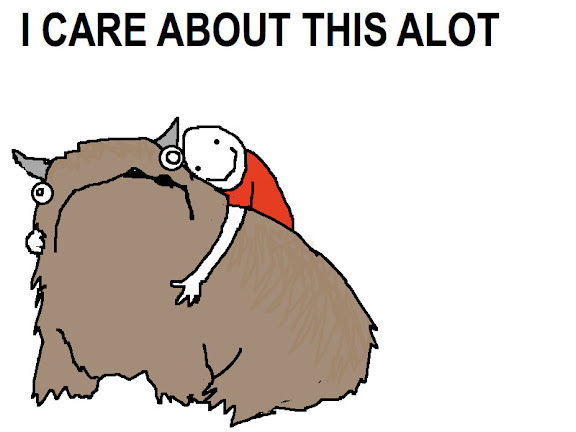
[Image via Natalie Dee.]

Posted in Uncategorized

Meet the New Young Millionaires

Written by Geoff Williams

Forget Bill Gates and Steve Jobs. The founders of Facebook, YouTube, and other upstart companies are shaking up the business world — and making millions along the way.

For many, the American dream isn’t just to become a millionaire — it’s to become a young millionaire. There’s something to be said for coming up with a million-dollar idea relatively early in the game of life.

With original whiz kids like Bill Gates and Steve Jobs paving the way, a new generation of entrepreneurs is putting their own spin on success — and making a lot of money along the way. How did they do it? While they may have taken slightly different paths, these young millionaires all found a way to turn unique ideas into lucrative ventures. Here’s a closer look.

Young millionaire: Mark Zuckerberg, 26

His claim to fame: Zuckerberg co-founded Facebook, which this year will bring in anywhere from $710 million to $1 billion in revenue, according to various reports. Zuckerberg’s own wealth is believed to be $4 billion — at least on paper.

His blueprint for success: Zuckerberg started Facebook from his dorm room on February 4, 2004. The Harvard student didn’t intend for his page to go beyond Harvard, but he soon recognized the appeal of being able to connect with college friends. He brought aboard his roommate Dustin Moskovitz and later classmates Eduardo Saverin and Chris Hughes, as they began expanding Facebook to other universities like Stanford, Dartmouth, Columbia and Yale. Facebook took off, first with college kids then high school students, and in June 2006, many corporations were allowed to join. In September 2006, Facebook opened the floodgates to the general public. Today, the site claims more than 400 million active users worldwide.

Young millionaire: Stacey Bendet, 32

Her claim to fame: She founded alice + olivia, a wildly successful women’s clothing line, which brings in a reported $50 million a year.

Her blueprint for success: Bendet started her business with University of Pennsylvania classmate Rebecca Matchett (alice + olivia is named after the founders’ mothers), and the collection is now sold in more than 800 stores around the world. Why the company became successful may simply be traced to Bendet’s creativity. New York once reported that while in college, Bendet Rollerbladed to a job interview dressed in orange pants and a fur bomber jacket. Today, her collections are known for being sophisticated but always adorned in a sense of fun and a little quirkiness. And what happened to Matchett? The two parted ways pretty early in their partnership, but Matchett isn’t doing so badly either — she is the co-founder of another clothing company called Rebecca & Drew.

Young millionaires: Dennis Crowley, 33, and Naveen Selvadurai, 28

Their claim to fame: They founded Foursquare, which has been valued at $80 million.

Their blueprint for success: Foursquare allows users to alert their Facebook friends and Twitter followers where they are at any given time, encouraging everyone to check out cool places they’ve discovered. Selvadurai is a software developer and Crowley knows something about social media (he sold Dodgeball, a location-based social network, to Google in 2005). Foursquare, a combination of software and social networking, is based on a very human desire: to get out and see things and share experiences with people. Selvadurai created it simply because, as he told BusinessWeek, “I live in the East Village, which has so much rich history and so much to do, and I realized that I’d seen maybe 5 percent of it. I was looking for a way to get me and my friends to go out and do more things.”

Young millionaire: Aaron Patzer, 30

His claim to fame: He created Mint.com, a money-management site. Last year, Intuit bought it for $170 million.

His blueprint for success: Patzer has always been something of an overachiever. As an undergrad at Duke University, he earned degrees in computer science, electrical engineering, and computer engineering. He later started a Ph.D. program, decided that it wasn’t practical, and got his MSEE (Masters Degree in Electrical Engineering) at Princeton instead. So maybe it isn’t a shock that he was only 25 when he created Mint.com. Still, you don’t need to have an advanced degree to understand why Patzer was successful. Everyone has money — or wants it — and Patzer created an easy-to-use site that helps people keep more of it.

Young millionaire: Andrew Mason, 29

His claim to fame: He created Groupon, a coupon site like no other. Revenue is estimated to hit $350 million in 2010, and the company has been valued at $1.2 billion.

His blueprint for success: Mason harnessed the power of collective buying action. Groupon, available in cities nationwide, offers discounts from local businesses — generally significant discounts, like 59 percent off admission to a laser-tag arcade or 67 percent off a week at a daycare center. If enough consumers respond that they’ll take a particular deal, it goes forward. If not enough respond, the business can pull the deal. It’s a win-win situation for everyone, since customers save a ton of money, businesses gets an influx of customers, and Groupon takes up to 50 percent of the cut.

Young millionaire: David Chang, 32

His claim to fame: Back in 2004, he created Momofuku, a noodle bar in New York City, which has since spawned a mini empire of line-out-the-door restaurants across the Big Apple.

His blueprint for success: Since opening his original noodle bar, Chang has expanded to several other locations, including Momofuku Ko, a 12-seat restaurant that takes reservations six days in advance, online only, and on a first-come first-served basis — infuriating some fine-dining folks who want to eat there sooner and more frequently. Nonetheless, the restaurant is always packed. Chang has also authored a cookbook, and for his creative-yet-affordable culinary creations, earned himself a spot on the 2010 Time 100 list.

Young millionaires: Chad Hurley, 34; Steve Chen, 32; Jawed Karim, 31

Their claim to fame: If you’ve ever watched a video of a cat playing the piano or Susan Boyle singing her heart out, you know these guys. Yep, they co-founded YouTube.

Their blueprint for success: Hurley worked at PayPal and talked up the idea of a video-sharing site with two coworkers, Chen and Karim. When they were given a bonus after eBay bought PayPal, they used that — along with some venture capital — to build an office in a garage. It was there, in February 2005, that they started YouTube. While Hurley, Chen, and Karim’s exact net worth is unknown, but you can do the math: Google bought YouTube in November 2006 for $1.65 billion.

Young millionaire: Kevin Rose, 33

His claim to fame: He created Digg, a content-sharing site with estimated revenue of $31 million.

His blueprint for success: Like a lot of these young millionaires, Rose tapped into the wisdom and acceptance of crowds. Rose’s business depends on people from all walks of life around the globe. In a nutshell, Digg asks people to vote on a story, asking them if they “Digg” it. Rose was featured on the cover of BusinessWeek in 2006 with the cover line: “How This Kid Made $60 Million in 18 Months.” Despite plenty of critics who question whether the site has a solid business model, BusinessInsider.com recently suggested that the company could be worth $250 million.

Simba, One Day You Will Be King

Posted in Uncategorized

The Secret Powers of Time

Found by 3rdeyeview

Time is the most important resource you have. This video is a great example of how your perspective of time can change you.

Professor Philip Zimbardo conveys how our individual perspectives of time affect our work, health and well-being. Time influences who we are as a person, how we view relationships and how we act in the world.

Watch on Youtube

Posted in Uncategorized

Page 1 of 1112345678...Last »

You will find a blog with varying content here.

Join the Smart people to get the daily updates.

More Subscription Options »