In Twitter’s short 3-year lifespan, the rapid-growing microblogging platform has spawned over 6 million followers who not only blog in 140 characters or less, but have also penned and performed songs in its honor.
In addition to being a staple for rapid-fire communication amongst technophiles and a merchandising tool for tech-savvy companies, Twitter has inspired would-be songwriters to write music and pen lyrics about the obsession that has swept the nation. And while celebrities like Ashton Kutcher, Demi Moore and Jane Fonda have graced our presence in Twitter-ville, the real celebs are the those “unsung heroes” who are now singing their hearts out on YouTube. It’s high time to acknowledge and give props to their bravery and musicality.
“first-time-ever” Top Ten Twitter Songs of All Time.
So in true David Letterman‘s top-ten list style, this year’s 10th place award goes to Alana Taylor, a 20-yr old native of New York City, attending NYU who is a true troubadour-ess, lauding the praises of Twitter to the discredit of Facebook, because after all “140 characters are all you need to say.” While she knows there are now a lot of Twitter songs on YouTube, she claims that she was the first to write a tribute song to Twitter, posting her’s as early as March, 2008. Alana blogs for Mashable.com, PBS.org and her own at alanataylor.com.
In 9th Place…Ms. Krystyl Baldwin, who is quick to warn you that the only thing she will harm during her video performance is “your ears” due to an “out of tune guitar” and a voice that is somewhat “off key.” Versus singing for a living, her self-titled website, krystyl.net lists her current vocation as a fashion event producer. However, if you like what you hear, Krystyl has informed me that her “Twitter, Part 2” video will be out in mid March. Stay tuned…
Keaton Branch, a 23-yr old Apple Store Manager, out of Houston, Texas is number 8 in our countdown. His whimsical refrain describes the Twitterverse as “somewhere between blog posts and emails” where someone still says, “hey man, what’s up? Keaton amusingly notes that although the top brass at Twitter HDQ haven’t gotten wind of his song, he is hopefully “waiting for a DM (Direct Message) from them one day!” @kbranch also has a music blog at AudioADD.net.
7th Place goes to Mary Hodder & Joshua Levy who work for TheUptake.org, a non-profit citizen journalism organization focused on video. Adapted from Lee Hays and Peter Seeger’s classic folk ballad “If I Had A Hammer,” Hodder’s and Levy’s parody not only extols the virtues of Twitter, but also promotes cell phone texting and Flickr photo pasting. Sing a long, if you like…
Allen Williamsis our 6th place winner.He is a 47 yr-old ( “going on 15”, according to Allen) writer, public speaker and self proclaimed “terrible guitar/piano player and song writer.” Williams teaches part-time at two universities in Nagoya, Japan. His Twitter tune has a catchy beat and his lyrics are quick to warn the twitterati about the hazards of just “following” anyone on Twitter. As he puts it, “Just heed these words carefully, or it just could be your loss, that silly @work follower, just might be your boss.”
The “Tweetbomb Song” by Camille Israel, a 21-yr old student at the University of British Columbia in Vancouver comes in at Number 5. “Tweetbomb” according to the @tweetbomb bio forewarns all followers that following @tweetbomb can result in an onslaught of tweets. Inspired by this, Camille assures you that she will retweet you “by Tweetdeck or Twhirl” cuz as she sings: “she just might be your kind of girl”
Our 4th place winner goes to the lovely Justine Ezarik(also known asiJustine) and Zappos.TV. Billing herself as an Internet Superstar, Justine can be found on blogs.YouTube, and Ebay. When she’s not performing online, she works as a freelance graphic/web designer and video editor. Zappos, an online shoe and handbag company that will generate more than $1 billion in sales this year contracted Justine to perform their homage to Twitter, called “I Tweet Myself.” Warning: A toilet scene and one naked man are truly hilarious!
When Chris Pirillo, who touts himself as a “Shameless self-promoter” asked his friend Dave Ryderto write a Twitter song, what came out of it became my pick for the Number 3 Twitter Song. Dave has since written and produced another Twitter song, but that one just missed this year’s deadline. While several versions of this year’s song exist on YouTube, I chose this version based on the clever editing that incorporates the cartoon character, Felix the Cat.
In second place, I selected Ben Walker and his song entitled: “You’re No One if You’re Not on Twitter.” Since YouTube is a social network and social networks are based on visitor feedback, the visitation to Ben’s video has remarkably racked up tallies just shy of 300,000 views and over 450 user comments. When asked if his song has been performed by others, Ben noted: “Apart from crowds of drunken Twits singing along at various gigs and Twestivals, I don’t think anybody else has performed the song. Twestival Paris almost got somebody to sing it in French (the lyrics were translated by a couple of fans last year) but they backed out at the last minute.” Ben’s day job keeps him busy as a web developer at torchbox.com and his personal website featuring all of his music can be found at ihatemornings.com.
However, my all time favorite “Follow” song and the one worthy of being our Number One Twitter song this year has got to go to “Follow You, Follow Me.” This song has a definite big-band-rock sensibility that can get even the most complacent listener a little jiggy! So this year’s Top Number One Twitter Song of all time goes to Phil Collins & Genesis, and their rock anthem: “Follow You, Follow Me.” Sit back enjoy their live performance filmed at one of their concerts held in Dusseldorf. Germany.
Perhaps a little bit of a cop-out regarding my Number One selection, but we all deserved to end this blog on a high note (pun intended)! However, if you don’t agree with any of my choices, please take our Poll and select your own Top Ten. Final Poll numbers will be tallied and posted by April 15, 2009, so your vote counts! (see TOP TEN POLL at the end of this article) Also feel free to follow any of these songwriters on Twitter and extend a hearty congratulations to them while you’re at it! Don’t forget to use the hashtag: #twittersongs in your tweets!
So there you have it… this year’s Top Ten Twitter Songs of All Time. If you don’t take our poll, I’d love to hear your comments and feedback. After viewing all of these great artists, what do you think? Which one tickled your fancy? Or perhaps you know of one I missed? Or maybe you are a songwriter and just finished writing one yourself? If so, comment here, as there is always next year! In the meantime, see you in Twitter-ville, and remember to keep it under 140 characters!
During The Pirate Bay trial, the music industry placed the blame for the decline in their revenues squarely on the shoulders of file-sharers. Their logic is clearly flawed, but it could sway the verdict if no alternative explanation is presented. So, if piracy isn’t to blame, then what is *actually* killing the music industry?
According to Per Sundin, CEO of Universal Music, the decline in music revenues in the past 8 years can be fully attributed to illegal file sharing. If this were actually true, many of us might even respect his decision to go after pirates as fiercely as the music industry is doing right now. However, the past 8 years have seen a lot more changes in the landscape of home entertainment than Per Sundin would like to admit, and some of those changes have had a massive impact on music profitability – much more so than any amount of piracy.
Let us refresh our memories and take a look at what actually happened during and just before the past 8 years:
1. First, the explosive rise of computer and console gaming. This competitive ‘third element’ has appeared in the entertainment landscape, beaten both music and movies to the curb and taken a huge cut out of the music industry’s revenues. Consumers don’t have infinitely-deep pockets, and billions of ‘recreation dollars’ that used to go almost exclusively to music, are now going into gaming.
2. International trade agreements have allowed consumers to buy their music across borders, rather than accepting local prices on music based on the ‘relative wealth’ of nations, rather than the actual value of the product.
3. New forms of distributable media, most notably MP3s but also CDs, have become mainstream. These new media don’t degrade over time and rarely break at all, making music rebuys a thing of the past, and allowing the second-hand market for music to thrive and expand – both of which take a cut out of the music industry’s former revenues.
4. Radical technological innovation has taken place in the field of music creation, processing, mixing, and mastering. Recording hardware, CD burners, music software, and media encoders have evolved to the point where most artists can actually afford decent-quality equipment to do their own recording and producing. Furthermore, this has fostered literally thousands of smaller, specialized studios that are challenging the ‘Big 4? with lower prices, better terms for artists, genre-specific expertise, etc. Successful artists can now leave the big labels and start their own recording outfits on relatively modest budgets. Naturally, super stars like The Beatles or Frank Sinatra have always had this option, but the recent technological advances have lowered the bar drastically. This development is depriving the ‘Big 4? of many of their former cash cows, who now use the major labels for their advertising and distribution infrastructure alone.
5. The World Wide Web has become an omnipresent force in the world, allowing cheap, end-to-end distribution of digital music, increasingly cutting out the corporate music distributors, who deal in trucks and CD covers, rather than bytes and bandwidth. With iTunes leading the way (very successfully ‘competing with free’, I might add), billions of songs are now purchased digitally rather than physically, no longer necessitating the big labels’ distribution networks.
6. The total number of radio stations, music television networks and other ‘streaming’ sources of music has grown exponentially, giving music fans a huge selection of free (and legal) music options. Satellite radio, DAB, and internet radio broadcasts have made it trivial for consumers to simply tune into a channel broadcasting the exact sub-genre of music that they feel like listening to (they can even have a stream created for them dynamically, e.g. on Pandora), making the *purchase* of music entirely optional for the casual listener.
7. A massive selection of entertainment alternatives (home computing, console gaming, mobile devices, etc.) have appeared in the home, effectively marginalizing music as an activity. 15-20 years ago, youths would regularly visit each other just to listen to music together; today, that is virtually unthinkable without some form of activity involved, such as playing Guitar Hero or Rock Band, or dancing at a concert.
8. And finally, the music industry itself has embraced the opportunities of digital media, at last letting consumers buy *single* tracks at a time rather than forcing entire albums full of ‘fillers’ on them. Looking at the RIAA’s own sales figures for the past 10 years, there is a *direct* correlation between the break-off in album sales and the introduction and increase in single track digital sales. Looking at the actual numbers, it is abundantly clear that the vast majority of consumers never wanted to buy full albums in the first place, but were merely forced to by the lack of affordable single-track media. Now that the digital revolution has arrived, countless millions of 16-track album sales are being turned into 1- or 2-track sales, *decimating* the former revenues on music. THIS is the real reason why the music industry is hurting.
In other words: The “it’s common sense” argument that the music industry is peddling in their attempt to tie the declining revenues to piracy, simply doesn’t hold. It is not as clear-cut as the industry believes; the true reason for the decline is something they are still unwilling to face, but will have to face sooner or later:
The fact is that the music industry’s revenues have been artificially inflated for decades because of limited consumer options. The last 15 years of innovation have lifted those limitations, effectively leaving the music industry with an obsolete, defective business model of monopolized production technology, forced album bundling, and almost nonexistent competition in the realm of home entertainment. What is happening now – the decline of music profits and the piracy witch hunt by the music industry – is merely the panicked struggle of a dying business model, a complacent industry’s refusal to accept its diminishing role in a digital world. The pirates are not the reason, and the decline is the not the disease. It is the cure.
This is a guest post by Jens Roland. Jens is a computer scientist by training, but a technology forecaster by trade. He has worked at international think tanks as a consultant and researcher in emerging technologies and has written more than 300 articles and a book on the subject.
———————— DATA: Net value of shipped music, in billion dollars
Having used both Kindles 1 and 2, I thought it would helpful to list where the new Kindle excels and where it falters. The dead tree book will never die – I think it will even have more longevity and popularity than the boutique appreciation of vinyl records – but our generation will be the last to use “books” as our primary reading systems. Expect ebooks to hit colleges in perhaps five years and high schools and grade schools in about 7. That said, should you buy a Kindle now? Why and why not?
10 Reasons to buy a Kindle 2
1. It’s great if you travel. If you travel, the Kindle is a godsend. I’m the kind of guy who stocks up books for even short trips, fully expecting to finish War and Peace, Notes from Underground, and four Clive Cussler novels on a plane trip from Pittsburgh to Columbus. With the Kindle you have a full complement of books available at any time.
2. You can put anything you want on it. You can easily email DOC, TXT, and PDF files to your own Kindle email address for conversion to the Kindle – but that costs 10 cents.
3. It looks great. The Kindle 2 is an amazing improvement over the Kindle 1. If every manufacturer took cues on build quality and product life cycles from Amazon, we’d all be better off.
4. It feels great. This new version has excellent button placement and is thin enough to cut cheese. It’s eminently portable.
5. Almost any book at any time. Except for a few esoteric reference books I’ve found just about everything I need on the Kindle store. As more and more publishers go ebook – and I think an iPhone Kindle reader will truly blow the last bottlenecks out – this excuse will become ineffective.
6. It works in inclement conditions. I was in Mexico with the wife and kids and I wanted to test the Kindle out near the pool. Three books later and I felt like the laziest high-tech maven in the world. The ladies next to me brought twenty softcover novels with them and all of them got wet and messy. The Kindle worked like a dream.
7. The bookmarking and highlighting systems are vastly improved. The original Kindle had two methods for note-taking: you could select text and add a note or you could add a book mark. The new system refines those considerably and adds visual feedback whenever you take a note.
8. The dictionary is now in-line. When you move to a word, its definition appears at the bottom of the page. If you wanted a definition before, you had to pop out to a separate page.
9. You can almost see and understand the illustrations in 16 greyscale shades. Note the “almost.” However, it’s better than 4 shades, which was abysmal.
10. It is the future. Sorry, it is. Amazon nailed the ebook and they’re going to own the space for the next few years. Maybe they’ll pull a Netflix and sell the software to OEMs, which is fine by me. But ebooks are what we’ll be reading while we rocket to Mars in 2050. Or we’ll have our robotic concubines read them to us.
10 reasons not to buy a Kindle 2 1. It’s bad for research. I’m working on a book right now and I wanted to use the Kindle for all of my research. Sadly, this is almost impossible. The book is a physical object – you can move through it, skimming for notes and important points – and there is something in our education that gives us a sense of space inside a book. I don’t quite know how to explain it, but you know how you can pick up a book and show someone what you’re looking for in a few page turns? You know it was halfway through, maybe a third of the way down the page, and it was near another set of words. The Kindle is not conducive to that kind of mental map-making… yet.
2. It’s horrible for reference. Don’t buy a Kindle of you just read programming manuals. Programming manuals offer something different. While it seems counterintuitive that a document you can search programatically wouldn’t be good as reference material, you’re better off looking up function calls on a website and using the physical book as a guide to building your programs. This is a corallary of point 1, above, so this could change.
3. The Kindle is flimsy. You’ll go through your day thinking you will break your Kindle. You don’t fit that much screen on a thin device that is meant to be thrown into a bag without a care and not risk cracking it. There will come a day when you open your bag and see that your Kindle is dead, even in its case. It’s not your fault. Say it with me: it’s not your fault.
4. It’s not ready for students. Add points 1, 2, and 3 together and you come to the conclusion that this is not ready for students. This may be a good device for English classes requiring lots of long novel reading, but as an education tool it isn’t quite there.
5. The net connection doesn’t work internationally. For some reason last year I was convinced the Kindle had Wi-Fi built-in. I was trying to get on the Internet in Warsaw, Poland and I kept looking for that Wi-Fi button. Then I remembered – no Wi-Fi. And I cried. How I cried, my friends. Then I downloaded the Kindle book onto my desktop and dragged it over via the USB cable. So that’s, in essence, your international solution.
6. No SD slot. While the Kindle can easily hold 1,500 books, what if you’re the kind of person who likes to keep everything in its right place? Maybe you want to make a book playlist? Maybe you have 1,501 books? I don’t know. Sadly, the Kindle doesn’t allow for memory expansion. Not a big deal, but to some it’s a bad thing.
7. Flight attendants will tell you to turn it off on take off and landing. You can’t explain that it’s epaper and uses no current. You just can’t. It’s like explaining heaven to bears.
8. It contains a battery. Remember, Reader, the Kindle is mortal. It will die on you when you don’t have your charger.
9. It’s bottom heavy. The internal battery makes the device want to plop face down on your chest. I read it last night when I was sleepy and it kept getting ready to fall on me.
10. There’s just something about a dead tree book, isn’t there? It’s nice to pop into the airport news stand and pick up a novel. It just is. I’m sorry.
Some of these sites allow you to craft a resume, while others are networking platforms that contain job listings. By signing up for all ten, you increase your chances of getting a job and decrease the amount of time you’ll spend searching for a new one. Three of the listed sites can be combined with other sites to be more impactful. In addition to joining, creating profiles and searching for jobs, I encourage you to support these sites with either a traditional website or blog, so that you have more to present to employers, in addition to your profile.
Have another social network you’d recommend? Tell us more about it in the comments.
1. LinkedIn
LinkedIn is by far the #1 spot for job seekers, those currently employed, marketers who are looking to build lists and salespeople who are seeking out new clients. With 35 million users, including recruiters and job seekers, LinkedIn is quite a hot spot. Of course, due to the current state of the economy, it’s simple to understand why LinkedIn is more popular than ever.
The problem is that most job seekers don’t optimize their profile, cultivate their network, join and participate in groups, use applications and exchange endorsements. That is basically everything you should be doing in a nutshell. I also recommend that you use a distinct URL (linkedin.com/in/yourfullname) and an avatar that best represents you and is consistent with the picture on your other social sites.
When you search for a job, recognize who in your network might help you get to the hiring manager. You’re given 1st, 2nd and 3rd degree connections on LinkedIn that you should be using to secure a job opening.
2. Plaxo With Simply Hired
Plaxo is a social network that resembles LinkedIn to a certain degree. You’re able to create your own profile with a section about you, your contact information and your “pulse stream,” which is made up of your presence on social media sites such as Twitter. You’re even able to share your photo album and send eCards, which is a nice differentiator.
The real value in Plaxo is the address book that keeps track of all of your contact information, including a Yahoo! Map indicating where your contacts live. Plaxo, which is owned by Comcast, is also integrated with Simply Hired, which is a job aggregator that searches thousands of job sites and companies and aggregates them in a single location for you. After building your Plaxo profile, use it as part of the recruitment process when applying for jobs with Simply Hired for success.
3. Twitter With Blog or LinkedIn URL
Twitter is an amazing tool if you can unlock its power. It’s taken me months to understand how conversations flow and how I can add to the discussion. Twitter breaks down communication barriers and lets you talk directly to hiring managers, without having to submit a resume immediately to a machine.
Although Twitter is probably one of the best networking tools on the planet, it needs to be supplemented with a blog or LinkedIn profile. There’s no way you can hire someone based on a Twitter profile, without having a link from that profile to something else that gives more information on that job seeker. You get to add one URL to your profile, so choose wisely.
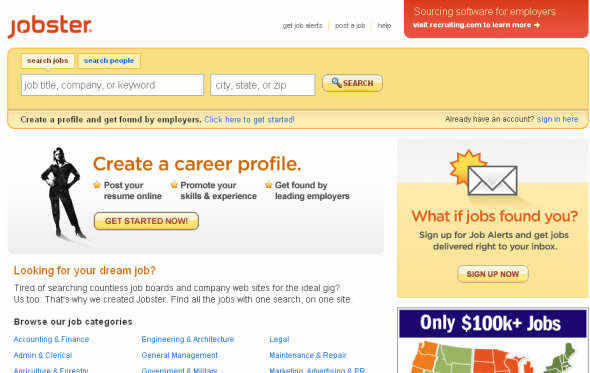
4. Jobster
Jobster isn’t spoken about nearly enough, yet it is a powerful platform for networking with employers who are offering jobs, while you’re searching. You can upload your resume, embed your video resume, showcase links to your site, your picture and tag your skills, which is a unique differentiator. You can search for open positions and see who the person is who posted the job. Then you can add them to your network and connect with them to find out more about the position.
5. Facebook
Facebook can be used to get jobs. There are two main ways of acquiring a job through Facebook. The first is to go to your Facebook marketplace, which lists job openings or other opportunities in your network. Aside from jobs, there are “items wanted” and a “for sale” listing. When searching for jobs, you’ll be able to see who listed the item and then message them to show your interest.
When you find a job opening that you’re interested in, you’ll be able to message the hiring manager directly. For instance, the subject line of the message will auto-populate with “Principal Web Developer in Littleton, MA” in the subject line. The second way to get a job using Facebook is to join groups and fan pages to find people with common interests and to network with them.
6. Craigslist
Craigslist is an extremely valuable job search tool if you’re not looking to work for a big brand name company, such as P&G or GE. Most of the positions on Craigslist are for consultants (design/programming help) and at small to midsize companies that are hiring. There are new listings every day and if you wake up to this site every morning and refresh the page, you have a good chance at getting a job sooner rather than later.
7. MyWorkster With Indeed
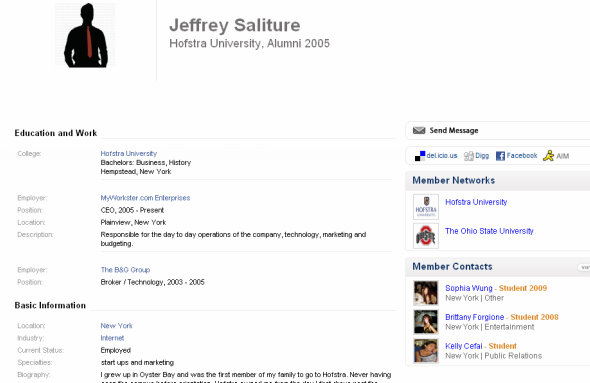
MyWorkster focuses on exclusive networks for colleges, allowing students and alumni to connect for exclusive career opportunities. This site isn’t valuable to you if you didn’t go to college though. This social network allows you to create a professional profile and network with potential employers.
For a free account, you get a profile, instant messenger built in the site, groups, events, your resume and more. The big differentiator is that it uses Facebook Connect to get your information. Here is an example of a profile page. MyWorkster also has job listings, which are provided by Indeed, a job search engine and aggregator, which is very similar to Simply Hired.
8. VisualCV
VisualCV understands the importance of personal branding in a job search. Instead of a traditional resume, you get your own branded webpage, where you can add video, audio, images, graphs, charts, work samples, presentations and references. VisualCVs not only let you stand out from the crowd, but communicate your value in a way that’s not possible with static text.
After you’ve created your VisualCV, you can display it publicly or privately, email it to a recruiter, save it as a PDF or forward the URL, which will rank high for your name. On the site, you can search for jobs and apply directly using your VisualCV. Everybody’s favorite venture capitalist, Guy Kawasaki, is on their board.
Disclosure: VisualCV sponsors my blog and magazine.
9. JobFox
JobFox, like online dating, tries to pair you up with a job that best fits you. Their differentiator is their “Mutual Suitability SystemTM” that enables them to match your wants and needs to those of employers to find the best relationship. The system learns about your skills, experiences, and goals and then presents you with jobs.
Then there’s the “Jobfox Intro,” where both the applicant and company get emails to encourage the connection. Just like VisualCV, you get your own branded website, with a personal web address to send to employers. JobFox was created by Rob McGovern, the founder of Careerbuilder.com.
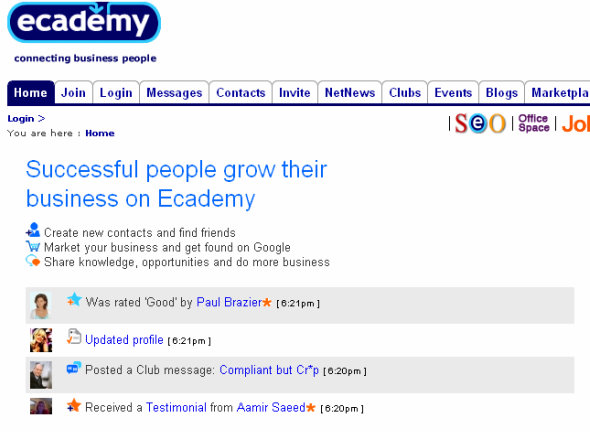
10. Ecademy
Ecademy, like LinkedIn, is a prime source for professional networking. You have your own online profile, where you can tell people what you do. You can join business networking groups based around your expertise and exchange messages with other members privately. You can also ask for introductions from friends, just like LinkedIn. Although, there isn’t a job search area on the site, 80% of jobs are from networking and this place is dedicated to it.
Written by Daniel Murphy Mathew Imaging/WireImage.com
We send off our favorite red-headed step-child of comedy into The Big Chair with videos you probably won’t be seeing on The Tonight Show. Horny manatees, anyone?
Yeah, right. Like you could pick just five. Summing up sixteen years and 2,700-plus hours of nutty late-night television in five measly clips is like summing up a rodeo by saying it smells bad.
But Conan – and it’s just Conan, like Johnny before him – deserves a tribute after closing up shop on Late Night last week on his way to Johnny’s chair. And strict editorial guidelines, cobbled together over hours and hours of hard work and drinking, dictate that this column contain five videos – sheer wealth of brilliant material be damned.
So best to keep it simple. And like that “quirky” girl you dated for five seconds in sixth grade before everyone started heckling you, the ones you end up missing the most are the ones you’ll likely never come across again. And unfortunately, in the parlance of the FCC, a masturbating bear at 12:35 in the morning is much different than a masturbating bear at 11:35 in the evening. (You can just hear the ad execs now: “They want to know if we’d prefer our spot scheduled before or after the pooping dog puppet sketch.”)
The Late Night skits we’ll remember most fondly, then, are the ones we likely won’t end up seeing on The Tonight Show when Conan pops up in L.A. this June – gems of comic genius that an awkward SNL writer cum TV game-changer cum cultural icon has left behind in his soon-to-be-demolished set, and in our hearts.
Quackers, the Shit-Eating Duck
So a duck craps on your stage. In front of everyone. You, being a normal, non-farm-owning person, react accordingly with righteous indignation and a well-timed S-bomb. Most talk-show hosts would be happy to just forget that night ever happened. It takes true balls to go back to the network execs and say, “Let’s take it one step further.”
Camp Michael McDonald
The joke herein is so offbeat you’re not even quite sure why you’re laughing. It’s borderline British, for chrissakes. But now that you’ve finished watching the clip for the twelfth time, all the while thinking, “I am the only person in America who finds this funny,” people across America pulling will be rolling on the floor saying the exact same thing.
In The Year 2000
Inane millennial predictions filmed in the style of a Swedish music video? With David Duchovny? Emceed by Andy Richter? There’s genuinely nothing not to love. Better still, the running bit (often starring unannounced A-listers who wouldn’t dare be this alien in L.A.) continued well after the millennium came and went.
HornyManatee.com
Like Quackers (and several of Conan’s other odes to the mascot), this was a brilliant bit of “The joke’s on you, Suits!” – one that went viral on the Web and made the Suits very happy, no less. You have to imagine more than a few eyebrows were raised when official tax documents reflected an NBC business expense of $159 for HornyManatee.com. The fact that the site is still up and running, and featuring pictures and videos of guys dressed up as horny manatees in order to generate donations for actual manatees, gives us hope for a return.
Conan O’Brien & Mr. T Celebrate Fall Foliage Day
Just try to imagine any other talk-show host actually going out and doing this. (Tyra Banks excluded, because she’s obviously bonkers.) Even Jon Stewart and Stephen Colbert, the Kings of Uncomfortable Comedy, send out their minions for the awkward-moment-filled field work. But there’s Conan, cheering on Mr. T as he wills an apple to fall off a tree with nothing but old-fashioned smack talk. That’s a man who loves his work.
The Great Filter is the idea that there is some single, almost insurmountably improbable barrier on the path to the stars that explains why we’ve never seen any sign of alien life. It combines aspects of astrology, biology and history to arrive at one inescapable conclusion: university professors dream of book deals.
Robin Hanson of George Mason University posits a “Great Filter” that prevents the rise of intelligent, self-aware, technologically advanced, space-colonizing civilizations. The “filter” would be one or more improbable steps along the path that starts with the creation of a planet and ends with a race capable of colonizing the galaxy.
Somewhere between those two points, philosopher Nick Bostrom points out, “the Great Filter operates, and it must be powerful enough that even with all the billions of possible starting worlds on which life might evolve – all those rolls of the cosmic dice – one ends up with nothing: no aliens, no spacecraft, no signals, at least not in our neck of the woods.”
The very existence of life makes finding a four-leafed clover with winning lottery tickets for leaves look like a sure thing. Add the staggering improbability of our evolution from single cells and you end up with odds so vast they’ve driven the invention of everything from the Drake equation to an invisible sky-beard who seems unnecessarily preoccupied with what we do one day out of every seven. People who study this subject file all that under “Shit we already knew”, and were too busy actually working on the science to come up with a garbage buzzword phrase that would look really awesome in bold type on the cover of a hardback book (available now for $29.99!) Luckily Robin Hanson was ready to do that for them.
There isn’t actually a book yet, but the Great Filter “theory” is so clearly designed to be publisher-ready you can almost see the page numbering. It talks in grand terms about a vast threat facing humanity, and if it never seems to have any idea what that threat actually is, was or will be then who cares? Most of the ‘evidence’ is based on the scarcity of life in the cosmos in general and how that describes threats to Earth specifically, otherwise known as “Fundamental misunderstanding of statistics #1”. He goes on to talk around this ethereal menace and all the effects it could have on THE SURVIVAL OF EARTH, combining lots of different fields in compelling pop-science friendly chapters without ever coming up with an actual result.
Not that we’re claiming that Professor Hanson doesn’t understand all this; just that he’s made a tactical decision not to care. His real intentions are further revealed by the way he throws around “possibility of world-destroying physics experiments” (we’re assuming he’ll scribble “I’M TALKING ABOUT THE LARGE HADRON COLLIDER” on autographed copies). This is a great buzzword for catching media attention and popular sales, at the tiny price of sacrificing even the pretense of scientific validity. Everyone who’s even heard of the basic physics of the LHC knows these cataclysm quotes are garbage.
Bostrom, director of the awesomely titled Future of Humanity Institute at Oxford University, claims that the Great Filter poses an “Existential Risk”. That’s a perfect choice of words because he thinks it means a threat to our very existence, when it’s really a made-up Nietzschean problem for people who should be delighted but are determined to be miserable anyway. He confirms this assessment by telling us we should take any discovery of alien life as terrible news, as that would put this mysteriously unspecified Filtering Boogeyman in our future instead of the past.
Listen: if we discover life on Mars and you can honestly call that a bad thing, then it’s not just that you aren’t a scientist. We’re not even sure you could be described as human.
I love boss fights in video games. Everyone looks forward to them, and they usually provide some of the funnest/hardest/most memorable bits of any game. They also usually have the best music, best cutscenes, and in general, they’re a blast to play. But what makes a perfect boss battle?
Well as I said, great music helps a lot, and there has to be a perfect balance in the atmosphere. You have to be enjoying the fight, but at the same time be scared out of your wits that you could die at any second. So here are my picks for boss fights that are easy, hard, memorable, or just fun.
Quick warning: All of these are my own opinion. If you disagree, you can leave a comment saying what you would have put, and before anyone asks, yes, these are nearly all Nintendo. They’ve been around longer and made more games, hence more boss battles, so it’s logical that there’s a lot of them on this list. I’m not a fanboy; I just genuinely think some of these Nintendo boss battles are good. There aren’t that many modern picks because with orchestras of music and realistic graphics, it’s easy to be epic nowadays.
Although I said music plays a big part in boss battles, music alone cannot get you a place on this list, so ‘Butsutekkai’ from Ikaruga, I’m sorry you were number 11.
Sorry to you too, ‘Devil Dragon’ from Megaman 2. You were a tad too easy for this list, although your initial shock factor was amazing.
Also, this blog will obviously have spoilers, but mostly for very old games.
10) Super Mario Land 2
The boss: Final Boss, Wario.
Edging onto the list is the first ever appearance of Wario as the final villain in the second ‘Super Mario Land’ game for Gameboy. Although it might not look especially epic nowadays, it was amazing to me when I first played it.
You burst into Wario’s room after getting through some hellish obstacles in the castle that was your’s before he took it over, and at first, he doesn’t seem too bad. He stomps on the floor, dropping glass orbs on your head, which seemed impossibly hard when I first played this at 6 years old, but now it seems easier. You just jump on his noggin three times and he’s gone…
Wait a second… did he just take one of your power-ups? Yep, the second stage of this battle sees him hoverring above you and smashing down at inopportune times. Great. The music is about as dark as a Mario Gameboy game could get away with, and it does help the scene by giving it a frantic feel. If you survive Wario this time, he runs off again.
Now he’s shooting Mario’s trademark fireballs at me! Ack! Well, this isn’t too hard compared to other games, and if you’ve gotten past the first two stages of Wario, the last one shouldn’t pose too much of a threat. Still, this introduction of Wario couldn’t have been pulled off smoother, and it ranks high amongst other great Gameboy boss battles, like King Dedede and Nightmare.
9) Pokemon Gold, but also applies to Silver, Crystal, Ruby, Sapphire, and probably others.
The boss: The champion.
Gym leaders in Pokemon games are usually really easy, and the Elite Four are normally not too hard either, especially if you’re tactics involve raising one Pokemon really high, and ignoring the rest. However, it gets a lot harder when you raise a balanced party, at the expense of your best Pokemon. In my case, my Blastoise is about 10 levels too short to beat Pokemon Red, just because I wasted time raising a Pidgeot, Arcanine, Parasect, Electrode and Hitmonlee too…
Anyway, even though these games were on the Gameboy, they were very long; longer than some games today. Therefore, the final boss, the Pokemon League Champion, was always going to be a tense battle, no matter what Nintendo made it. As it turns out, they gave it some music that starts off dramatic and slow, but quickly bursts into battle pace. It helps that in almost every Pokemon game, you know the Champion beforehand, and although it’s predictable in most games, I didn’t see it coming the first time I played (To be fair, I was 7.)
This fight will make you sweat as you reach the end of your 10+ hour mission to become to Pokemon Champion. It’s almost epic enough to make you look over the fact that Lance has three Dragonites, the highest being level 50, when Dragonair only evolves into Dragonite around level 55. Lance, you’re a cheater. That’s why you lose.
8) Super Castlevania IV
The boss: Dracula.
Dracula has always been a fairly interesting boss in every Castlevania game, and I was thinking of putting in his incarnation from ‘Symphony of the Night’ because of it’s epic addition of dialogue (Die monster! You don’t belong in this world!) but I haven’t been able to get a copy of SOTN yet (Expensive game…) so the Super Castlevania IV version will have to do.
This boss fight is still pretty epic. This game had great boss fights, mainly for the 4 second victory jingle after getting that red orb… but Dracula’s battle had real tension and atmosphere. Before the battle even begins, you walk through a corridor, and all the torches light up. He’s expecting you.
After getting some weapons and health from the infamous invisible ledge before the main fight, you charge in. Dracula can shoot fire at you, summon fireballs to follow you, and near the end of the fight, he charges lightning down through the room. The music changes to ‘Simon’s Theme’ and you can easily die. However, if you’re successful, this is actually one of the only Castlevania games where he doesn’t have a second phase. He just dissolves into a cloud of bats and dies mysteriously…
7) The Legend of Zelda: Ocarina of Time
The boss: Phantom Ganon.
Picking out the best boss fight from Ocarina of Time is like picking whether to be shot, burned, or drowned. In other words, with the giant King Dodongo, the creepy Bongo Bongo, the humourous Twinrova, the startling Volvagia and the incredibly awesome final battle with Ganon, it was a hard choice to make. Even Morpha was almost fun enough to make the Water Temple seem worthwhile.
Still, Phantom Ganon gets picked purely for the shock factor. The forest temple is the first temple you solve as an adult with Link, and you know that the final boss will be Ganondorf. So when you make it to the boss battle after a humongous maze of ghosts and keys, you’re expecting something tough, but not to turn around and see Ganondorf himself.
Oh wait, it’s not him. He took his face off and it’s a ghost… wait a minute, that’s just as creepy! Fighting this spirit of Ganondorf is fairly tough, especially if you have no idea that you have to shoot his horse with an arrow while it’s charging out of a painting towards you. Even when you beat it, it’s fairly creepy as it dissolves in midair, then Ganondorf speaks from somewhere and banishes his own friggin’ ghost to another dimension. How normal.
6) Super Mario World 2: Yoshi’s Island
The boss: Big Baby Bowser.
One of the biggest battles on the SNES, this boss was incredible in every sense of the word. It showed what the graphics on the SNES could do, it had one of the most memorable boss tunes of the era, and it was just… unique for it’s time. Chucking eggs into the distance at something that resembles Godzilla is always going to be fun.
The scene oozes with tension as Yoshi stands alone on the wrecked roof/floor/we don’t know, of Baby Bowser’s palace, and rocks are falling around you. Then, your giant nemesis rises from the debris and roars at you. Then the rocks charge down and smash through whatever you’re standing on. It gets worse when Baby Bowser summons them to raise up later, then smash down on you again.
Your only hope is firing giant eggs at him, and if you fail, you get a creepy death of Baby Bowser charging towards you until his body fills the screen, and then he destroys the platforms, leaving Yoshi to fall to his death. Definitely one of the most memorable bosses in a video game.
5) Resident Evil 4
The boss: Del Lago.
Resident Evil 4 has some amazing bosses, and it was hard to choose the best one. Krauser? He’s fun, but his death scene is lame. Saddler? Still fun, but too obvious. Salazar? Great, but you can kill him in one hit with a rocket launcher. El Gigante? Well, you fight four of them, they’re nothing special…
Del Lago was breathtaking. Not only was he the first boss in the game, he was also undoubtedly to biggest, and it’s no wonder Leon could only hurt him with harpoons. Unless you’re on ‘easy’, he takes a fair number of harpoons before eventually giving up, and before then he could have smashed Leon’s boat into the water and swallowed him whole.
Just when you think you can relax, and Del Lago is dead, a rope attached to him finds itself wrapped around your legs, and unless you’re playing the Wii version, you have to frantically tap buttons unless you want to see Leon getting dragged out of the boat and underwater, where he faces one of the more visually disturbing deaths by drowning.
‘Del Lago’ actually means ‘of the lake’. Just a little trivia.
4) Wario Land 2
The boss: The Basketball Bunny.
Warning: To avoid seeing the entire level and just go straight to the boss, you’ll need to go to 5:17 of this video.
Every list has to have one completely personal entry that nobody else would pick, and this is mine. The single greatest boss out of the 12 you face in ‘Wario Land 2’ on the Gameboy, it’s the most unique boss of the game. Most of the other bosses involve damaging them by jumping on them, or using the B button to charge at them. Some get slightly more imaginative, as one two make you throw items at them, and you can only damage one of the final bosses by hitting him when he’s recharging.
However, this boss is amazingly different. You fight him… over a game of basketball.
The strange basketball bunny jumps around and occasionally chucks a basketball your way to stun you. If he jumps on you, Wario turns into a red ball, and if he grabs you then, he’ll jump up and dunk you to score a point. If he gets 3 points, you fly out of the arena and have to try again. To win, you need to jump on him, grab him when he’s a ball, and throw him from midair or with a charged shot from the ground, and slam dunk his sorry ass out of here.
Although it doesn’t sound like much, it was ridiculously hard when I first played it, and even though I now know all the right places to stand when aiming, there was a time when I thought he was the hardest boss ever. Then again, at that point, this was the 5th game I’d played… ever.
Even so, he’s still a truly unique and fun boss.
3) Spartan: Total Warrior
The boss: The Hydra.
Warning: This is another boss not well-known enough to have it’s own video on Youtube, so if you want to see it, skip straight to 4:50.
I’ve heard amazing things about the Hydra boss battle in ‘God of War’, but I haven’t been able to secure a PS2 yet (If anyone complains about my lack of consoles, I’ll assume they’re offering to buy me one, as I really don’t have the money right now…) so I’ve had to settle for a great boss in a very underrated game.
Spartan: Total Warrior pits you up against several mythical beasts and bosses, like the Minotaur. Heck, in the first level, you flatten a Talos (A giant bronze soldier forged by Hephaestus… do your research) with three catapults in an attack on Sparta. Still, it can’t compare to the Hydra.
The many heads will try to bite you, which does surprisingly little damage. If you strike the heads, they give you magic, and if you do a charged magic attack on one of the heads… it explodes. Yep, seriously. However, you can’t rest yet, because if you don’t gather fire arrows from a respawning chest and fire one at the severed neck, the head grows back. If you do hit the neck in time, it explodes. It’s that awesome.
As the Hydra grows more heads, the battle rages on and on, and your only sign of victory is the beast’s decreasing health bar. Eventually, after it rears it’s chief head and starts breathing fire, you can destroy it’s last head and kill this humongous beast. One of my favourite boss fights.
2) Eternal Darkness
The boss: The guardians.
This boss is so high because it can be 3 different monsters, depending on which artifact you choose at the beginning of the game. For this reason, the video above only shows the 3 different guardians killing Paul Luther, not all 3 fights. If you really want to see them, follow these links, but I don’t want to put another 3 videos into this already packed blog.
To see Peter Jacobs attacking the Xel’lotath guardian, go here.
Anyway, all three of these guardians are different and uniquely terrifying. The Ulyaoth guardian looks like a jellyfish with legs, the Xel’lotath guardian looks like a headless mermaid, and the Chattur’gha guardian looks like a f***ed up ‘Groudon’ from Pokemon.
To show how epic these bosses are, when you first encounter them as Paul Luther… they instantly kill you. Xel’lotath’s guardian explodes your head, the other two just squish poor Paul beneath their giant limbs. So when you come to fight them centuries later as war journalist Peter Jacobs, you know they mean business. They’re huge, tough, and unbeatable without magic. Each one even taunts you if you try to shoot it, just because it doesn’t do anything to hurt them.
My favourite taunt is from the Ulyaoth guardian.
“My machinationa are timeless Peter…
Your life is not.”
1) Earthbound
The boss: Giygas.
This is the first part of the battle, just to give you a taste of what Giygas is like. If you desperately want to see the second part, it’s here.
Earthbound is mainly known for being a bit quirky and kooky. However, the final boss is known for being dark and incredibly tense. Giygas is pretty much… insane. He had so much power, it consumed him, and now he doesn’t even know what he’s doing. As Pokey says ‘He is the evil power.’
The first stage of the battle is fairly straightforward. Giygas is invincible, so you bash his cohort, Pokey. After taking a beating and listening to one of the greatest pieces of boss music ever (Starts out like an NES tune, then turns into dark drum and bass) Pokey taunts you, then lets Giygas out of the ‘Devil’s Machine’. Giygas is still invincible, but you still have to keep hitting him until Pokey appears to taunt you again.
Then comes my favourite bit of the battle. This might just be because I love storyline in gaming, but in the final phase, one of your characters uses the normally useless ‘pray’ command, and all of your friends from along your adventure suddenly start praying for your safety. This somehow does damage to Giygas, as more and more people you recognise start helping you.
The final epic touch is that at some point in the game, it asks you to give your name. Not the name ‘Ness’ but the name of you, the player. Well, you’re the final person who prays for the safety of Ness, Paula, Jeff and Poo, and you’re the one who kills Giygas. Nice! Basically, Giygas completely spazzes out and goes mental. The graphics go crazy, on purpose, and then the screen crashes into black. Then… the ending! Yay, you’ve beaten Earthbound!
Well, that’s my favourite boss battles. I hope, even if you didn’t agree all the time, you had fun reading the list, and if you think I missed a glaringly obvious awesome boss, leave a comment.
I am known around the workplace as “the heathen” (one of a few actually), we also have “the preacher”. I have written about this particular inpidual before and while he is a generally nice man, he does have his annoying qualities. One of which is to periodically approach me with a theological ‘challenge’ as he is convinced that one day I will come into the ‘fold’. I have never really believed in god despite being raised in a catholic home. I claimed I did for most of my childhood and adolescence but there was a never a complete cognitive ‘belief’ time where I can honestly say I was a Christian.
When my colleague approaches me with assertions of my future conversion that he can “see” coming, many times I will reply with the same, saying that one day I see him losing his faith. He doesn’t like this counterpoint when it is used, so periodically a new tactic is endeavored. He attempts to present a particularly ‘good’ apologetic argument he has discovered. Quite often these are rehashed and overused reiterations of the same, already rebutted, apologetics that are prolific all over the world wide web.
On the event of our most recent dialog I was quite busy with a project that was being done as a favor and when presented was already past due. I did not have time for a lengthy discussion that would eventually lead to my preacher co-worker shaking his head and stumbling off humming some comforting hymn in order to reassure his faith, so I decided to “nip it in the bud” as Barney Fife would say. When he approached me he began with a story about a friend of his that found Jesus on the way to jail (a story he has already related to me before), so I cut him off.
I asked him a paraphrased plain and simple query, one I have heard so eloquently postulated on the Non-Prophets and Atheist Experience podcasts. Below is the quote from one of the shows.
“One question I like to ask Christians that makes them wriggle is this: If you could go back in time and successfully rescue Jesus from the crucifixion, would you do it?
I have yet to hear a Christian utter a yes that wasn’t then qualified into a no.
Me, I’d rescue the poor bastard in a heartbeat. Christians have no morals.”
So, here is the paraphrased version I asked the coworker:
“Speaking of Jesus, let me ask you this. You occasionally sing the gospel lyrics, ‘from the earth to the cross my debt to pay from the cross to the grave from the grave to the sky Lord I lift your name on high’. If given the opportunity, being present at the crucifixion and knowing what you know now, would you save this purported ‘saviour’ from murder? If you knew you could succeed and assuming you love him as much as you claim, would you retrieve him from torture and death, or would you watch him suffer and expire in order to win your so-called salvation? Which is essentially a selfish act.”
My coworker’s eyes seemed to expand three times the size of their original state, he said nothing and shook his head as he walked off. This time, he was not humming a reassuring hymn, but it seemed as if he was truly perplexed about what actions he would take.
I was able to return to the project at hand, without further interruption from ‘witnessing’ events.
“Your kindness for weakness I never mistook
I worried you often,yet you understood
That life is so fleeting,these troubles won’t last
Every guy at some point has wished they were a pornstar. So, if that dream ever comes true, we’ve decided to help you out by showing you how to maneuver your way through 90% of the porno movies made.
If you’ve ever used Firefox you’ll appreciate the fact that it’s incredibly easy to use and intuitive right out of the box. This is perhaps one of the key reasons why it now owns 21.5% of the worldwide browser market share, and Internet Explorer is having its worst month yet.
Frankly speaking, as Internet speeds continue to increase, the loading times of webpages are becoming increasingly less of an issue. The time saved simply by having a better, more user friendly and clear interface outweighs most gains garnered from a browser which simply loads faster.
Here are 5 excellent tips to make browsing even smoother and faster on Firefox.
1. How to save time by automatically loading the next page
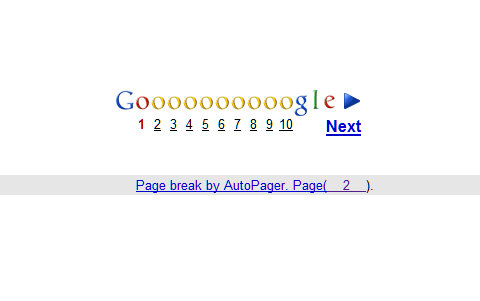
Autopager is a Firefox extension which automatically loads up the next page of a series of web pages and displays it at the bottom of the screen, when you scroll to the end of the page.
For example, if you were to load up a Google Search, and you were unhappy with the page one results, you previously had to click on a link to take you to page 2 of the results. With Autopager, all you do is scroll down – saving you the extra click. Google’s page 2 results would now be appended at the bottom of the page 1 results. Keep scrolling downwards and you’d see page 3, 4 and so on.
By default AutoPager works with a ton of sites, including the New York Times, Digg, and, of course, Google. If you want to add your own custom autopaging to unsupported sites, the site wizard feature makes it easy to so. This extension is a true time saver.
2. How to use keyboard shortcuts to get instant results
Firefox comes with a whole range of keyboard shortcuts so you can really speed things up if you’re a power user. Mozilla lots of different shortcuts on their support page, and here are 5 cool keyboard tricks which would come in handy for all Firefox keyboard newbies:
Back/Forward Navigation: Alt Left Arrow / Alt Right Arrow
Complete .com Address : Ctrl+Enter (When you’re in the URL bar)
Zoom In / Out: Ctrl + / Ctrl –
Bookmark all tabs: Ctrl Shift D
Undo closed tab: Ctrl Shift T
MakeUseOf now gives away a printable Firefox chet sheet nicely summarizing the “need to know” shortcuts. Apart from Firefox, there are cheat sheets for Gmail, Windows, Mac OS X and several other.
3. How to NOT get bogged down by 404s
Your favorite website down? Rather than visiting it later, or hitting the refresh button incessantly, you can try installing ErrorZilla, a firefox extension which will add Try Again, Google Cache, Coralize, Wayback, Ping, Trace, and Whois buttons, when a website isn’t found or a web server is down.
Think of it as a much more useful 404 error page where rather than just telling you the page doesn’t exist – it allows you to search and visit cached versions of the page.
4. How to load up web pages faster
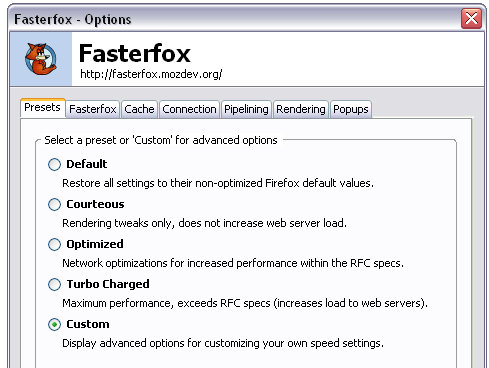
Fasterfox is an extension which dips under the hood to tweak many network and rendering settings such as simultaneous connections, pipelining, cache, DNS cache, and initial paint delay.
Previously, these were tweaks which you had to manually adjust – but now they work right out of the box once you use this handy extension.
5. How to download files faster
Originally skeptical when I first tried this out, I have been completely blown away by how effective this software is. DownloadThemAll is a free extension which acts as a download manager (meaning you can pause and resume downloads), and download files faster by having them simultaneously download. This is quite possibly my favorite extension out of all five.
So there you have it, 5 speedy tips which will helpfully make your browsing on Firefox an even faster, more powerful experience.
What time saving browsing tips for Firefox do you have? I’d love to hear about them in the comments!
 In Twitter’s short 3-year lifespan, the rapid-growing microblogging platform has spawned over 6 million followers who not only blog in 140 characters or less, but have also penned and performed songs in its honor.
  During The Pirate Bay trial, the music industry placed the blame for the decline in their revenues squarely on the shoulders of file-sharers. Their logic is clearly flawed, but it could sway the verdict if no alternative explanation is presented. So, if piracy isn’t to blame, then what is *actually* killing the music industry?

 Some of these sites allow you to craft a resume, while others are networking platforms that contain job listings. By signing up for all ten, you increase your chances of getting a job and decrease the amount of time you’ll spend searching for a new one. Three of the listed sites can be combined with other sites to be more impactful. In addition to joining, creating profiles and searching for jobs, I encourage you to support these sites with either a traditional website or blog, so that you have more to present to employers, in addition to your profile.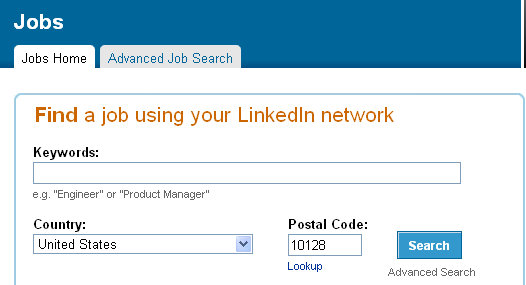
 The Great Filter is the idea that there is some single, almost insurmountably improbable barrier on the path to the stars that explains why we’ve never seen any sign of alien life. It combines aspects of astrology, biology and history to arrive at one inescapable conclusion: university professors dream of book deals.

 If you’ve ever used Firefox you’ll appreciate the fact that it’s incredibly easy to use and intuitive right out of the box. This is perhaps one of the key reasons why it now owns