As turbulent economic times continue to influence our financial strategies, you can turn to financial experts such as CNN’s Clark Howard or Suze Orman, or you can do what I do and take a lesson from celebrities!
For a material girl, she sure did make a silly financial blunder. She’s been coined as a marketing genius, keeping her career and her image alive for more than twenty years. Madonna faulted, however, by entering into her marriage with Guy Ritchie without signing a prenuptial agreement. Putting her $500 million dollar fortune at risk, Madonna’s divorce cost her a reported $75 million.
Lesson Learned: Keep your financial assets your own. If you have something you wouldn’t want to give away, sign a prenup’.
Nick Cage has never played the victim in his film career, but in real life, he seems pretty good at it. Especially, when the tax man cometh. In February of 2008, it was widely reported that the actor used his production company, Saturn Productions, to hide some personal extravagance – $3.3 million, in fact.
Lesson Learned: Personal expenses are personal expenses. Keep your taxes on the straight and narrow. Need help? Invest in a personal accountant. It’s worth the time and your fee for services can be deducted off your next year’s tax return.
There’s a competitive desire to win, and then there’s a desire to lose all your money to a friendly game of golf. In 1993, Jordan lost $57,000 to his gambling frenzies, and claims exist from Jordan’s colleagues and friends that he lost more than $1.25 million in one golf game alone.
Lesson Learned: Gambling should be a delightful misadventure of sorts, not an “I need money and have to win” sort of obsession. Keep it fun.
Rest his soul – his death was untimely and unexpected, which is exactly why he should have had an updated will! The Oscar-nominated star of Brokeback Mountain wrote his will leaving everything to his family in 2003. With the birth of his daughter in 2005 he neglected to make an update. When you’re worth an estimated $20 million, it’s advisable to keep your will updated and signed.
Lesson Learned: As lifestyle changes occur and relationships evolve, it’s important to update your will regularly. Set a time once a year to review and update if necessary.
“Heeeeere’s Trouble!” Housing foreclosure is becoming all too common of a term these days and celebrities are no exception to it. There’s an irony that exists in Ed McMahon – the man who delivered oversized checks to lucky winners of the sweepstakes – facing foreclosure. After falling $664,000 in the hole on mortgage payments, McMahon found himself in a mountain of debt.
Lessons Learned: In the words of Ed McMahon himself, “Well, if you spend more money than you make, you know what happens…” Don’t buy a house you can’t afford.
We know he’s Too Legit to Quit, but he should’ve quit spending a while ago. MC Hammer is infamous for his overspending which led him to file for bankruptcy in 1996, with $13 million in debt. With a net worth of $30 million dollars, Hammer spent a majority of his funds paying over 300 people to work for him, to the tune of $500,000 in monthly wages.
Lesson Learned: No matter how popular, how successful, or how business savvy you may find yourself, a lavish lifestyle can only last so long.
You’re young, you’re rich, and you’re spending it all. Britney Spears entered the entertainment world at the ripe age of eight and has been a force to be reckoned with ever since. When you earn $737,000 per month and don’t allocate a penny toward savings or investing, you are not planning for the future particularly well.
Lesson Learned: Plan now for the long-term. Living in the moment is a dangerous trend.
Examples of financial missteps are everywhere, and the celebrities have done a good job of showing us what not to do. From foreclosure and bankruptcy to investments and tax evasion, the examples are endless. Follow these lessons learned to keep your finances from putting you at risk.
To hear the media tell it, the entire business world is in flux. But not every company is succumbing to economic despair. While many are laying off employees, closing offices, and slashing budgets, others are preserving employee morale and staying afloat without such painful sacrifices. Following, are twelve ways that these praiseworthy businesses are avoiding layoffs and staying the course.
While reducing the hours each employee works per week is not the most popular tactic, it is infinitely preferable to losing one’s job. Even scaling back from forty hours a week to 35 can go a long way toward keeping the workforce intact without bankrupting the company. And for those employees who aren’t living paycheck to paycheck, the extra time off can even be a welcome change. The New York Times writes about a few maverick managers who have experimented – successfully – with a 24 hour work week.
One way to soften the blow of reduced hourly workloads is to let employees choose their own schedule. By requiring employees to be present for “peak” hours but letting them choose their remaining schedule, businesses can counteract the unhappy necessity of cutting hours by giving employees a small sense of control over how it gets implemented.
Trivial as it may seem, runaway office expenses can add up to serious waste. Smart businesses are striving to audit these expenses and cut them to the bone before conducting any layoffs. As EffortlessHR.comcorrectly remarks:
“Employees need the tools to get the job done, but do you need twelve different colors of Post-Its and six different kinds of pens?”
The bigger the company, the bigger impact these kinds of unexamined office expenses can have on the employment budget.
When a company’s economic forecast worsens to the point of pay cuts becoming necessary, these often begin at the executive level. Motorola has set a terrific example in 2009 by announcing that it would be cutting the salaries of its co-CEO’s by 25%. Starting pay cuts at the executive level achieves two goals:
1) Greater cost savings, as executive salaries are higher than rank-and-file; and,
2) A sense of shared sacrifice that gives employees less reason to protest their own pay cuts (if they become necessary).
The most unpopular cost-cutting measure short of an outright layoff is reducing an employee’s pay. Nevertheless, when times are tough, there is often no other way to keep everyone on board than to temporarily institute a percentage reduction in pay. Common reductions are 5% but these can be as high as 10% or more.
Not every employee at every company is living paycheck to paycheck. For these fortunate folks, the unpaid vacations being instituted by a growing number of businesses are a most welcome perk. Others may not be as supportive of this tactic – described by MSNBC as “the vacation no one wants” – but by scheduling unpaid vacations around the same time, businesses can limit employee suffering and save money without layoffs. Another way companies are saving some money is to schedule occasional mandatory, unpaid holidays. While this is heavily criticized under normal circumstances, it is more palatable during recessions, when the alternative could be total loss of income.
One of the most painless ways to cut costs without cutting jobs is to substitute telecommuting for in-person work. This is especially attractive for support and IT positions, whose duties can be carried out remotely without the overhead of keeping someone fed, heated, or cooled in an office (or insured, et al). And unlike many of the job-saving measures we’ve discussed, few employees complain about working from their homes.
For many of the same reasons telecommuting makes sense, companies that eliminate unnecessary traveling and meetings may find it easier to retain more of their employees. Instead of shelling out big bucks for airfare and hotel stays, cost-conscious companies like Bayer Corp. are conducting meetings virtually using technology that allows people to “chat in real time and watch each other’s life-size images on screens that created the effect of being at the same conference table down to the bottled water, coffee cups and laptops.”
A company struggling to retain its existing workforce has no business hiring new employees. As a result, many businesses have implemented temporary hiring freezes that limit the workforce to those employees already on the payroll. State and municipal governments have frequently utilized this retention strategy as well.
Going hand-in-hand with hiring freezes are salary and raise freezes. As the name implies, this is simply a company-wide policy of holding everyone’s salary to its current level and agreeing to forgo pay raises while the company gets back on solid footing. As with so many other measures discussed, this policy is never celebrated, but still preferred to layoffs.
Eliminating or scaling back corporate parties, luncheons, and events
In the same vein as cutting wasteful office supply spending, eliminating or scaling back corporate events can provide a much-needed boost to a company’s budget. In recessionary times, luncheons and parties are luxuries when it comes down to choosing between them or keeping people employed, and this is one obvious place to save a few bucks when the opportunity arises.
My father had rules. They governed everything from his clothing to his business dealings to a day at the ballpark, and they were based on the notion that there are certain things a Good Man does and certain things he doesn’t do.
Recently, I set about compiling a list of his rules with the goal of presenting my own future offspring with an instruction manual for proper living. But for every one of my dad’s sartorial commandments or motivational sports idioms, there was something else I wish he had told me. Some maxim drilled into me that could have helped me get a job, get laid, or just spared me some embarrassment along the way to becoming a man. What follows are my top 10 things I wish Dad had told me.
10. How to fish Every boy should learn how to bait a hook, cast into a shady spot, and catch a fish. My dad took me deep-sea fishing once. The captain hooked a fish and handed me the rod to reel it in. That’s not fishing, that’s shopping. The point of fishing isn’t the fish itself (unless of course, it’s how you make your living), it’s the qualities required to do it well: patience, perseverance and the ability to be quiet.
9. How to work on a car My father was a product of the ’50s, so it always came as a surprise that he wasn’t more of a car man. I figured everyone from that era could rebuild the engine on a ’57 Chevy, but his advice to me was to know how to change a tire and a fan belt, and leave the rest to a mechanic. Not terrible advice for owners of cars where everything short of the radials is computerized, but I still wish I could wrench my own ride back to life. What’s more American than that?
8. Get a haircut What happened to dads at the turn of the last century? There’s never been a sorrier display of men’s hairstyles than the parade of short-longs and sensitive ponytails found on campuses throughout the ’90s. And I was not immune. I sincerely wish that every time I slinked home for spring break, my father had marched me into the nearest barbershop with a photo of Johnny Unitas pinned to my shirt. I might not have scored the English lit chick, but at least my college pictures wouldn’t look like early-years Michael Bolton.
7. It is not enough to be well rounded Is it just WASPs who insist on this notion that being above average in multiple disciplines is superior to being the best at just one thing? Don’t get me wrong, a real man should be able to dress a deer, set a bone and plan an invasion while reciting a Kipling poem. But if you want to make a living, it is wise to excel in at least one discipline, preferably the thing you love.
6. Go left The old man was an all-state basketball star in an all-white era. He taught me to shoot, pass and hustle. But in the drive-and-dish world of pickup hoops, what I needed was a left hand. When your opponent discovers you can’t go left, you might as well hang it up.
5. How to love running I hate it. To be the kind of guy who goes out for a run to sweat out last night’s Jager shots, you gotta start early. And while dad’s “executive workout” (steam room, shower, cocktail) might help you tackle a case of the Mondays, it’s not the best long-term plan for taking care of the ticker.
4. Do more in college When else in your life will you have that much time and freedom to actually put your education to the test and create something? Every college-bound boy not working for his tuition at the local pizzeria should finish his schooling with a body of work: short stories, mechanical drawings, a rock opera, something. Not just a degree and a taste for cheap beer and bad jazz.
3. You cannot win without a good quarterback As a long-suffering Redskins fan, this has been a painful lesson to learn. My father died thinking his beloved home team was a linebacker away from a championship. He was wrong. Defense does not win championships. Mannings do.
2. Use sunscreen The old man had a habit of burning himself to a deep lobster red at the start of every summer. He called it his base. And paired with a blue blazer and some go-to-hell pants, he somehow pulled it off. Following his lead, I spent most of my summers looking like a flame-broiled English tourist. A good tan, among other things, requires patience and protection. Which brings us to …
1. Never underestimate your fertility My father actually said this all the time, but can you ever stress this point enough?
Even before the rise of YouTube as a central hub for video, we’ve been obsessed as a culture with sharing funny and amazing videos with our friends. While most videos get a couple views and fade into the background, a select few not only gain tens of millions of views, but make a lasting impact on culture as well. These videos quickly become Internet memes that nobody can ever seem to stop talking about.
From the Dancing Baby of the 1990s to the phenomenon that is Susan Boyle, the web has seen its share of viral video sensations. However, these 20 are the cream of the crop. They have been seen by millions and discussed by millions more. Many of them are part of not only Internet culture, but mainstream culture too. Here are the top 20 YouTube reviews and video memes in chronological order.
Got another video to add to this list? Share it with everyone in the comments.
1. Dancing Baby (1996)
One of the absolute oldest video memes of all time, Dancing Baby (Baby Cha-Cha) is a 1996 3D animation of, well, a baby dancing. The baby even appeared in the popular law drama Ally McBeal.
All Your Base was a flash animation that parodied the horrible english translation of the Japanese game Zero Wing. With great phrases like “All your base are belong to us,” “You have no chance to survive make your time,” and “Take off every ZIG,” it’s no wonder it got so popular.
3. Dancing Banana/Peanut Butter Jelly Time (2001)
The popular emoticon became even more iconic when it was synced to lyrics from the Buckwheat Boyz. Featured everywhere from Family Guy to Tampa Bay Rays baseball games, you have to wonder why we care so much about dancing fruit. The iconic video was made by Ryan Etrata of AlbinoBlackSheep.
4. Star Wars Kid (2002/2003)
It’s just a strange and awkward kid flailing around with a metal pole. Yet this teenager’s video was spread around the web, mostly via peer-to-peer technology. The star of the video filed a lawsuit against the schoolmates that distributed the video, stating that they had essentially ruined his life.
5. Badger Badger Badger (2003)
In 2003, Jonti Picking created Badger Badger Badger, a flash video with a silly but catchy tune and weird dancing badgers. The video loops indefinitely and almost seamlessly, just like some of his other well-known animations (i.e. Magical Trevor).
6. Numa Numa (2004)
Lip syncing + weird dancing + Moldovan pop music = instant viral hit. At least, that was the case for Gary Brolsma, the star of the famous Numa Numa video, where he entertains audiences with his moves to the song Dragostea din tei.
For a long time, Brolsma tried to hide from the attention, but eventually returned to the spotlight with a second, more professional video, New Numa, which is embedded below:
7. Charlie the Unicorn (2005/2006)
Charlie the Unicorn and its twosequels have garnered tens of millions of pageviews for the strange and psychedelic antics of two unicorns taking Charlie to Candy Mountain and…well, you’ll have to watch the video to know what happens.
The video became popular on YouTube in 2006, although the flash version was first posted on Newgrounds in 2005.
8. Leeroy Jenkins (2006)
This video, a clip from World of Warcraft, depicts a team trying to plan for battle with a group of enemies when suddenly, out of nowhere, you hear the rallying cry “Leeeeeeeeeeroy Jeeeeeeeeenkins!” About a minute later, everybody is dead, and nobody is happy with Leeroy.
The video became so popular that Leeroy was even part of a clue on Jeopardy!, which nobody got correct.
9. Evolution of Dance (2006)
The most popular YouTube video of all time, this video by Judson Laipply shows him dancing to dozens of songs across multiple eras in skillful fashion. Seriously, this is some unique talent. As the video aptly states, it’s “the funniest 6 minutes you will ever see.”
10. lonelygirl15 (2006)
A teenage girl, Bree aka lonelygirl15, captured the attention of lusting teenage boys and audiences everywhere with her short video blog posts. Eventually the show was unearthed as fiction by The New York Times. Bree was killed off in 2007 and the show continued until 2008.
The show’s star, Jessica Lee Rose, is now involved with video projects across the web.
11. Laughing Baby (2006)
I don’t even think I need to explain this one, but I will. A Swedish man posted a video of his baby laughing to funny sounds like “bing!” It’s adorable, so why wouldn’t the public love it?
12. Charlie bit my finger (2007)
The combination of the British accent and the baby that just doesn’t care propelled this video to nearly 100 million views. I still don’t get why it’s that popular, but this is just what happens sometimes with online video.
13. Chocolate Rain (2007)
Tay Zonday’s surprisingly deep voice, his breathing away from the mic, and the funky lyrics helped propel Chocolate Rain to the level of web sensation. It has received over 37 million views and led to a musical career for Tay.
14. Leave Britney Alone! (2007)
Chris Crocker’s reaction to negative Britney Spears coverage received 2 million views in 24 hours. I’m going to stop explaining it there.
15. The Mysterious Ticking Noise (2007)
Master flash animator and musician Neil Cicierega is responsible for some of the greatest viral videos in social media history. In the early 2000s, he created the surreal animations Hyakugojyuuichi and Irrational Exuberance, an animation based off the even stranger Yatta! Japanese pop group.
Puppet Pals was actually created in 2003 for the popular Newgrounds flash portal, but the iconic Mysterious Ticking Noise was not released until 2007. It features an addictive 2 minute Potter-themed harmony that has propelled it to over 60 million views.
Cicierega is also the creator of the extremely popular Ultimate Showdown of Ultimate Destiny video, a flash video and song featuring a plethora of fictional characters locked in battle royale:
16. Obama Girl/Crush on Obama (2007)
During the heat of the primary election campaign, this video from Barely Political was released, featuring Amber Lee Ettinger and vocals by Leah Kaufman. The result was a video with over 14 million views and a string of further successes; Amber even appeared in a video with Ralph Nader.
17. Don’t Tase Me, Bro! (2007)
When Andrew Meyer, a University of Florida student, protested at a town hall forum featuring John Kerry, University police used a taser in attempts to bring him under arrest. His response, “Don’t Tase Me, Bro!”, was spread across social and traditional media. It was soon remixed and repeated nearly everywhere.
18. Rickroll (2008)
Based off the duckrolled meme once popular on the 4chan web forum, the Rickroll is simply tricking someone into watching a video of Never Gonna Give You Up, a hit 1987 song from Rick Astley. Some would link secretly to the video, while others would place the video about 30 seconds into a seemingly normal video.
The above video is an example of someone being RickRoll’D, but if you just want the original music video with 20 million+ views, well, here it is:
19. Jizz In My Pants (2008)
Saturday Night Live has been the source of multiple viral videos. While several of them could make this list, the one that seems to have the most views is Jizz in My Pants, featuring Andy Samberg and Jorma Taccone. Interestingly enough, it’s one of the few SNL videos that are available legally on YouTube, due to it being published by The Lonely Island, the comedy group headed by Sandberg, Taccone, and Akiva Schaffer.
The most powerful viral phenomenon of 2009, Susan Boyle’s unassuming appearance and killer voice wowed audiences in the auditions of Britain’s Got Talent!. Its spread is even more impressive when you consider that embedding is unavailable for the original video via YouTube.
BONUS: Keyboard Cat
Because the only way to play off a list like this one is with the Keyboard Cat, the growing Internet meme of 2009 in which painful stunts and regrettable mistakes are followed by Fatso the cat playing the keyboard.
On the heels of mounting cynicism generated by Wall Street bailouts and the perception that corporate leaders are gaming the system to make a profit, at least one American company is proving that businesses can survive and even thrive while sticking to traditional values.
In-N-Out Burger, the iconic West Coast hamburger chain frequented by celebrities, is not slashing jobs or making major cutbacks during this recession. In fact, the regional chain, which has 232 locations in California, Arizona, Nevada and Utah, took in an estimated $420 million in revenues in 2008, and claims per-store sales of about $1.94 million. So how is this mom-and-pop burger joint pumping out per-store sales numbers that are better than Burger King and a host of other competitors?
BusinessWeek writer Stacy Perman has penned a book (In-N-Out Burger: A Behind the Counter Look at the Fast-Food Chain That Breaks All the Rules) that chronicles how In-N-Out Burger founders Esther and Harry Snyder built the foundation for a business that has performed well since it debuted in 1948. Here are the six principles she says have made In-N-Out Berger an out-and-out success:
Keep a Relentless Focus on Quality — Perman says that the Snyders were “micro-managers” from the beginning, insisting on only using the highest quality beef, produce and other ingredients at their stores.
“Harry would go to the meat purveyors, and stand over the butcher’s shoulder to make sure that he got the meat that he paid for,” she says, adding, “In the 60s, at a time when the fast food industry had turned to using frozen beef patties and French fries, [Harry] began hiring butchers so that he could maintain the quality of his beef. His own butchers would prepare the beef patties, and that continues to this day, but on a much larger scale.”
Listen to Your Customers — One of the company’s mottos is “Our customer is everything.” Applying that belief led to the company policy of preparing burgers just the way customers asked for them. Some of the customer favorites became popular and were eventually adopted as the restaurant chain’s “secret menu.” By listening to their customers, In-N-Out created menu choices other stores couldn’t duplicate.
“So now you have three or four generations of people who grew up on In-and-Out Burger who have this very special relation ship to the chain,” says Perman. “It’s very authentic — you can’t buy that. It’s very organic and they’ve been very careful never to commercialize that.”
Treat Employees Well — The Snyders always held their employees in high esteem, paying them higher wages than competitors and calling them associates to make them feel more connected to the franchise.
“They believed in sharing their success with their employees,” says Perman, noting that In-N-Out associates make $10 an hour working part-time and starting store managers make $100,000, plus bonuses tied to store performance. The company benefits package is also generous. Such treatment engenders loyalty from workers.
“They have the lowest turnover rate in the fast food industry, which is notorious for turnover,” says Perman. “They say that the average manager’s tenure is 14 years, but they have managers who have been there 30 or 40 years.”
Keep Things Simple and Consistent — Another of Harry Snyder’s mottos was, “Keep it real simple, do one thing and do it the best you can.” That theme runs throughout the business.
“People get cynical about changes at different companies, but they always know that In-N-Out doesn’t change,” says Perman. “In and out stands for something and they’ve stuck to it and their customers really see that.”
Expand Slowly and Only Under the Right Conditions – In-N-Out has strict guidelines that limit the growth of stores, but ensure each store’s success.
“They don’t open a store outside of a 500-mile radius of the commissaries where they get their fresh beef patties, their buns and other products because they want to maintain freshness,” says Perman. “They make deliveries daily or near daily.”
She also points out that, “They never open a new store unless they have management strength in place. They have very rigorous training procedures.”
Define Your Own Level of Success – In corporate America, where success is sometimes defined as rapid growth at any cost, In-N-Out has, as the title suggests, made its own rules.
“If the customers and the employees were happy and they were making the best product they could, they were successful,” she says, “and they have maintained that philosophy.”
Presentations – whether they are made with Powerpoint or other applications, are a great way to support a speech, visualize complicated concepts or focus attention on a subject.
However, a bad presentation can achieve the opposite. Badly designed slides with too much text or bad graphics can distract or worse, irritate the audience.
Here’s is a short guide that will help you create presentations with a professional look and concise content, avoiding the most common mistakes.
Design
The first thing that gives a professional touch to any presentation is the design.
Presentation Helper has a large selection of free Powerpoint templates for a variety of topics. However, whether you download a free template or create your own, keep the following in mind:
1. Compose Slides
Don’t copy & paste slides from different sources.
Keep the design very basic and simple. It shall not distract.
Pick an easy to read font face.
Carefully select font sizes for headers and text.
Leave room for highlights, such as images or take home messages.
Decorate scarcely but well.
Restrict the room your design takes up and don’t ever let the design restrict your message.
2. Use Consistency
Consistently use the same font face and sizes on all slides.
Match colors.
You may use your company logo, highlight headers, create a special frame for figures/images or the whole slide but don’t overload your slides with these elements.
Colors
A poor choice of colors can shatter a presentation.
If you’re unsure which colors match best, use ColorBlender to get a set of up to six matching colors, simply by moving a set of RGB sliders back and forth.
3. Use Contrast
Black text on a white background will always be the best but also the most boring choice.
If you want to play with colors, keep it easy on the eyes and always keep good contrast in mind so that your readers do not have to strain to guess what you’ve typed on your slide.
4. Apply Brilliance
Carefully use color to highlight your message!
Don’t weaken the color effect by using too many colors at an instance.
Make a brilliant choice: match colors for design and good contrast to highlight your message.
Text
5. KISS
Keep It Straight and Simple.
Keywords only.
No sentences!
Never read your slides, talk freely.
Remember that your slides are only there to support, not to replace your talk! You’ll want to tell a story, describe your data or explain circumstances, and only provide keywords through your slides. If you read your slides and if you do it slow and badly, the audience will get bored and stop listening.
6. Take Home Message
Always express a Take Home Message.
It’s your message, a summary of your data or story.
Make it a highlight that stands out.
Images
Images are key elements of every presentation. Your audience has ears and eyes – they’ll want to see what you’re talking about, and a good visual cue will help them to understand your message much better.
7. Add Images
Have more images in your slides than text.
But do not use images to decorate!
Images can reinforce or complement your message.
Use images to visualize and explain.
A picture can say more than a thousand words.
If you don’t have your own images, you can browse Flickr or Google’s image search for material. If this is a very public and official presentation however, you need to keep copyrights in mind.
Animations & Media
In animations, there is a fine line between a comic or professional impression. However, animations can be rather powerful tools to visualize and explain complicated matters. A good animation can not only improve understanding, but can also make the message stick with your audience.
8. Don’t Be Silly
Use animations and media sparingly.
Use animations to draw attention, for example to your Take Home Message.
Use animations to clarify a model or emphasize an effect.
Target & Content
Your target i.e. your audience, defines the content of your presentation. For example, you won’t be able to teach school kids about the complicated matters of economy. However, you may be able to explain what economy is in the first place and why it is important.
9. Keep Your Audience In Mind
What do they know?
What do you need to tell them?
What do they expect?
What will be interesting to them?
What can you teach them?
What will keep them focused?
Answer these questions and boil your slides down to the very essentials.
In your talk, describe the essentials colorfully and choose your weapons i.e. text, images and animations wisely (see above).
If you lose the attention of your audience, everything will be lost – it won’t matter how ingenious your design ??? or how brilliantly you picked colors and keywords.
10. Practice
A well-prepared and enthusiastic talk will help you convince your audience and maintain their attention. There are some key points that define a good talk.
Now a days its not hard to find a free file hosting at all but to find a high speed website that can help you to upload, send or receive your large files in an easier way is not that easy. We also know that people have a love and hate relationship with free file hosting sites. Some file hosting sites are really handy and make sharing data even simpler than sending a file via email. But we don’t want you to worried at all. We have compiled a list of 6 (More) Free File Hosting Websites That Would Be Useful.
You are welcome to share if you know more sites with free file hosting which our readers/viewers may like.
filehosting.org provides an easy possibility for you to send large files to your friends. Just upload the file you want to share with your friends and they send you a download link to your file. You can give this download link to your friends by mail or messanger. It is also allowed to link to the download page from websites and communities. This is easy, fast and reliable filehosting.
This service can be used for uploading files up to 100MB each. After uploading you will be given a link, that others can use to download your file. Their filesize limit is 100MB and each file can be downloaded unlimited times.
wiki upload is a free file hosting & sharing service. You can upload documents, videos, images, mp3s, ebooks, shareware etc. It supports upto 5GB file size.
FileSend is a free file hosting and delivery service generally used to send files that are too large for email.They offer a generous 120 MB of space for you to upload your files and send to your friends.
With FileSave you can share music, movies, pictures, documents and any other file with ease. Just upload them only once and share with all your friends. You can link to files from your MySpace, Facebook or Bebo page or post links on your blog page or forums or simply use as personal storage. It’s upto you.
Goodbye, Nissan 240SX. Hello, $1200 cash. [This is my happy dance]
I hate selling cars. Actually I hate cars in general. I’m horrible at them, I don’t understand them, and I don’t do a good job of taking care of them. Luckily, I’ve been blessed the last few years by the gods of Japan, a.k.a. Nissan. I did nothing right for 6 years straight and this little thing held strong.
I think it’s important as bloggers to admit when we suffer “epic” fail. I occasionally fall into the habit of preaching from a soap box (a.k.a. yesterday), but every now and then I take the time to step up and admit I suck. I sucked today. I just got lucky. I like being lucky.
You can’t run a car into the ground for 6 years, ignoring check engine lights, changing oil, slowly leaking tires, broken headlights, and impending rust and expect to make a big profit when you sell. After all the car has 240,000 miles. How much longer can this thing go?
Did I mention we waited until the last minute, threw up a rough ad (good picture thanks to wife, though), and just kind of closed our eyes? We thought we’d be lucky to get $1000. Actually we said told ourselves we’d take anything over $1000 and run. We put it up for $1500 “or best offer” (mistake). I was flooded with calls asking all kinds of questions, especially “what’s the lowest you’ll take”. I literally had a tough time keeping up with everything.
The first 4 people who looked at it passed without even making an offer. They were out looking for a steal and weren’t willing to deal with a leaking brake line, leaking oil, power steering pump, weak transmission, dents in the body, rips in the leather seats, and 240,000 miles. Selfish pricks. I was starting to get really worried.
Then the clouds parted and out dropped a young kid who just enrolled in technical school to work on cars. Guess what his dream fixer-upper was. Hallelujah! About an hour of looking under the hood and under the car, he totaled up what it would take to create the next inspiration behind Fast & The Furious and offered $1200. I countered at $1300, he declined. I thought for exactly 1.5 seconds before running away as fast as I could with $1200!
I quickly sat down and jotted everything I did wrong in this process. It took up almost a full page, so I just kept the party going and brainstormed everything I could have done wrong. I’ll leave it up to your imagination which half of the following I actually did and which I made up. It’s more fun this way…
67 Ways NOT To Sell A Car
Don’t worry when a little rust starts to form.
Don’t wash the outside of the car.First impressions don’t matter.
Don’t pick up trash from the back seat of the car. Who rides in the back seat?
Clean the car, but don’t detail it.
Don’t bother checking the fluid levels. Who cares about oil, brake fluid, and power steering?
Don’t fix minor interior problems, such a knobs, switches, and vents.
Don’t bother with adding an air-freshner.
Let your pets have free reign over the car.
Don’t worry about touching up paint.
Don’t bother cleaning out the trunk. Instead assume they won’t pop it open.
Add the 16th bumper sticker to your collection.
Continually smoke in your car up until the day you sell.
Don’t replace old, worn out floor mats.
Let your kids eat food in the car. Would you like fries with that?
Assume waxing your vehicle is over-rated.
Sell your car to a dealer without checking the private party market.
Don’t bother with keeping maintenance records. Everyone will take your word.
Don’t mention that your car has been totaled… twice.
Don’t bother paying off the title even if you’re able.
Only advertise in one medium.
Don’t bother with free online listings. They take too long and people hate the internet.
Clean the car, but ignore the tires/rims. No one ever looks at the size or condition of tires.
Don’t bother to check the air in all the tires.
Don’t replace broken headlights. You can just sell it during the day.
Don’t replace broken windshield wipers. You can sell it on a sunny day.
Let people test drive your car alone.
Tell everyone your reason for selling is “Time to move on from this one.”
Print fliers in black and white.
Forget to mention you’ve been the only owner.
Grant a discount, because it’s “all the cash they have on them”.
Put “Or Best Offer” on every ad.
Forget to mention any other calls or appointments you may have.
Sell your 4-wheel drive in the spring, right after all the snow melts away.
Sell your rear-wheel drive convertible in November.
Donate your car to charity without first testing the local market, solely for the tax write-off.
Start your price slightly above-market, just in case. That works well for homes, too.
Advertise your price as $13,000 instead of $12,900, even if you’re willing to take $12,000.
Don’t bother getting that clicking noise looked at. Buyers probably won’t notice it.
Don’t worry about a physical “For Sale” sign.
Forget to mention that you are selling your car to family and friends.
Have an annoying ring-back tone on the number you place in the ads. Everyone likes Soulja Boy.
Don’t screen buyers by phone. Just put your address directly in the ad.
Ignore how you look when you meet potential buyers to show the car.
Sell your car on payments.
Answer the question, “What’s the lowest you’ll take?”
Just sign over the title, without checking your state laws. Isn’t that what Uncle Earl always does?
Forget to look over the glove compartment and trunk one last time.
Don’t cancel your insurance after selling the car.
Don’t study the local market. Kelley Blue Book conquers all.
Post an ad without any pictures.
Ignore all calls from numbers you don’t know hoping they will leave a voicemail.
Be the first to throw out a price once negotiations start.
Accept a personal check as payment.
Underestimate the leverage of an official car history report.
Rush the buyer when he is looking over the car.
Lose a deal over $50, with very little other prospects.
Don’t list all of the obvious issues with the car in the ads.
Over-promise, under-deliver.
Don’t thoroughly include all the details and features. Who cares about power-windows?
Fail to explicitly state that “car is sold as is” and definitely don’t get that in writing anywhere.
List your car on Monday night. The weekend is usually too convenient for people.
Wait until the last minute to sell your car.
Don’t worry about getting seat covers for damaged interior.
Lie about known problems. These things never come around.
Lack knowledge of your car’s gas mileage.
Grow attached to a particular buyer and forget you always have the option of walking away.
Once the sale is complete, sport the Happy Dance in full view of the buyer.
Do you suck at cars half as much as I do? What are your favorite ways NOT to sell a car? List them below and I’ll add any original ones up into the post above!









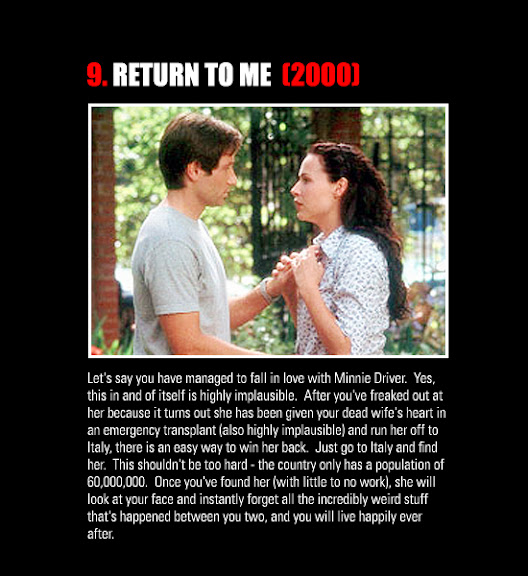


 My father had rules. They governed everything from his clothing to his business dealings to a day at the ballpark, and they were based on the notion that there are certain things a Good Man does and certain things he doesn’t do.

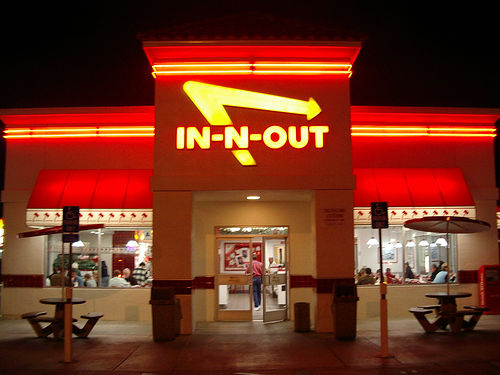
 “They don’t open a store outside of a 500-mile radius of the commissaries where they get their fresh beef patties, their buns and other products because they want to maintain freshness,” says Perman. “They make deliveries daily or near daily.”
 Presentations – whether they are made with Powerpoint or other applications, are a great way to support a speech, visualize complicated concepts or focus attention on a subject.
 A poor choice of colors can shatter a presentation.
 Images are key elements of every presentation. Your audience has ears and eyes – they’ll want to see what you’re talking about, and a good visual cue will help them to understand your message much better.
 Your target i.e. your audience, defines the content of your presentation. For example, you won’t be able to teach school kids about the complicated matters of economy. However, you may be able to explain what economy is in the first place and why it is important.





 Goodbye, Nissan 240SX. Hello, $1200 cash. [This is my happy dance]