Written by 2spare.com
A hoax is an attempt to trick an audience into believing that something false is real. We came up with a selection of the Top 10 Greatest Hoaxes of all time:
The Surgeon’s Photo of the Loch Ness Monster
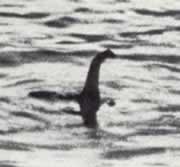 Ancient Scottish legends spoke of a giant sea monster that lived in the waters of Loch Ness. In 1934, Colonel Robert Wilson, a highly respectable British surgeon, said that he noticed something moving in the water and took a picture of it. The resulting image showed the slender neck of a serpent rising out of the Loch. The photo came to be known simply as “The Surgeon’s Photo” and for decades it was considered to be the best evidence of the monster.
It wasn’t until 1994, when Christian Spurling, before his death at the age of 90, confessed his involvement in a plot, that included Wetherell and Colonel Wilson, to create the famous photo. Apparently Wetherell’s motive was revenge, since he was humiliated years earlier when the supposed monster’s footprints he found were nothing but dried hippo’s footsteps.
Hitler’s $6 million-dollar diary
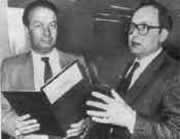 On April 22, 1983 the German magazine Der Stern announced that it had made the greatest Nazi memorabilia find of all time: a diary kept by Adolf Hitler himself. And this was not just one thin journal.
The magazine had paid 10 million German marks ($6 million at that time) for the sixty small books as well as two “special issues” about Rudolf Hess’ flight to the United Kingdom, covering the period from 1932 to 1945.
However, within two weeks, the Hitler Diaries were revealed as being “grotesquely plump fakes” made on modern paper using modern ink and full of historical inaccuracies, the most obvious of which might have been the fact that the monogram on the title page read ‘FH’ instead of ‘AH’ (for Adolf Hitler). The diaries were actually written by Konrad Kujau, a notorious Stuttgart forger of Hitler’s works, who was sentenced to 42 months in prison.
The Jewish master plan to dominate the World
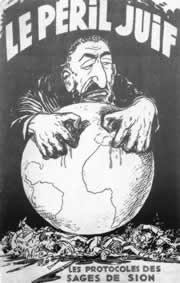 The Protocols of the Elders of Zion is a text purporting to describe a plan to achieve global domination by Jews. Following its first publication in 1903 in the Russian Empire, numerous independent investigations have demonstrated that the document is a hoax; notably, a series of articles printed in The Times of London in 1921 revealed that much of the material was directly plagiarized from earlier works of political satire unrelated to Jews.
In Russia, it helped to the idea that the Bolshevik movement was a Jewish conspiracy for world domination. On WWII, The Protocols became a part of the Nazi propaganda effort to justify persecution of the Jews. It was made required reading for German students.
Today, many Arab governments funded new printings of the Protocols, and taught them in their schools as historical fact. In Syria, The Protocols is currently a best-seller, and government-controlled television channels occasionally broadcast mini-series concerning the Protocols.
Idaho, the US state with a made-up name
 Idaho it’s perhaps the only state to be named as the result of a hoax. When a name was being selected for new territory, eccentric lobbyist George M. Willing suggested “Idaho,” which he claimed was a Native American term meaning “gem of the mountains”.
It was later revealed Willing had made up the name himself, and the original Idaho territory was re-named Colorado because of it. Eventually the controversy was forgotten, and modern-day Idaho was given the made-up name when the Idaho Territory was formally created in 1863.
The Alien Autopsy footage from Roswell UFO crash
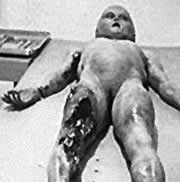 On 5 May 1995, Ray Santilli, a London-based film producer, presented for the first time his alleged “Alien Autopsy” footage to media representatives and UFO researchers. The body was suggested to belong to one of the aliens picked from the supposed Roswell UFO crash site in 1947. The footage became world-known inmediatly.
he debate on whether the autopsied body is a very realistic mannequin, a girl with a genetic disorder (such as progeria or Turner’s syndrome), or a real alien is still going on. Pathologists have also questioned the techniques being used in the supposed autopsy. Ironically, the best evidence against the film comes from one of the background details. On one wall of the autopsy room, there is a type of warning sign that was not produced until 1967, two decades after the alleged event.
Fox TV produced a programme debunking the video as a hoax a couple of years later and, in 2006, a British comedy movie called “Alien Autopsy” was released, on the subject of Santilli faking the autopsy footage, who was apparently involved in the movie’s production, which if so would suggest that the autopsy footage was indeed faked.
The fossil that embarrassed British Paleontology
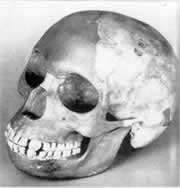 The so-called Piltdown Man was fragments of a skull and jaw bone found in 1912 from a gravel pit at Piltdown in the English county of Sussex. The fragments were claimed by experts of the day to be the fossilised remains of a hitherto unknown form of early man.
From the British Museum’s reconstruction of the skull, it was proposed that Piltdown man represented an evolutionary missing link between ape and man, since the combination of a human-like cranium with an ape-like jaw tended to support the notion then prevailing in England that human evolution was brain-led.
In 1953, 41 years later, the Piltdown man was finally exposed as a composite forgery: it consisted of a human skull of medieval age, the 500-year-old lower jaw of a Sarawak orangutan and chimpanzee fossil teeth. The identity of the Piltdown forger remains unknown.
The Catholic Pope that turned out to be a woman
 John Anglicus, a ninth century Englishman, travelled to Rome, became a Cardinal, and when Pope Leo IV died in 853 A.D., he was unanimously elected pope. As Pope John VIII, he ruled for two years, until 855 A.D. However, while riding one day from St. Peter’s to the Lateran, he had to stop by the side of the road and, to the astonishment of everyone, gave birth to a child. It turned out that Pope John VIII was really a woman. In other words, Pope John was really Pope Joan.
According to legend, upon discovering the Pope’s true gender, the people of Rome tied her feet together and dragged her behind a horse while stoning her, until she died. Another legend has it that she was sent to a faraway convent to repent her sins and that the child she bore grew up to become the Bishop of Ostia. It is not known whether the story of Pope Joan is true.
The “Chess Machine” that fooled Napoleon
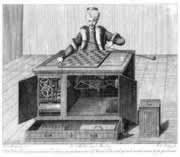 The Turk was a famous hoax which purported to be a chess-playing automaton first constructed and unveiled in 1769 by Wolfgang von Kempelen. He first exhibited the Turk at the court of Austrian Empress Maria Theresa in 1770, and later took it on a tour of Europe for several years during the 1780s. The Turk defeated prominent world-figures, such as Napoleon Bonaparte and Benjamin Franklin.
The cabinet had doors that opened to reveal internal clockwork mechanisms, and when activated the mechanism appeared to be able to play a strong game of chess against a human opponent. However, the cabinet was a cleverly constructed illusion that allowed a chess master to hide inside and operate the mannequin. Consequently, it won most games.
The buying of the Catholic Church by Microsoft
 In 1994 a press release began circulating around the internet claiming that Microsoft had bought the Catholic church. The release quoted Bill Gates saying that he considered religion to be a growth market and that, “The combined resources of Microsoft and the Catholic Church will allow us to make religion easier and more fun for a broader range of people.” Under the terms of the deal, Microsoft would acquire exclusive electronic rights to the Bible and would make the sacraments available online.
Microsoft had to issue a formal denial of the release on December 16, 1994. This was the first internet hoax to reach a mass audience using the internet. The authors of these hoaxes remain unknown.
The Martian invasion that frightened the World
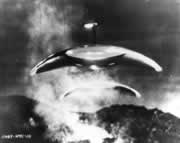 The War of the Worlds, is a radio adaptation by Orson Welles based upon H. G. Wells’ classic novel, was performed by Mercury Theatre on the Air as a Halloween special on October 30, 1938. The live broadcast reportedly frightened many listeners into believing that an actual Martian invasion was in progress. It has been called the “single greatest media hoax of all time“, although it was not intended to be one.
Contemporary newspapers reported panic ensued, with people fleeing the area, and others thinking they could smell the poison gas or could see the flashes of the fighting in the distance. Several people reportedly rushed to the “scene” of the events in New Jersey to see if they could catch a glimpse of the unfolding events, including a few astronomers from Princeton University who went looking for the “meteorite” that had supposedly fallen near their school.
It is sometimes said that the news of the Japanese attack on Pearl Harbor was first received in skepticism as a consequence of the radio performance. Amazingly enough, the drama has been rewritten to apply to other locations and rebroadcast, with similar results:
– A 1944 broadcast in Santiago, Chile caused panic, including mobilization of troops by the governor.
– A February 12, 1949 broadcast in Quito, Ecuador panicked tens of thousands. Some listeners, enraged at the deception, set fire to the radio station and the offices of El Comercio, the capital’s leading newspaper, killing twenty people.
 Getting straight A’s won’t guarantee success, but it sure doesn’t hurt. A high GPA will help you make more money, pursue further education, or change career paths. If you’re going to spend many thousands of dollars on a college education, you might as well make the most of it. Right?



























 There is no way you can accurately predict the questions that will be asked in an interview, but you can be ready and prepared by thinking about the factors that might concern an interviewer or employer before the interview.
 People at the top of every profession share one quality – they get things done. This ability supercedes intelligence, talent, and connections in determining the size of your salary and the speed of your advancement.