Monthly Archives: September 2010

How to Improve Your Financial IQ

Written by Peri Pakroo

Stop avoiding your numbers–there’s nothing to be afraid of and everything to gain.

Like many things we know are good for us–exercise, getting a good night’s sleep, laying off the French fries–keeping careful track of your business’s finances is one of those must-do tasks to keep your business healthy. Nevertheless, a huge number of business owners neglect their numbers, and their businesses pay the price.

I tend to see two main types of financial blow-off:

  1. Fully neglecting to track income and expenses by letting receipts pile up (or get lost) and failing to enter data into a bookkeeping system.
  2. Doing a decent job of keeping income and expense records up to date, but failing to use the numbers to answer questions about the business’s financial situation.

While I’ve definitely known more than a few business owners guilty of the abject neglect described in item 1 (you know who you are), the second type of financial ignorance is practically an epidemic among owners of small to medium-size businesses. Over and over I hear owners admit sheepishly, “I don’t do enough with the numbers.” If you merely keep up with the basics, you might avoid true financial disaster. But you’ll definitely miss opportunities to thrive if you don’t use your data to make strategic decisions.

Getting Over the Hump

If you’ve had your head in the sand about your business’s finances, take heart: You are not alone (by a long shot). Tons–tons–of successful business owners loathe dealing with numbers. They regard financial management with fear, anxiety, insecurity or some combination of the above. Typically, they say they are simply too busy running the business to deal with tracking income and expenses or analyzing the numbers.

The good news is that affordable bookkeeping software automates most of the work, from tracking account balances to generating sophisticated financial reports, putting essential financial information at your fingertips. If you really hate working with numbers or truly don’t have the time to do so, have a competent employee or outside bookkeeper do the job.

However, as the owner of the business and the person responsible for guiding it, you do need to be in the know about your business’s finances. So if you hire someone to do most of the financial management tasks, make sure you’re in the loop and that you understand what the numbers mean. Don’t be shy about asking for guidance or mentoring from an accountant or bookkeeper. If you feel insecure about your level of financial knowledge, you’re in good company. Just make a sustained effort to learn as you go.

Financial Management in a Nutshell

The trick with bookkeeping is to establish a system early to help you stay organized. By “system” I mean a simple process for organizing your receipts and files, as well as having bookkeeping software set up and configured. With a system in place, you’ll definitely be able to handle most or all of your bookkeeping tasks, even if you’ve never done them before. I typically break financial management down into three broad steps.

1. Keeping and organizing records of expenses and income: Financial management starts with keeping records of all the money the business spends (expenses) and all the money it earns (income). This means carefully keeping and organizing your receipts and expense records (such as bills from the office supply store, invoices from your web-hosting company, and receipts of payments to your employees and freelancers) and your income receipts (such as a cash register tape of your café’s income, check stubs from your client’s payment checks, or your invoices to clients marked “Paid”).

2. Entering this information into bookkeeping software: On some periodic basis–maybe monthly for a small consulting business and daily for a busy café or retail store–you’ll enter the information from your income and expense receipts into a bookkeeping system. More often than not, this will be some sort of financial management software such as QuickBooks or MYOB.

3. Generating financial reports: Finally, with up-to-date information entered into your bookkeeping system, you’ll generate reports such as a profit/loss report or cash-flow projection (described below) to reveal how your business is doing.

Doesn’t sound too bad, does it? Again, setting up a system will make a huge difference when it comes to entering and categorizing data in your bookkeeping software. With your data entered, you’ll be all set to do the important (and actually quite fun) part of financial management: generating reports showing you the financial health (or illness) of your business.

Often, business owners have such poor systems in place they barely manage to get their data entered accurately. It becomes a grueling task–hours spent searching for receipts and trying to decipher poorly documented expense reports–that they stop after the data entry stage and never get around to generating reports. Don’t let this happen to you. Generating reports is key to managing your business’s finances and making strategic decisions.

Financial reports summarize the data in your bookkeeping system to show you different aspects of your business’s financial situation. For example, a profit and loss report compares monthly income to monthly expenses to show whether your business is selling enough products or services to cover costs each month. A cash-flow projection shows similar information, but includes other sources of income such as capital contributions from owners or loans (that is, not just revenue from sales). It also organizes the information slightly differently to show you whether the timing of your income is adequate to pay your bills on time.

The Payoff

By generating reports, you’ll be able to see trends and patterns in your business’s finances and identify profitable opportunities to pursue. You’ll also avoid letting your business simply drift along–or worse, run it into the ground. Here are a just few ways that analyzing your financial reports will help your business:

  • You’ll be able to price goods and services more competitively, pace growth more effectively and trim costs strategically–for example, you might cut back on travel expenses or outsourced services that aren’t helping to generate sufficient income.
  • You may be able to reduce taxes by timing your purchases strategically and claiming all your deductible expenses–things that often escape businesses with disorganized records.
  • You’ll be able to manage your business’s cash flow, ensuring you can pay important bills on time. Cash-flow management is a critical element in every business. When it’s done poorly or not at all, you may find yourself short of cash when it’s time to pay taxes, payroll or other crucial expenses. This is exactly the type of scenario that forces businesses to close up shop for good.

Finally, if you’re itching to launch your venture and still worried that you have too much to learn in a short time, stop fretting. You don’t need to turn into a financial whiz overnight. In practice, I advise every small-business owner to consult at least once or twice during their startup days with an experienced bookkeeper or accountant (or possibly both) to help the business get started on the right foot. For those of you who feel like total novices when it comes to the money stuff, consulting a professional will help you get over the hump of your financial learning curve. There are also lots of useful organizations such as The Association of Women’s Business Centers and SCORE that can help get you up to speed.


Peri Pakroo is a business and communications consultant, specializing in legal and startup issues for businesses and nonprofits. She is the author of The Women’s Small Business Start-Up Kit .


Bonus:What a Timing!

The REAL “Stuff White People Like”

Written by Christian Rudder

What is it that makes a culture unique? How are whites, blacks, Asians, or whoever different from everybody else? What tastes, interests, and concepts define an ethnic group? And is there any way to make fun of other races in public and get away with it?

These are big questions, and here’s how we answered them.

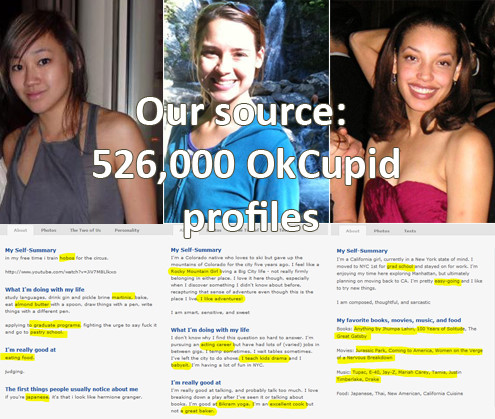
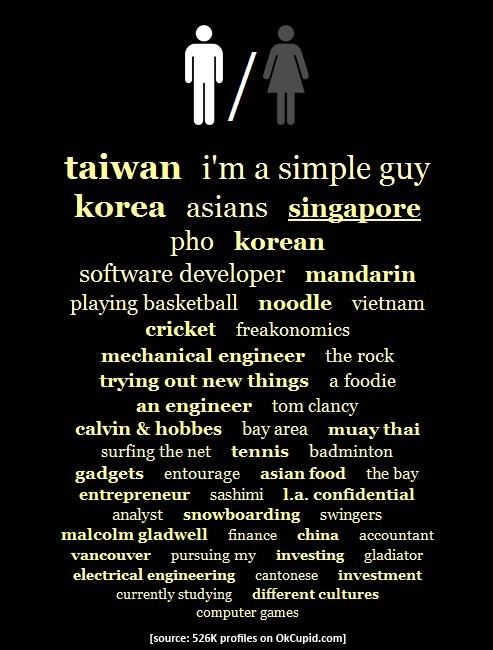
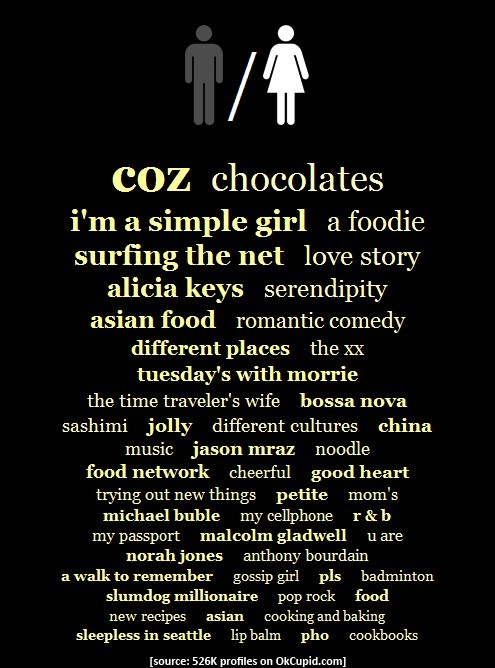
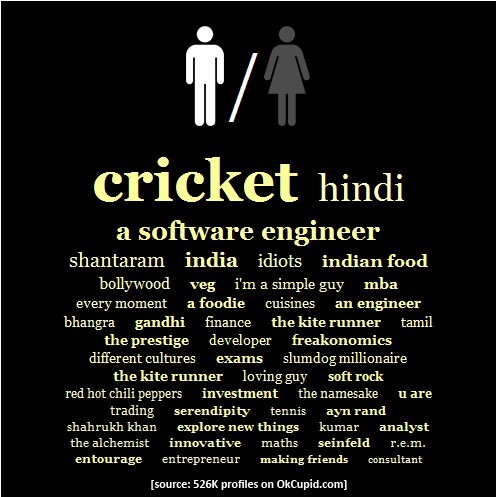
We selected 526,000 OkCupid users at random and divided them into groups by their (self-stated) race. We then took all these people’s profile essays (280 million words in total!) and isolated the words and phrases that made each racial group’s essays statistically distinct from the others’.

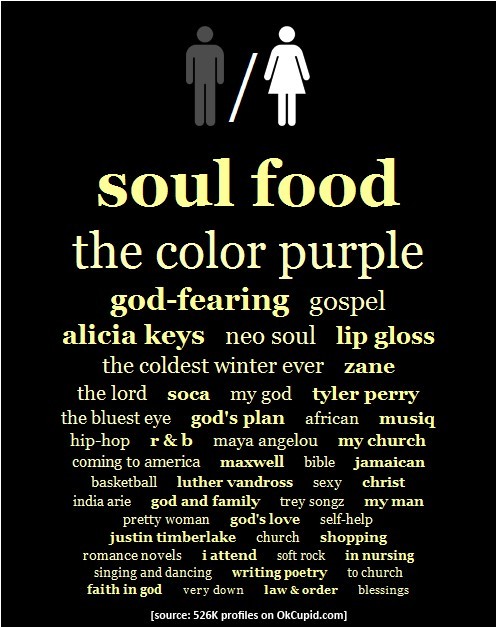
For instance, it turns out that all kinds of people list sushi as one of their favorite foods. But Asians are the only group who also list sashimi; it’s a racial outlier. Similarly, as we shall see, black people are 20 times more likely than everyone else to mention soul food, whereas no foods are distinct for white people, unless you count diet coke.

Using this kind of analysis, we were able find the interests, hobbies, tastes, and self-descriptions that are specially important to each racial group, as determined by the words of the group itself. The information in this article is not our opinion. It’s data, aggregated from the essays of half a million real people.

So here’s the real stuff white people like.

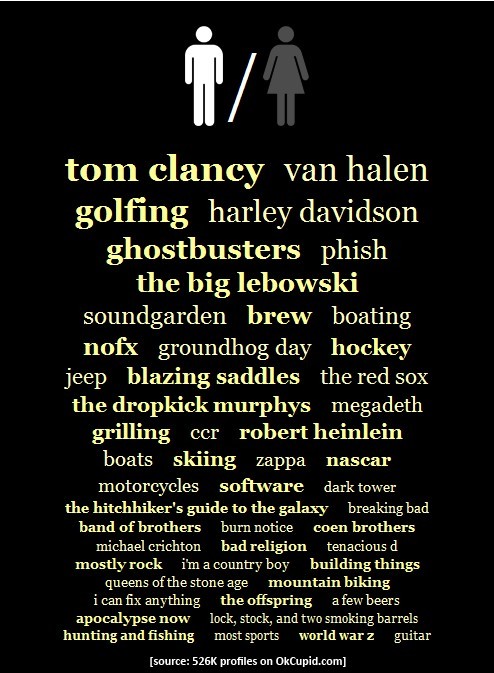
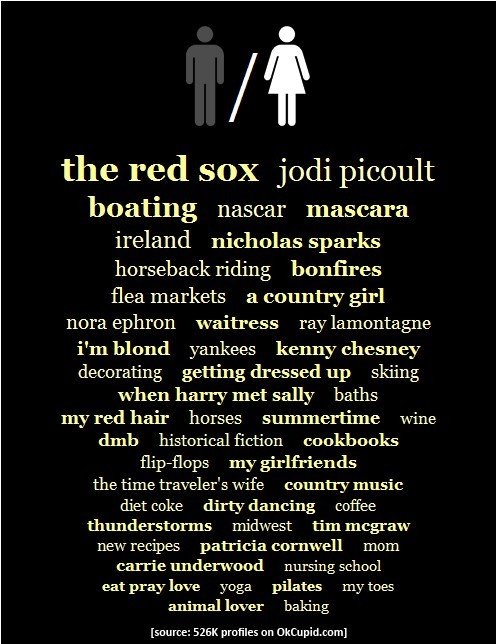
Click on the icons to toggle between men/women.

In general, I won’t comment too much on these lists, because the whole point of this piece is to let the groups speak for themselves, but I have to say that the mind of the white man is the world’s greatest sausagefest. Unless you’re counting Queens of the Stone Age, there is not even one vaguely feminine thing on his list, and as far as broad categories go we have: sweaty guitar rock, bro-on-bro comedies, things with engines, and dystopias.

As for the interests of white women, you have romance novels, some country music, and a broad selection of Good Housekeeping type stuff. It’s also amazing the extent to which their list shows a pastoral or rural self-mythology: bonfires, boating, horseback riding, thunderstorms. I remind you that OkCupid’s user base is almost all in large cities, where to one degree or another, if you find yourself doing much of any of these things, civilization has come to an end.

If I had to choose over-arching themes for white people’s lists, for men, I’d go with “frat house” and for women, “escapism.” Whether one begot the other is a question I’ll leave to the reader.

Stuff black people like.

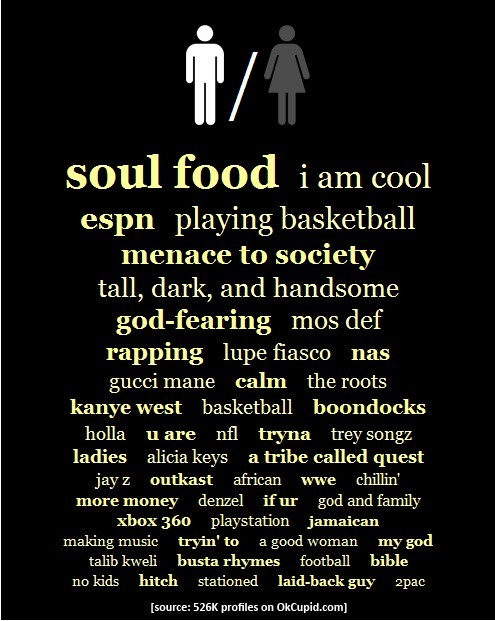
Hopefully it’s been obvious that the font-size of a phrase indicates the relative frequency with which it appears. So, toggling between black men and black women above, you can see that while soul food is important to both, but it’s really, really important to the women. In fact, soul food and black women is the single strongest phrase/group pair we found.

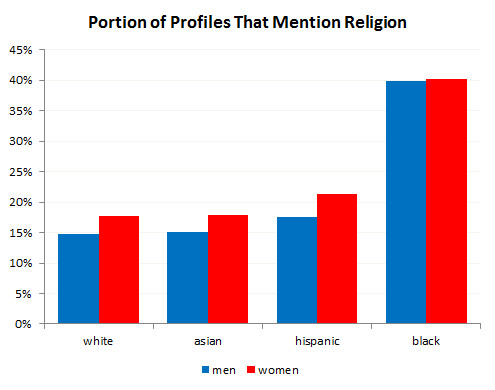
The above lists also make it clear that, regardless of whether Jesus himself was black, his most vocal followers definitely are. Religious expressions weren’t among the top phrases for any of the other races, but they’re all over the place for black men and (especially) black women, for whom 13 of the top 50 phrases are religious. Black people are more than twice as likely than average to mention their faith in their profiles.

Finally, it’s worth noting that of the four lists we’ve seen so far, black women’s is the only one to explicitly include someone of another race: Justin Timberlake.

Double finally, how bold is it that I am cool is the second most typical phrase for black men?

OkTrends Racial Stereotype #1

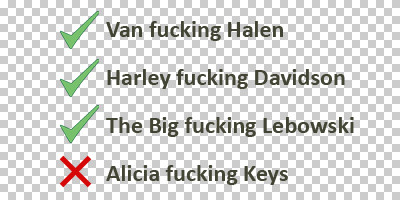
In the course of researching this article and, in particular, comparing white guys to black guys, a handy shortcut occurred to me:

If you’re trying to figure out if white dudes like something, put fucking in the middle, and say it out loud. If it sounds totally badass, white dudes probably love it. Let’s see this principle in practice:

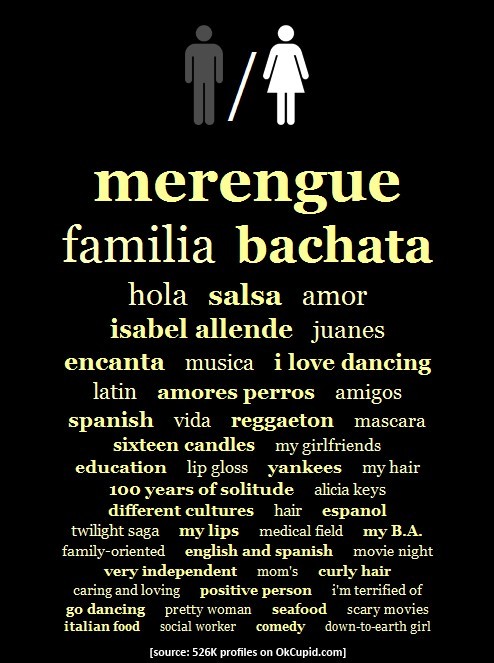
Stuff Latinos like.

Music and dancing—merengue, bachata, reggaeton, salsa—are obviously very important to Latinos of both genders. The men have two other fascinating things going on: an interest in telling you about their sense of humor (i’m a funny guy, very funny, outgoing and funny, etc.) and an interest in industrial strength ass-kicking (mma, ufc, boxing, marines, etc.) Basically, if a Latin dude tells you a joke, you should laugh.

OkTrends Racial Stereotype #2

El chiste de knock-knock:

Latinas’ interests are fairly typical for a dating site: you got friends, career, education, movies, music, a few physical details, and, oh yeah…morbid fear. We dug further into I’m terrified of (on their list at #42) and found which words typically came next. It’s mostly insects and “the dark”, though one expert tautologist is “terrified of being scared” and another woman is “terrified of Martians.”

I feel obligated to state, on behalf of white men everywhere: That woman should get a grip. Martians are nothing compared to the Sardaukar.

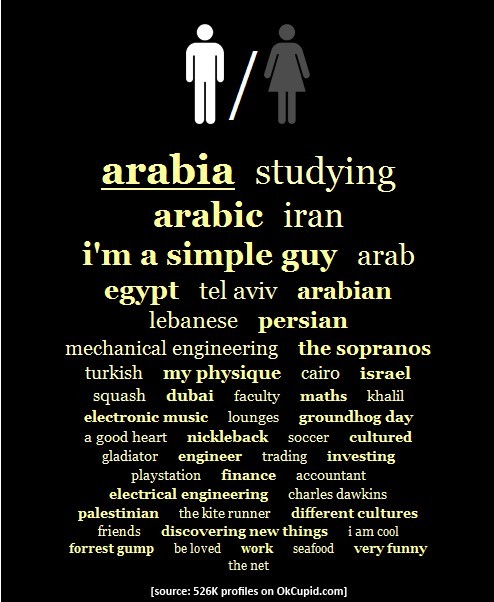
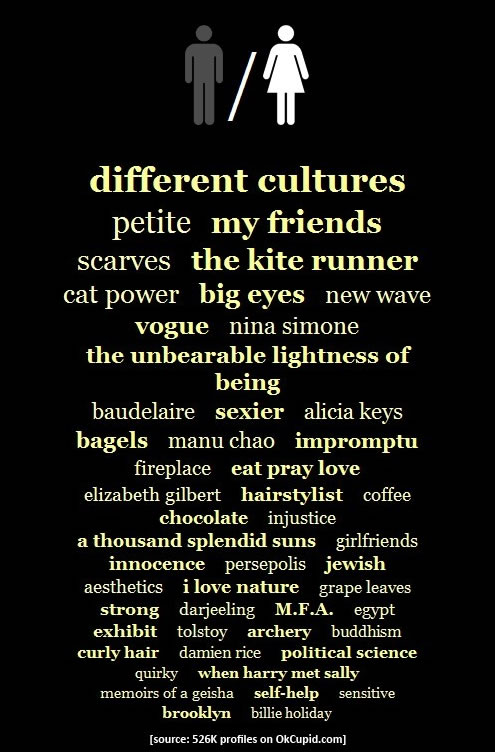
Stuff Asians like.

As you can see, both Asian men and women choose I’m simple as their go-to self-description. Contrast this to black men’s I am cool and Latinos’ I’m a funny guy. It’s also interesting that Asian men very often mention their specific heritage (taiwan, korea, singapore, vietnam, china) while Asian women don’t.

OkTrends Racial Stereotype #3

Combing through these lists, you can see the different ways women use cosmetics:

  • White women show off their eyes (mascara is #5 on their list).
  • Black women show off their lips (lip gloss, #7).
  • Latinas show off both (mascara, #18 / lip gloss, #22).
  • Asian women, however, show off their practicality (lip balm, #48).

. . .

So far, I’ve gone through racial groups in order of their prominence on OkCupid. For brevity (I know this is the internet), I’ll present the remaining lists without foolish commentary. You can click any of the links to reveal them inline.

Stuff Indians like.

Stuff Middle Easterners like.

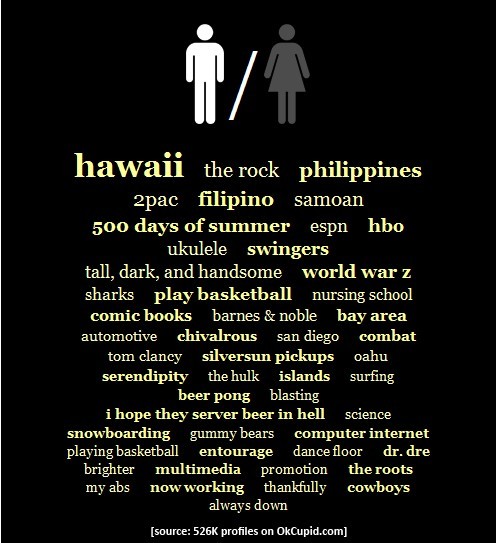
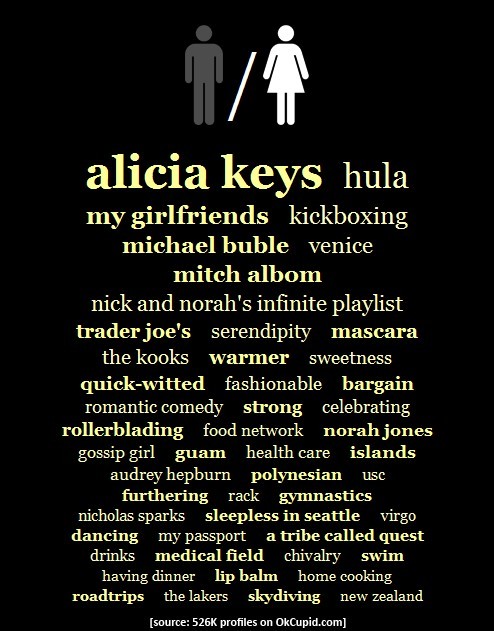
Stuff Pacific Islanders like.

Sidenote: reading level

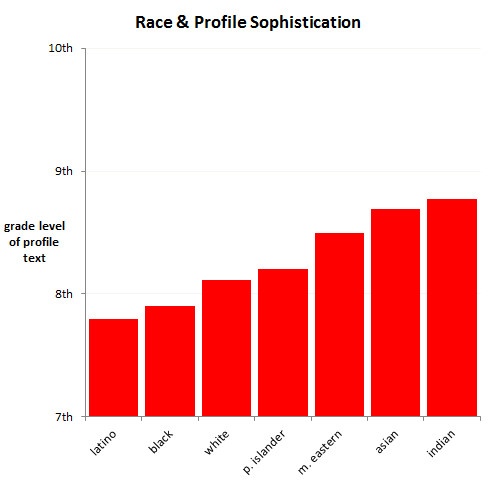
Since we were parsing all this text anyway, we thought it would be cool to do some basic reading-level analysis on what people had written about themselves. We used the Coleman-Liau Index, and when we partitioned the essays by the race of the writers, we found this:

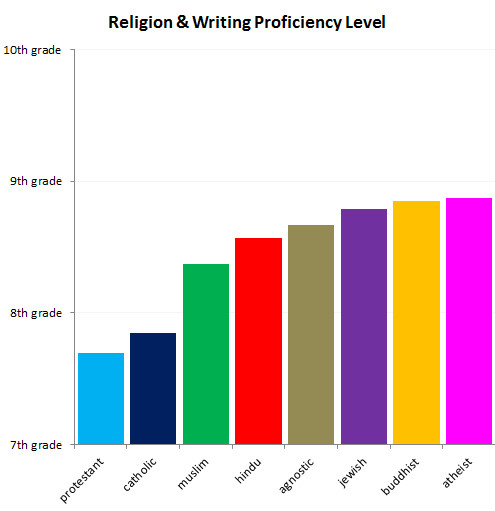
Before anyone gets too charged-up about this, we also ran reading level by religion and found this:

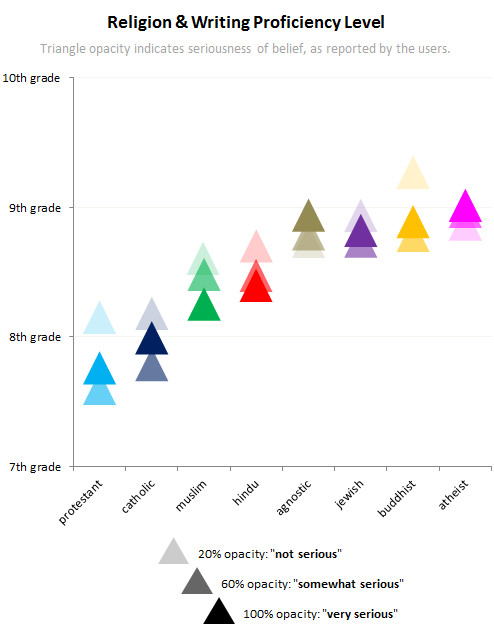
Is there a Comic Sans version of the Bible? There really should be. We subdivided this chart further, by how serious each person was about their beliefs:

Note that for each of the faith-based belief systems I’ve listed, the people who are the least serious about them write at the highest level. On the other hand, the people who are most serious about not having faith (i.e. the “very serious” agnostics and atheists) score higher than any religious groups.

. . .

We’ll be revisiting race later this month, with a statistical investigation of interracial dating, and we’re almost finished with the article on (bi-)sexuality we promised last time. Thanks for reading, everyone.

Till next time,

Christian

Max Shron and Aditya Mukerjee contributed additional research to this post.

Bonus: I miss you.

9 Websites Stuck in the 1990’s

Written by Dan Martell

In the past ten years, the Internet has changed so drastically – so completely – that it’s hard to remember what a vastly different place it was in the 1990’s. The web was new and exciting back then, and everyone from businessmen to high-school tinkerers were compelled to put websites together and become a part of this growing trend. Not surprisingly, the designs they produced were brutally bad by today’s standards, yet despite graphical and technical changes in web design, there are still some businesses operating from remarkably outdated pages. These are sites that time forgot, and as the Internet speeds past them, they stand as a testament to a strange world not-so-long ago – the Internet of the 1990’s.

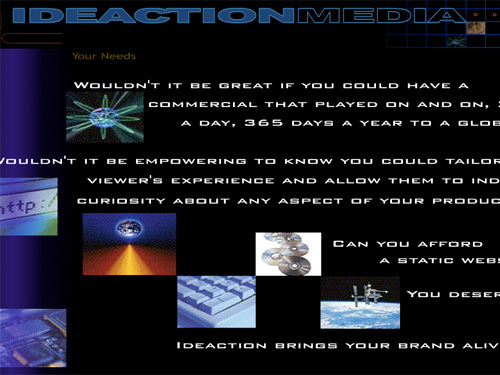
IdeaAction Media Productions

(source)

In 1999, this all-flash design would have been top notch, but today it just looks painfully dated. Though IdeaAction appears to have something to do with advertising, it is hard to tell exactly what because their descriptive paragraphs fly on and off screen too fast to read. Topping it all off, the entire video loops over mere seconds after their contact information is displayed, forcing anyone who might want to give them a call to watch the terrible production over and over again.

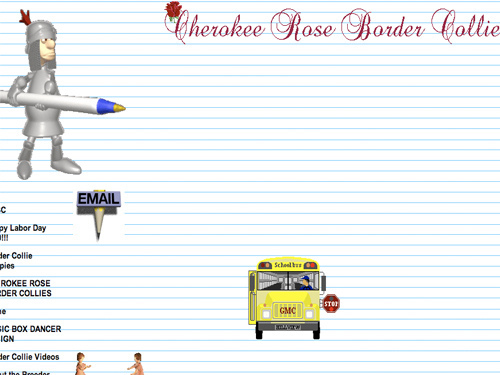
ABBC Breeders

(source)

Complete with Pink Floyd midi music playing in the background, the American Beauty Border Collies Breeders website is like taking a time machine back to the Internet of 1998. Simply viewing the tasteless layout and tacky animated GIF images that litter the page will make you remember a time when GeoCities and AngelFire were the primary website building utilities, and everyone who knew how to use copy and paste commands could create a homepage. The only essential 90’s web artifact missing from ABBC Breeders is some old fashioned flaming text.

Utah Ski Rentals

(source)

Animated backgrounds were a big part of the Internet in the 1990’s. Once designers realized they didn’t need to stick to the solid color page that worked so well for so long, it seemed that readability began taking a back-seat to animation and pizzaz. Soon, every website on the net started converting to annoying graphic backgrounds that made reading the actual text on the page a strenuous and tiresome activity. Utah Ski Rentals is unable to move on from this Internet dark age, still boasting a snowing background, randomly placed buttons, and scrolling text banners.

Dokimos

(source)

Speaking of horrendously annoying backgrounds, Dokimos takes the cake as the most unbearable. Featuring a scrolling rainbow of bright colors behind biblical scripture, the religious-themed website is impossible to look at for more than several seconds without being driven away, or even worse, going into an epileptic fit. Further dating the website to the 90’s is the presence of a guestbook, one of the oldest forms of commenting a web page. Not surprisingly, the first comment in the guestbook is from 1999.

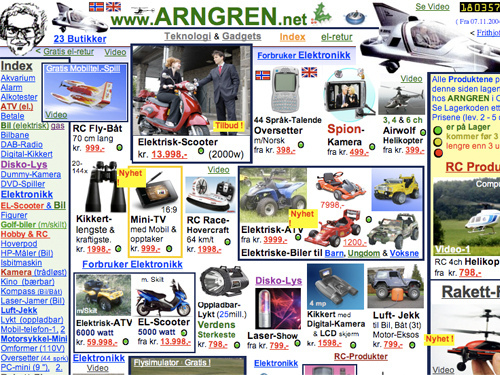
Arngren

(source)

Arngren is a gadget sales site with an infuriatingly confusing layout. Looking like something that was thrown together in Microsoft Frontpage ‘98, the site scatters disconnected technology items for sale all across its main page with utter disregard to organization or ease of use. Look closely at the top of the page and you’ll see another component of every website to exist in 1990s, the long retired visual hit counter.

Cobra Strike Trading Solutions

(source)

CobraStrike is an awfully fierce name for such a timid website. Looking more like a pretty Microsoft Word document than a complete site, the trading firm says little about what it does, choosing instead to boast about profits and put a big, clip-art like picture of a cobra up for all to see. Signs of 90’s influence include the lifeless solid background color, the pasted in images that clash with the page, and the single page layout.

Party Tent City

(source)

Here’s a website that would have shamed even Expages designers in the 90’s. Massive text runs into small text, some of it is italicized, some of it is highlighted, and images and videos are randomly pasted in without formatting. The lack of any sort of navigation makes the whole site look like something a middle school web-hobbyist in 98 might have come up with.

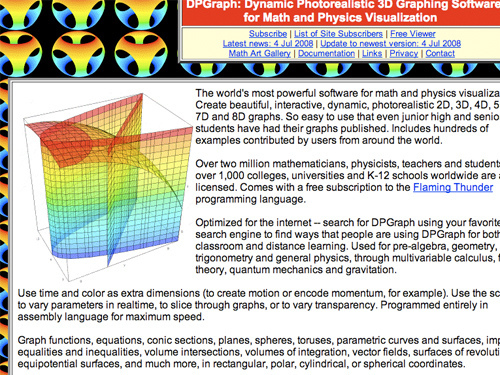
DP Graph

(source)

At least the designers at DP Graph were kind enough to place their text inside of a white box and not directly on top of their multi-colored spinning background so that we don’t have to squint and highlight to read it. Still – it’s 2010, can’t we leave the tiled animated background in the 90’s along with the words “phat” and “da bomb?” The bottom of the page says that it was created in 1997, and we can safely assume it hasn’t been touched since.

Smith and Goldsmith Inc

(source)

Still operating off the Homestead web design and hosting suite (another online design suite popular in the late 90’s), Smith and Goldsmith Inc round out our list with a design that features all the tells of a true 90’s page. First of all, the background is a tacky, tiled graphic – a common choice of amateur designers from the 90’s. Scrolling text banners interrupt the flow of the page to scream messages at you, text flows into images, images flow into images, and a visual hit counter proudly boasts the number of visitors. Last but not least, the site makes use of the ultra-popular side button navigation, a fad not seen on the web past the early 2000’s.

Thumbnail image source is here

Bonus:  Oh god, twitter.

10 Best Time Travel Movies and Shows

Written by furiousfanboys

Time travel is by far one of the most popular subjects in science fiction and has almost always been found in the genre in books, movies, and TV shows. Below we’ve chosen the ten best movies or shows that used time travel as their basis.

Back to the Future

The Back to the Future trilogy is one of the most popular scifi series ever and for good reason. It combined time travel and science fiction with comedy and produced three of the most entertaining movies ever made. This year the first movie celebrates its 25th anniversary.

Quantum Leap

Watching Quantum Leap you’re struck by how they just don’t make shows like it anymore. Its strong moral tone of Sam leaping through time to fix wrongs hits a depth of science fiction storytelling not seen since the original Twilight Zone or Star Trek in the 60s. It’s a show that ended way to soon and should have ended better than it did.

Frequency

If you’ve ever seen Frequency, you owe yourself to check it out. Part Back to the Future, part Field of Dreams; it’s a unique and really good time travel story where a son is able to talk to his dead father over a radio and change the course of his own history.

Time After Time

One of the best time travel movies ever, and a very strong inspiration for Spielberg and Zemeckis when making Back to the Future. You’ll even see some things that Back to the Future lifted directly from the movie (compare H.G. Wells to Doc Brown when they each try to open their time machine). In the movie H.G. Wells chases Jack the Ripper to modern day San Francisco.

The Time Machine (1960)

Forget the bad remake. The 1960 George Pal Time Machine is the best. You get creepy Morlocks here. No super intelligent talking ones.

Bill & Ted’s Excellent Adventure

Vastly superior to its sequel, the original Bill & Ted’s Excellent Adventure has become something of a cult classic over the years. Despite Keanu being a big star now, we’d kill to see a third movie more along the lines of the first. SAN DIMAS HIGH SCHOOL FOOTBALL RULES!

Star Trek IV: The Voyage Home

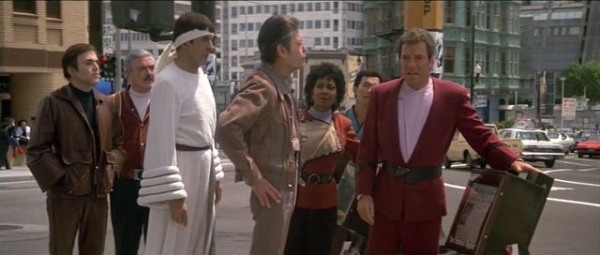
The most fun of all Trek films, by far. It’s a lighthearted romp after the serious life and death stories the previous movies dealt with. The mission to bring George and Gracie back to the 23rd Century is a classic scifi story that appeals to more than just Trek fans. “Hello, computer…”

Primer

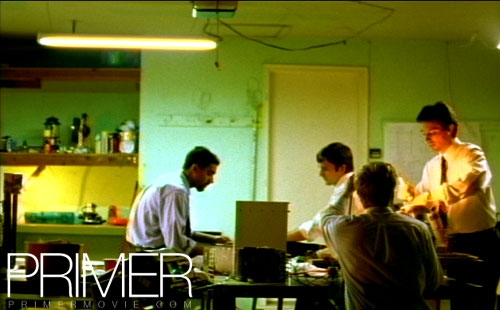
You may not have seen Primer, but it’s worth tracking down. It was an extremely low budget time travel movie, with some unique ideas on how time travel could work.

Lost

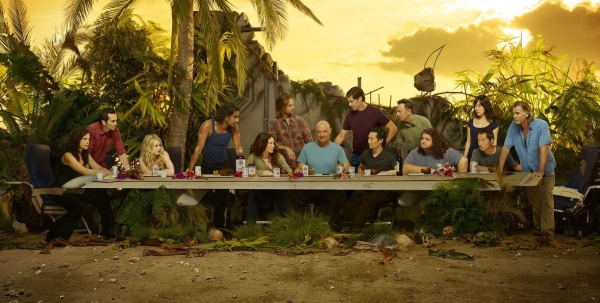
Despite your feelings on how it ended, Lost was one of the better shows to deal with time travel. Most of the fourth and fifth seasons dealt with that as one of the major elements of the story.

Doctor Who

You can’t talk about time travel in scifi without mentioning the ol’ Time Lord himself.

Bonus: In all the years… why didn’t I think of this sooner?

BlackBerry Facts You’ll Be Surprised To Know

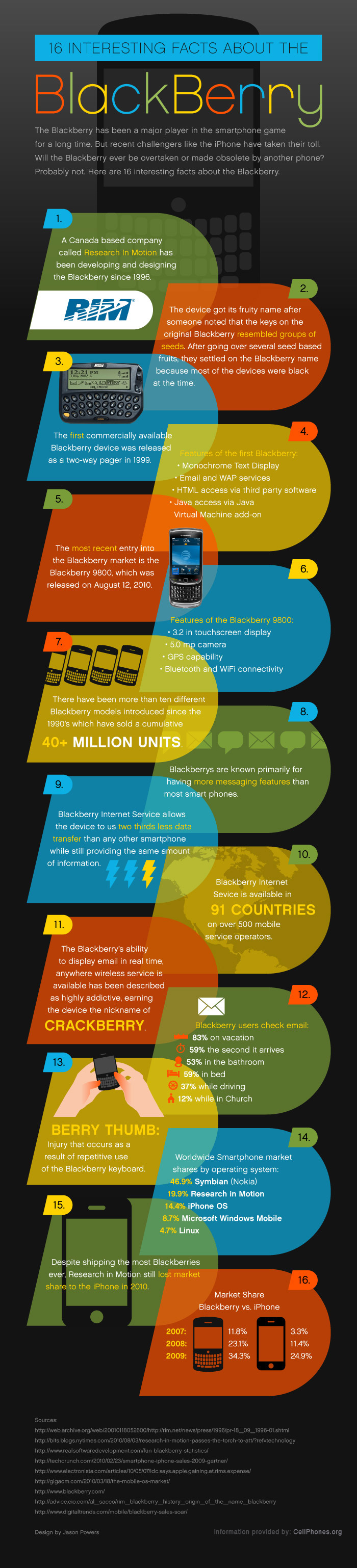
The BlackBerry brand has been synonymous with smartphones for close to a decade now. But while millions of people around the world own, use and are maybe even addicted to the devices, only a select few are familiar with the history of the BlackBerry and Research In Motion, or RIM, the company that actually makes the devices. This infographic put together by the team at Cell Phones.Org, details much of the BlackBerry’s and RIM’s history right up to the release of the new Blackberry Torch 9800, which just hit the scene a couple of weeks ago. Interesting stuff, but we’d hazard a guess that more than 53% of BlackBerry users check their phones while on the throne. And for everyone’s sake, the 37% of you checking in while driving—put the darn phone down!
16 Interesting Facts about BlackBerry
Via: Cell Phones

Bonus: One childs most exciting day


7 Traits of Real Men

Written by mocha dad

Photo by: Photofinish2009 via Flickr

Men were made to be bold, strong, leaders. However, our society has attempted to repress these traits. If you look at the way men (especially dads) are portrayed on TV, you’d think we were all a bunch of irresponsible, befuddled, nincompoops, who can only function with the help of a “smart” female partner, friend, or spouse.

Consequently, many boys are confused and have no idea what it takes to be a real man. They seek inappropriate role models and emulate the bad behavior that they see on a regular basis.

It is our duty as men, fathers, and responsible citizens to counter these negative images and raise a new generation of men who are respectful, loving, and willing to contribute to society in a positive way.

If we are to achieve this goal, we must start with improving ourselves. I started my journey towards self-improvement after my daughter’s birth. The greatest compliment that a father can get from his daughter is “I want to marry someone just like you.” That kind of pressure forces you to examine your life and look for ways to improve.

Over the years, I’ve discovered seven traits that real men possess:

  1. Integrity – Integrity is more than being honest. It’s a lifestyle set on striving towards moral excellence. Real men say what they mean and mean what they say. They are the same person whether or not others are watching. They are trustworthy, dependable, and unwavering.
  2. Compassion – Compassion is sympathetic consciousness of others’ distress together with a desire to alleviate it. In other words, you feel compelled to help someone who is hurting. Men aren’t often viewed as being compassionate, but it is a trait that helps us to become more connected to the people around us. Real men turn their compassion into service and work to make the world a better place.
  3. ConfidenceReal men are confident. Many people confuse confidence with arrogance and self-centeredness. Real men know the difference. Confidence is about being self-assured and self-aware. Confident men have faith in their abilities and knowledge. They don’t need to tear others down in order to build themselves up. They earn people’s trust with their radiant, inner strength. When a they walk into the room, everyone takes notice.
  4. Self-control – Hardly a day goes by without a news report about some high-profile man who has been destroyed by sex, money, and/or drugs. Too many men lack self-control, but it is the foundation of a virtuous life. Self-control starts with focus and ridding yourself of distractions. Doing this isn’t easy because temptations lurk around every corner. Real men are able to tame their desires and channel that energy into positive pursuits.
  5. Perseverance – Perseverance is the product of self-control. It is courageous resistance against difficult circumstances. Perseverance is only developed through trials. Real men endure the trials and emerge stronger. They never give up.
  6. Bravery – Bravery is the courage to do what is right regardless of the circumstances. Nothing is ever accomplished with an attitude of passivity. Real men stand up in the face of adversity.
  7. Humility – Today’s breed of young men loves to let everyone know how much swagger they have. They thump their chests and proclaim to the world, “I’m a Big Deal. Look at me!” Real men understand the value of being humble and letting someone else’s light shine. They realize that humility is more endearing than self-importance. Humility indicates that you are ridding yourself of the poison of self-centeredness. Besides, humility softens the blow when someone knocks you off your pedestal.

Acquiring all of these traits takes time and dedication. However, our society would benefit greatly if all men strove to possess them.

Stay Strong,

Question: In your opnion, what traits should a real man possess?


Bonus: so true…..