Monthly Archives: August 2010

30 Books Everyone Should Read Before They’re Thirty

Collected by Marc and Angel Hack Life

The Web is grand. With its fame for hosting informative, easy-to-skim textual snippets, and collaborative written works, people are spending more and more time reading online. Nevertheless, the Web cannot replace the authoritative transmissions from certain classic books that have delivered (or will deliver) profound ideas around the globe for generations.

The thirty books listed here are of unparalleled prose, packed with wisdom capable of igniting a new understanding of the world. Everyone should read these books before their thirtieth birthday.
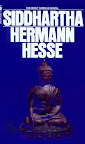
1. Siddhartha by Hermann Hesse

A powerful story about the importance of life experiences as they relate to approaching an understanding of reality and attaining enlightenment

2. 1984 by George Orwell

1984 still holds chief significance nearly sixty years after it was written in 1949. It is widely acclaimed for its haunting vision of an all-knowing government, which uses pervasive, twenty-four/seven surveillance tactics to manipulate all citizens of the populace.
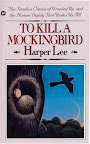
3. To Kill a Mockingbird by Harper Lee

The story surveys the controversial issues of race and economic class in the 1930s Deep South via a court case of a black man charged with the rape and abuse of a young white girl. It’s a moving tale that delivers a profound message about fighting for justice and against prejudice.
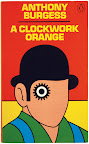
4. A Clockwork Orange by Anthony Burgess

A nightmarish vision of insane youth culture that depicts heart wrenching insight into the life of a disturbed adolescent. This novel will blow you away … leaving you breathless, livid, thrilled, and concerned.
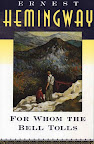
5. For Whom the Bell Tolls by Ernest Hemingway

A short, powerful contemplation on death, ideology and the incredible brutality of war.
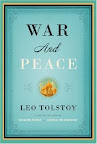
6. War and Peace by Leo Tolstoy

This masterpiece is so enormous even Tolstoy said it couldn’t be described as a standard novel. The storyline takes place in Russian society during the Napoleonic Era, following the characters of Andrei, Pierre and Natasha … and the tragic and unanticipated way in which their lives interconnect.
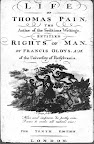
7. The Rights of Man by Tom Paine

Written during the era of the French Revolution, this book was one of the first to introduce the concept of human rights from the standpoint of democracy.
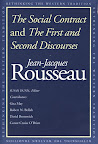
8. The Social Contract by Jean-Jacques Rousseau

A famous quote from the book states that “Man is born free, and everywhere he is in chains.” This accurately summarizes the book’s prime position on the importance of individual human rights within society.
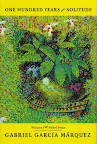
9. One Hundred Years of Solitude by Gabriel García Márquez

This novel does not have a plot in the conventional sense, but instead uses various narratives to portray a clear message about the general importance of remembering our cultural history.
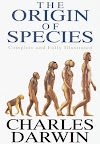
10. The Origin of Species by Charles Darwin

Few books have had as significant an impact on the way society views the natural world and the genesis of humankind.
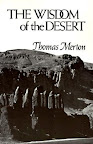
11. The Wisdom of the Desert by Thomas MertonThe Wisdom of the Desert by Thomas Merton

A collection of thoughts, meditations and reflections that give insight into what life is like to live simply and purely, dedicated to a greater power than ourselves.
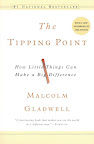
12. The Tipping Point by Malcolm Gladwell

Gladwell looks at how a small idea, or product concept, can spread like a virus and spark global sociological changes. Specifically, he analyzes “the levels at which the momentum for change becomes unstoppable.”
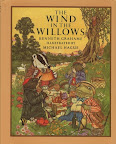
13. The Wind in the Willows by Kenneth Graham

Arguably one of the best children’s books ever written; this short novel will help you appreciate the simple pleasures in life. It’s most notable for its playful mixture of mysticism, adventure, morality, and camaraderie.
14. The Art of War by Sun Tzu

One of the oldest books on military strategy in the world. It’s easily the most successful written work on the mechanics of general strategy and business tactics.

15. The Lord of the Rings by J.R.R. Tolkien

One of the greatest fictional stories ever told, and by far one of the most popular and influential written works in twentieth-century literature. Once you pick up the first book, you’ll read them all.
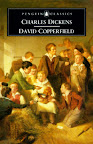
16. David Copperfield by Charles Dickens

This is a tale that lingers on the topic of attaining and maintaining a disciplined heart as it relates to one’s emotional and moral life. Dickens states that we must learn to go against “the first mistaken impulse of the undisciplined heart.”
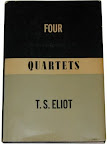
17. Four Quartets by T.S. Eliot

Probably the wisest poetic prose of modern times. It was written during World War II, and is still entirely relevant today … here’s an excerpt: “The dove descending breaks the air/With flame of incandescent terror/Of which the tongues declare/The only discharge from sin and error/The only hope, or the despair/Lies in the choice of pyre or pyre–/To be redeemed from fire by fire./Who then devised this torment?/Love/Love is the unfamiliar Name/Behind the hands that wave/The intolerable shirt of flame/Which human power cannot remove./We only live, only suspire/Consumed by either fire or fire.”
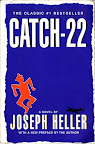
18. Catch-22 by Joseph Heller

This book coined the self-titled term “catch-22” that is widely used in modern-day dialogue. As for the story, its message is clear: What’s commonly held to be good, may be bad … what is sensible, is nonsense. Its one of the greatest literary works of the twentieth century. Read it.
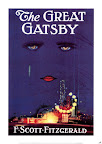
19. The Great Gatsby by F. Scott Fitzgerald

Set in the Jazz Age of the roaring 20s, this book unravels a cautionary tale of the American dream. Specifically, the reader learns that a few good friends are far more important that a zillion acquaintances, and the drive created from the desire to have something is more valuable than actually having it.
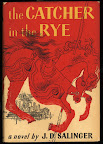
20. The Catcher in the Rye by J.D. Salinger

This novel firmly stands as an icon for accurately representing the ups and downs of teen angst, defiance and rebellion. If nothing else, it serves as a reminder of the unpredictable teenage mindset.
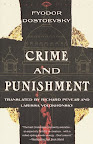
21. Crime and Punishment by Fyodor Dostoyevsky

A smooth-flowing, captivating novel of a young man living in poverty who criminally succumbs to the desire for money, and the hefty psychological impact this has on him and the people closest to him.

22. The Prince by Niccolo Machiavelli

This book does a great job at describing situations of power and statesmanship. From political and corporate power struggles to attaining advancement, influence, and authority over others, Machiavelli’s observations apply.

23. Walden by Henry David Thoreau

Thoreau spent two years, two months and two days writing this book in a secluded cabin near the banks of Walden Pond in Concord, Massachusetts. This is a story about being truly free from the pressures of society. The book can speak for itself: “I went to the woods because I wished to live deliberately, to front only the essential facts of life, and see if I could not learn what it had to teach, and not, when I came to die, discover that I had not lived.”
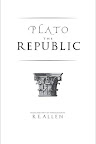
24. The Republic by Plato

A gripping and enduring work of philosophy on how life should be lived, justice should be served, and leaders should lead. It also gives the reader a fundamental understanding of western political theory.
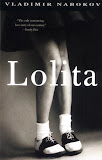
25. Lolita by Vladimir Nabokov

This is the kind of book that blows your mind wide open to conflicting feelings of life, love and corruption … and at times makes you deeply question your own perceptions of each. The story is as devious as it is beautiful.
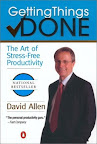
26. Getting Things Done by David Allen

The quintessential guide to organizing your life and getting things done. Nuff said.
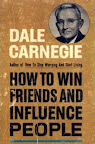
27. How To Win Friends and Influence People by Dale Carnegie

This is the granddaddy of all self-improvement books. It is a comprehensive, easy to read guide for winning people over to your way of thinking in both business and personal relationships.
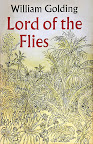
28. Lord of the Flies by William Golding

A powerful and alarming look at the possibilities for savagery in a lawless environment, where compassionate human reasoning is replaced by anarchistic, animal instinct
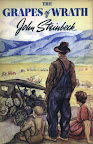
29. The Grapes of Wrath by John Steinbeck

Steinbeck’s deeply touching tale about the survival of displaced families desperately searching for work in a nation stuck by depression will never cease to be relevant.
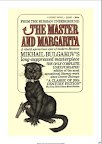
30. The Master and Margarita by Mikhail Bulgak

This anticommunist masterpiece is a multifaceted novel about the clash between good and evil. It dives head first into the topics of greed, corruption and deception as they relate to human nature.
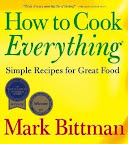
BONUS: How To Cook Everything by Mark Bittman

900 pages of simple instructions on how to cook everything you could ever dream of eating. Pretty much the greatest cookbook ever written. Get through a few recipes each week, and you’ll be a master chef by the time you’re thirty.
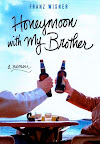
BONUS: Honeymoon with My Brother by Franz Wisner

Franz Wisner had it all … a great job and a beautiful fiancée. Life was good. But then his fiancée dumped him days before their wedding, and his boss basically fired him. So he dragged his younger brother to Costa Rica for his already-scheduled honeymoon and they never turned back … around the world they went for two full years. This is a fun, heartfelt adventure story about life, relationships, and self-discovery.

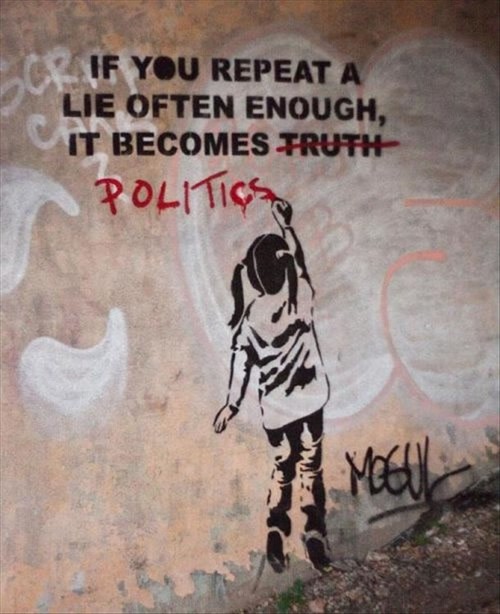
Bonus: Lies
source

8 Feel Good Websites to Brighten Your Day

Written by Tas Anjarwalla

Feeling down after reading the world’s depressing news? Here are eight sites to get you smiling

Our world, and the internet, are full of bad news that makes it easy to be a Negative Nancy.

With oil disasters, wars, criminal misdeeds and corporate scandals clogging our news feeds, it’s no wonder people prefer to spend their web time scanning Facebook and catching up with shows on Hulu.

“Nowadays it seems all we see and hear on the news are negative events,” wrote Domonique Burke, a blogger for Skirt.com. “I’m sorry, but I don’t want to hear about bad things happening in the world all the time…Where are the positive, uplifting stories? The stories that make us want to better our own lives after hearing them?”

Well, these stories do exist — you just have to know where to find them.

Despite its haters and trolls, the massive realm of the internet still has enough bright spots to improve any dark mood. Here are eight websites that feature positive and uplifting stories for people like Burke. Or you.

Who knows? They may even help renew your faith in the goodness of the human experience. Enjoy:

1. Happy News

Did you hear about the pizza deliveryman who saved a life? How about the Haitian dancer who was given a prosthetic leg after hers was lost in the earthquake?

These stories and many others are often lost in the flood of sad/frightening/depressing/violent news that proliferate the internet. Culled from popular news sites and submitted by citizen journalists, the stories on Happy News are just that.

The site’s credo says it all: “We believe virtue, goodwill and heroism are hot news. That’s why we bring you up-to-the-minute news, geared to lift spirits and inspire lives.”

2. Gives Me Hope

Along the lines of popular sites like FMyLife, but about 65,000 times more uplifting, Gives Me Hope (GMH) offers user-submitted true stories of kindness and generosity. The stories are sentimental and, at times, almost heartbreakingly sweet.

“It was my first day back to school after being hospitalized for chemo,” one user writes. “I had lost all of my hair, and was embarrassed. When I walked in, everyone was bald — the popular kids, people I didn’t know, my friends, the teachers. Everyone. Their kindness GMH.”

How can you not love the world after reading that?

3. 1000 Awesome Things

1000 Awesome Things is a blog, updated every weekday, that enumerates the little things in life that make us happy. It’s a reminder that even the smallest of feats, like “#936 Perfect parallel-parking on the first try” or “#572 Learning a new keyboard shortcut” are a reason to smile.

The site was launched in June 2008 and has been counting down from 1,000 ever since. Now at post number 449, the site is so popular that creator Neil Pasricha even released “The Book of Awesome Things” in April. When asked what will occur when he reaches number 1, Pasricha said, “Something very awesome will happen.”

4. PostSecret

This secret-sharing site might be the perfect outlet to release that secret you’ve been harboring. Every Sunday founder Frank Warren posts a handful of secrets that people have anonymously mailed him on postcards.

Sometimes it can do a world of good to know someone shares your fears, dreams, hopes and failures. PostSecret inspired a reader from England to write, “Your site is truly inspirational. I’m left feeling full of compassion for my fellow human beings — we’re the same the world over.”

The secrets range from touching (“I’m not that tough. My parents just couldn’t pay for medical insurance“), to cryptic (“Law school changed me“), to downright shocking (“Everyone who knew me before 9/11 believes I’m dead.“).

Warren uses the site as as a platform to support Hopeline, an organization that fights suicide.

5. Cute Baby Fix

We’ve seen a lot of baby videos in our day. Maybe too many. But goshdarnit, they still leave us grinning every time. This site is dedicated to cute baby videos and pictures and will let you watch a breakdancing baby take down celeb-baby Justin Bieber or marvel at how even a lame picture of baby feet is so freaking cute.

But if a site full of bug-eyed newborns is too much for you, stick with these classic YouTube videos: 3-year-old Ha Youngwoong strumming his guitar while singing “Hey Jude” or this toddler laughing hysterically at torn-up newspaper.

6. Christian the Lion

OK, so this isn’t a website. But it’s a video so amazing it’ll have you believing anything is possible. The backstory: John Rendall and Anthony Bourke bought Christian, a lion cub, from Harrods in 1969 and raised him in their London home. Several years later, they set the lion free to live in the wilds of Africa.

A year later, against the advice of experts, the pair was determined to locate Christian. They traveled to Kenya to find him, and their reunion was recorded on film. Really, you just have to watch it — it’s truly inspirational. (If you want to see the video with Whitney Houston singing in the background, click this link instead.)

You can read the full story at the Born Free Foundation site.

7. Today’s Big Thing

Make Today’s Big Thing your new home page and you won’t be inundated with depressing stories. Instead, you’ll see the latest funny videos and creative pictures the internet has to offer in arts, entertainment, sports and more — the real “news” people will be talking about at work tomorrow.

Don’t be the last person to see this old man dancing to Lady Gaga or watch Zach Anner’s hilarious Oprah audition tape, because even though it’s no Russian spy ring, it’s still news. Kind of.

8. ZooBorns

Already know about the puppies of cuteoverload.com, the kitten in a bottle at thingsthatmakeyougoaahh.com or the LOL cats at I can has cheez burger?

Yes, it’s true — nothing gives you that warm and fuzzy feeling quite like pictures of baby animals. The site is an ongoing collection of animal births at zoos and aquariums around the world. You’ll feel like a 12-year-old girl when you find yourself forwarding pics of a yawning orangutan (OMG so cute!!!!).

Bonus: Today was not his day to die


The Best High School Valedictorian Speech

Written by Erica Goldson

© The Daily Mail
The 2010 Graduating Class of Coxsackie-Athens High School.

Comment: The following speech was delivered by top of the class student Erica Goldson during the graduation ceremony at Coxsackie-Athens High School on June 25, 2010

Here I stand

There is a story of a young, but earnest Zen student who approached his teacher, and asked the Master, “If I work very hard and diligently, how long will it take for me to find Zen? The Master thought about this, then replied, “Ten years . .” ?The student then said, “But what if I work very, very hard and really apply myself to learn fast — How long then?” Replied the Master, “Well, twenty years.” “But, if I really, really work at it, how long then?” asked the student. “Thirty years,” replied the Master. “But, I do not understand,” said the disappointed student. “At each time that I say I will work harder, you say it will take me longer. Why do you say that?” ?Replied the Master, “When you have one eye on the goal, you only have one eye on the path.”

This is the dilemma I’ve faced within the American education system. We are so focused on a goal, whether it be passing a test, or graduating as first in the class. However, in this way, we do not really learn. We do whatever it takes to achieve our original objective.

Some of you may be thinking, “Well, if you pass a test, or become valedictorian, didn’t you learn something? Well, yes, you learned something, but not all that you could have. Perhaps, you only learned how to memorize names, places, and dates to later on forget in order to clear your mind for the next test. School is not all that it can be. Right now, it is a place for most people to determine that their goal is to get out as soon as possible.

I am now accomplishing that goal. I am graduating. I should look at this as a positive experience, especially being at the top of my class. However, in retrospect, I cannot say that I am any more intelligent than my peers. I can attest that I am only the best at doing what I am told and working the system. Yet, here I stand, and I am supposed to be proud that I have completed this period of indoctrination. I will leave in the fall to go on to the next phase expected of me, in order to receive a paper document that certifies that I am capable of work. But I contest that I am a human being, a thinker, an adventurer – not a worker. A worker is someone who is trapped within repetition – a slave of the system set up before him. But now, I have successfully shown that I was the best slave. I did what I was told to the extreme. While others sat in class and doodled to later become great artists, I sat in class to take notes and become a great test-taker. While others would come to class without their homework done because they were reading about an interest of theirs, I never missed an assignment. While others were creating music and writing lyrics, I decided to do extra credit, even though I never needed it. So, I wonder, why did I even want this position? Sure, I earned it, but what will come of it? When I leave educational institutionalism, will I be successful or forever lost? I have no clue about what I want to do with my life; I have no interests because I saw every subject of study as work, and I excelled at every subject just for the purpose of excelling, not learning. And quite frankly, now I’m scared.

John Taylor Gatto, a retired school teacher and activist critical of compulsory schooling, asserts, “We could encourage the best qualities of youthfulness – curiosity, adventure, resilience, the capacity for surprising insight simply by being more flexible about time, texts, and tests, by introducing kids into truly competent adults, and by giving each student what autonomy he or she needs in order to take a risk every now and then. But we don’t do that.” Between these cinderblock walls, we are all expected to be the same. We are trained to ace every standardized test, and those who deviate and see light through a different lens are worthless to the scheme of public education, and therefore viewed with contempt.

H. L. Mencken wrote in The American Mercury for April 1924 that the aim of public education is not “to fill the young of the species with knowledge and awaken their intelligence. … Nothing could be further from the truth. The aim … is simply to reduce as many individuals as possible to the same safe level, to breed and train a standardized citizenry, to put down dissent and originality. That is its aim in the United States.”

Comment: The full passage reads: “The aim of public education is not to spread enlightenment at all; it is simply to reduce as many individuals as possible to the same safe level, to breed and train a standardized citizenry, to down dissent and originality. That is its aim in the United States, whatever pretensions of politicians, pedagogues other such mountebanks, and that is its aim everywhere else.”

To illustrate this idea, doesn’t it perturb you to learn about the idea of “critical thinking.” Is there really such a thing as “uncritically thinking?” To think is to process information in order to form an opinion. But if we are not critical when processing this information, are we really thinking? Or are we mindlessly accepting other opinions as truth?

This was happening to me, and if it wasn’t for the rare occurrence of an avant-garde tenth grade English teacher, Donna Bryan, who allowed me to open my mind and ask questions before accepting textbook doctrine, I would have been doomed. I am now enlightened, but my mind still feels disabled. I must retrain myself and constantly remember how insane this ostensibly sane place really is.

And now here I am in a world guided by fear, a world suppressing the uniqueness that lies inside each of us, a world where we can either acquiesce to the inhuman nonsense of corporatism and materialism or insist on change. We are not enlivened by an educational system that clandestinely sets us up for jobs that could be automated, for work that need not be done, for enslavement without fervency for meaningful achievement. We have no choices in life when money is our motivational force. Our motivational force ought to be passion, but this is lost from the moment we step into a system that trains us, rather than inspires us.

We are more than robotic bookshelves, conditioned to blurt out facts we were taught in school. We are all very special, every human on this planet is so special, so aren’t we all deserving of something better, of using our minds for innovation, rather than memorization, for creativity, rather than futile activity, for rumination rather than stagnation? We are not here to get a degree, to then get a job, so we can consume industry-approved placation after placation. There is more, and more still.

The saddest part is that the majority of students don’t have the opportunity to reflect as I did. The majority of students are put through the same brainwashing techniques in order to create a complacent labor force working in the interests of large corporations and secretive government, and worst of all, they are completely unaware of it. I will never be able to turn back these 18 years. I can’t run away to another country with an education system meant to enlighten rather than condition. This part of my life is over, and I want to make sure that no other child will have his or her potential suppressed by powers meant to exploit and control. We are human beings. We are thinkers, dreamers, explorers, artists, writers, engineers. We are anything we want to be – but only if we have an educational system that supports us rather than holds us down. A tree can grow, but only if its roots are given a healthy foundation.

For those of you out there that must continue to sit in desks and yield to the authoritarian ideologies of instructors, do not be disheartened. You still have the opportunity to stand up, ask questions, be critical, and create your own perspective. Demand a setting that will provide you with intellectual capabilities that allow you to expand your mind instead of directing it. Demand that you be interested in class. Demand that the excuse, “You have to learn this for the test” is not good enough for you. Education is an excellent tool, if used properly, but focus more on learning rather than getting good grades.

For those of you that work within the system that I am condemning, I do not mean to insult; I intend to motivate. You have the power to change the incompetencies of this system. I know that you did not become a teacher or administrator to see your students bored. You cannot accept the authority of the governing bodies that tell you what to teach, how to teach it, and that you will be punished if you do not comply. Our potential is at stake.

For those of you that are now leaving this establishment, I say, do not forget what went on in these classrooms. Do not abandon those that come after you. We are the new future and we are not going to let tradition stand. We will break down the walls of corruption to let a garden of knowledge grow throughout America. Once educated properly, we will have the power to do anything, and best of all, we will only use that power for good, for we will be cultivated and wise. We will not accept anything at face value. We will ask questions, and we will demand truth.

So, here I stand. I am not standing here as valedictorian by myself. I was molded by my environment, by all of my peers who are sitting here watching me. I couldn’t have accomplished this without all of you. It was all of you who truly made me the person I am today. It was all of you who were my competition, yet my backbone. In that way, we are all valedictorians.

I am now supposed to say farewell to this institution, those who maintain it, and those who stand with me and behind me, but I hope this farewell is more of a “see you later” when we are all working together to rear a pedagogic movement. But first, let’s go get those pieces of paper that tell us that we’re smart enough to do so!

Bonus:  Morbid curiosity