Monthly Archives: June 2010

Are the 10 Commandments really the basis for U.S. laws?

Written by Phil Plait

As we ramp up to the mid-term elections in November 2010 — sure to be just a warmup to the insanity that will be the Presidential election in 2012 — you can bet your bottom shekel that we’ll be hearing from a lot of “family values” politicians decrying our lack of morality. That’s de rigeur for any election, but every cycle it seems to get worse.

heston_10commandmentsA lot of these claim that the United States is either a Christian nation — a ridiculous and easily-disprovable notion — or that it was founded on Judeo-Christian principles (the “Judeo” part is a giveaway that these politicians are Leviticans: they seem to keep their noses buried more in the fiery wrath of the Old Testament than in the actually gentle, politically-correct teachings of Jesus… more on this later, promise). Specifically, they claim quite often that our laws are based on the Ten Commandments.

I was thinking about this recently. People seem to accept that our laws are based on the morals of the Old Testament laid out in the Commandments, but as a proper skeptic, I decided to take a look myself. Why not go over the Commandments, said I to myself, and compare them to our actual laws, as well as the Constitution, the legal document framed by the Founding Fathers, and upon which our laws are actually based?

So I did*.

For those of you not familiar with the Bible — which includes many politicians most willing to thump it, it seems — what follows is the relevant passage from Exodus 20 in the King James Version. I found it online at the University of Michigan’s Digital Library, which matches other online versions I found. Note: apparently, God said some other stuff interspersed among the Commandments, a sort of legal commentary to stress the aspects He felt important. I have highlighted the actual Commandments below.

Let’s take a look:

[1] And God spake all these words, saying,

[2] I am the LORD thy God, which have brought thee out of the land of Egypt, out of the house of bondage.

[3] Thou shalt have no other gods before me.

[4] Thou shalt not make unto thee any graven image, or any likeness of any thing that is in heaven above, or that is in the earth beneath, or that is in the water under the earth:

[5] Thou shalt not bow down thyself to them, nor serve them: for I the LORD thy God am a jealous God, visiting the iniquity of the fathers upon the children unto the third and fourth generation of them that hate me;

[6] And shewing mercy unto thousands of them that love me, and keep my commandments.

[7] Thou shalt not take the name of the LORD thy God in vain; for the LORD will not hold him guiltless that taketh his name in vain.

[8] Remember the sabbath day, to keep it holy.

[9] Six days shalt thou labour, and do all thy work:

[10] But the seventh day is the sabbath of the LORD thy God: in it thou shalt not do any work, thou, nor thy son, nor thy daughter, thy manservant, nor thy maidservant, nor thy cattle, nor thy stranger that is within thy gates:

[11] For in six days the LORD made heaven and earth, the sea, and all that in them is, and rested the seventh day: wherefore the LORD blessed the sabbath day, and hallowed it.

[12] Honour thy father and thy mother: that thy days may be long upon the land which the LORD thy God giveth thee.

[13] Thou shalt not kill.

[14] Thou shalt not commit adultery.

[15] Thou shalt not steal.

[16] Thou shalt not bear false witness against thy neighbour.

[17] Thou shalt not covet thy neighbour’s house, thou shalt not covet thy neighbour’s wife, nor his manservant, nor his maidservant, nor his ox, nor his ass, nor any thing that is thy neighbour’s.

So let’s take these one at a time, and see how many points of U.S. law that overlap the Ten Commandments shalt rack up.


1) I am the LORD thy God… Thou shalt have no other gods before me.

OK, that’s clear enough. Obviously, God is saying He’s the only one, and all other religions that have other gods, or other versions of The One God, are wrong.

So let’s take a look at the Constitution, specifically the First Amendment:

Congress shall make no law respecting an establishment of religion, or prohibiting the free exercise thereof;

Right away, we have a problem. That’s the very first thing laid out in the Bill of Rights, and I mean the very first sentence. “Congress shall make no law respecting an establishment of religion.”

What this says to me, and is pretty clear about it, is that we cannot make laws saying this god or that god is The God. Not only that, if you want to worship a god, any god, you have the legal right to do so.

Clearly, this very First Right of all Americans is in direct contradiction to the very first Commandment sent down by God. So people saying our laws are based on the Ten Commandments must never have even gotten to the first one of the ten. I guess they got to Exodus 19 and stopped.

Points: 0

Running total: 0


2) Thou shalt not make unto thee any graven image, or any likeness of any thing that is in heaven above, or that is in the earth beneath, or that is in the water under the earth.

Obviously, we have no laws governing this. As I understand it, this is a point of contention between many different sub-sections of Christianity, which is understandable. If you have a statue of, say Jesus, and you worship it, does it break this Commandment? Maybe you can claim it only represents God. I suppose transubstantiation is also something to consider here. But I wonder; sometimes people leave little offerings to statues and such, like when a statue of the Virgin Mary is seen to bleed, or when a religious icon appears in an overpass or a window. Is that a violation of this Commandment?

These sorts of arguments are interesting to me, but I’m not a religious scholar, so I’ll leave it for others to decide. The point is, no laws are on the books or in the Constitution to prevent that, and again the First Amendment says it’s OK to worship whomever you want.

So…

Points: 0

Running total: 0


3) Thou shalt not take the name of the LORD thy God in vain

Ah, another easy one. The very second phrase in the First Amendment states:

[Congress shall make no law] abridging the freedom of speech

There’s no codicil that says, “…except for taking the Lord’s name in vain”, so I have to conclude the Constitution not only is not based on this Commandment, but directly contradicts it as well.

Points: 0

Running total: 0


4) Remember the sabbath day

Well, we do have Blue Laws in the US, restricting things like business practices (notably liquor sales) on Sunday. Of course, the Jews say the sabbath is from Friday night to Saturday night, and don’t see Sunday as being the sabbath at all, so interpreting this Commandment is a bit up in the air. But even ignoring that, most of these Blue Laws have — correctly — been repealed. Not only that, but I suspect that a lot of these politicians making claims about the Ten Commandments themselves work on Sundays (or even Saturdays).

Since we do in fact have laws based on this Commandment — even if they are unconstitutional — I’ll give this one half credit.

Points: 0.5

Running total: 0.5


5) Honour thy father and thy mother

This is good advice, certainly, and at the very least worth keeping in mind and even attempting in daily life. But is this the basis for any legal precedent? Children disrespect their parents all the time — I might even accept that as a definition of childhood. Of course, before they’re 18 we can’t toss a kid in jail for saying their dad is a poopyhead, but after they come into the majority… but then adult offspring still do all sorts of disrespectful things to their parents. Again, think as I might on this, I can’t come up with any laws (or any Constitutional statements) specifically saying you can’t be disrespectful. Sure, you can’t slander your parents, or libel them, or beat them up, or any number of other awful things. But you can’t do that to anyone, and those are illegal for other reasons, and don’t count.

Points: 0

Running total: 0.5


Intermission

So here we are, halfway through the Ten Commandments, and there is not yet one single thing they say that actually has legal precedent. Mind you, if I were God, I’d put the most important rules first, so I think even at this midway point we can safely say our laws are not based on the Ten Commandments. But it’s worth going through them all, and besides, I promised. I don’t want to be accused of bearing false witness.


6) Thou shalt not kill.

Now we’re getting somewhere. This action forbidden by God actually is illegal!

Now, I can argue that this particular action was objectionable long before the Ten Commandments were etched in stone. Heck, even some other primates apparently can grieve over the loss of other primates. So I don’t think we can actually state that our laws are based on this Commandment; it’s more like they have a common ancestor. Note too that the code of Ur-Nammu, which predates Moses by centuries, expressly forbad murder.

Also, people kill all the time, and it’s not necessarily illegal. Soldiers, for example, or killing in self defense. Some people say that the Commandment actually translates to “murder”, which would then exclude my two examples. Fair enough. But either way, the Commandments can’t really claim first rights to this one.

However, I can’t rule out that our law is based on this Commandment; even if other civilizations had their own rules, ours may have a different pedigree. From what I’ve read, much of the rules laid out in the Constitution were taken from British law, and that itself may have roots traceable back to the Commandments.

Given all this, I can be generous, and give this one a full point.

Points: 1.0

Running total: 1.5


7) Thou shalt not commit adultery.

Well, we do have some laws dealing with this as well — though they are seldom enforced, and vary wildly from state to state. To be honest, I think these laws are silly, and I’m glad they’re not taken too seriously. If someone chooses to have adulterous relations outside their marriage, that’s up to them. If they have a contract — legal or emotional or personal — to someone else, and betray them in this way, then yeah, that’s pretty awful, and immoral. We’ve evolved to be mostly monogamous creatures, and we feel pretty bad when our mate goes off with someone else. But we do have the capability to exceed our evolutionary limitations. And what if both people in the relationship mutually agree to bring in a third party? Isn’t that up to them, and not some Senator who peeps into their bedroom window to decide?

Something like this, I suspect, should be taken on a case-by-case basis, and not have blanket laws thrown over everything. In this sense (and more things listed below), my feelings would fall under the purview of libertarianism. Mind you, there are some things that may be bad behavior but aren’t necessarily illegal. If you disagree with this, think about some bad behavior you personally might have, and ask yourself if they should be illegal. Bear in mind marijuana is illegal, but tobacco and alcohol aren’t. Hmmm.

Since few of these laws even exist, and those are on the wane — and not enforced — even half credit would be a stretch.

Points: 0

Running total: 1.5


8) Thou shalt not steal.

Well, sure. No quarrel here. And since a lot of the arguments behind this follow those of #6 above, I’ll have to give this a full point.

Still, something here bugs me. After all, this one’s a bit specific, don’t you think? I mean, if God went out of His way to start mentioning specific acts to be bad, why this one? Why not other ones that are generally considered to be more important? Sure, stealing is bad, but I’d rather someone steals a loaf of bread than rapes someone, for example. I would put rape much higher on the list even than adultery, too. What kind of legal or moral code would leave that act off its list of “Thou shalt nots”? I’ll note that the above-mentioned Code of Ur-Nammu made rape a capital crime.

Since we do have laws about this, and given #6, I’ll grant this a full point.

Points: 1.0

Running total: 2.5


9) Thou shalt not bear false witness against thy neighbour.

Of all the Commandments, this is the one I like the best. Why? For one thing, as a skeptic and scientist, I think it’s incredibly important to be honest.

But another reason is schadenfreude. So many people who interpret the Bible literally seem to ignore this Commandment, like, for example, here, and here, and here, and here, and here, and here. Say.

However, the strict interpretation of this Commandment is not simply lying. Bearing false witness is a phrase that implies you are lying in some sort of official capacity; for example, in front of a local judge or magistrate. In that case, it’s perjury, and illegal. Again, these rules are more ancient than the Commandments, but with #6 and #8 above, I’ll have to give this a full point.

Points: 1.0

Running total: 3.5


10) Thou shalt not covet thy neighbour’s house, thou shalt not covet thy neighbour’s wife, nor his manservant, nor his maidservant, nor his ox, nor his ass, nor any thing that is thy neighbour’s.

I’m not a big fan of coveting. It’s more than simple jealousy, it’s the actual inordinate desire to possess something owned by or associated with someone else. It can be an ugly emotion, to be sure, but making it illegal would, I think, be overstepping the bounds of the legal system.

I’m also not so big on outlawing an emotion. Coveting is uncool, but there is a whole laundry list of negative emotions, many of which are ugly indeed. We don’t have laws against those, but it’s odd to me that the one emotion listed in the Commandments is coveting. Either way, this certainly argues against the idea that we’re basing our laws on the Commandments.

Flipping this around, there’s also a huge list of immoral actions that are illegal, but not mentioned in the Ten Commandments. Torture, for one. Waging false war would be up there pretty high on my list. Nepotism is a good one, too. I bet you can think of others.

Anyway, since we don’t have actual laws against coveting this one gets no credit.

Points: 0

Running total: 3.5


Conclusion

GRAND TOTAL: 3.5

Hmph. So at the very best — and I think I was generous — not even half the Commandments translate into law, and those that do have a suspicious pedigree. Moreover, the first four Commandments, and the ones that most pertain to religion and Judeo-Christianity specifically, are expressly forbidden by our Constitution (and the fifth is arguably unconstitutional as well). If the Founding Fathers really wanted our country’s system of laws to be based on the Commandments, then this is not an auspicious way to do it.

One might even think they were trying on purpose, very hard, to prevent such a thing.

Now, some people say that it’s not really our laws, but our morality that’s based on the Ten Commandments. I think that’s a silly claim as well, for many of the same reasons outlined above. Remember too that many civilizations had codes of ethics and legal systems that had similar ideas long before Moses climbed Mt. Sinai.

Moreover, reading through the teachings of Jesus, I see a lot of things like (paraphrasing a bit) “Be nice to each other”, “Forgive one another”, “Look at your own failings before sniping at someone else”, and others. Not only are these not in the Ten Commandments, most of them aren’t even hinted at. Sure, not coveting and stealing your neighbor’s possessions is a good place to start for morality, but I think those could both be encompassed by saying “Your neighbor’s a person too, and you should respect that.”

I might even claim that rule to be golden. Say.

So the Ten Commandments are clearly neither the moral nor legal basis of the United States of America. At best, you can say that 2 (rounding up) overlap our laws, but they are a hardly a basis for laws. And they fall far, far short of being a basis of morality. I would think a lot of the things (but not all of them!) in Jesus’s Sermon on the Mount would be in a better position for claims of our moral basis, but I don’t see anyone saying a transcript of that speech should be hung in a courtroom.

And it would be illegal in many cases to do so anyway.

Of course, nearly all politicians making claims about moral issues based on the Bible are themselves going against a whole lot of the things Jesus was pretty specific about. Go ahead and read the Sermon on the Mount, and ask yourself if the politicians so fond of bringing up that old-time religion are really following in the footsteps of the One they claim to follow.


* I’m not a lawyer, so any actions you take based on my interpretations hereunder — committing adultery, coveting thy neighbor’s ass, or any combination thereof — is your own fault.


I will ignore the list that is made in Deuteronomy 5, which is slightly divergent from the one in Exodus 20, or the Ritual Decalogue in Exodus 34 which is way, way different from what most people consider to be THE Ten Commandments. I’d include them as well, but that would be very inerrant of me.
7 Coolest Features of the iPhone 4 & What Buyers Need to Know

Written by John Hudson

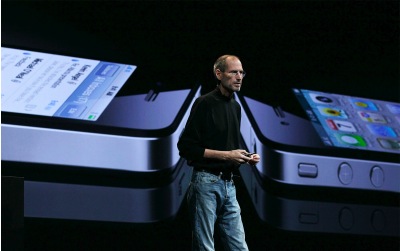
7 Coolest Features of the iPhone 4 Justin Sullivan/Getty Images At Apple’s developer conference in San Francisco, Steve Jobs unveiled his company’s next generation smartphone, the iPhone 4. With over 100 new features, there’s a lot to drool over. Here’s what gadget geeks are most excited about:
  • Pricing and Color Schemes Michael Bettiol at Boy Genius Report writes: “The iPhone 4 will be available in both black and white. The 16GB model will be $199 and the 32GB model will be $299. Both of these prices reflect the 2-year contract price with AT&T. Pre-orders for the US, UK, Germany, France, and Japan will commence on the 15th of June. June 24th is the big day as far as actual availability goes.”
  • It’s Super-Thin, writes Agam Shah at PC World: “The iPhone 4 sports a new look and is the thinnest smartphone, [Jobs] said. At 9.3 millimeters (0.36 inches) thick, the new iPhone is 24 percent thinner than iPhone 3GS.”
  • You Can Bing It,’ praises Miguel Helft at The New York Times: “No black eye for Google, but a win for Microsoft. Mr. Jobs announces that in addition to Google, which remains the default search engine, and Yahoo, which was already an option on the iPhone, iOS 4 will give users the option to use Bing for their searches.”
  • An Incredible Display Screen, notes Ed Oswald at Technologizer: “Another major feature is the ‘Retina display,’ Apple’s upgraded screen for the iPhone 4. The resolution comes in at 326dpi, which along with some software magic makes for clear, smooth fonts and more vivid images. Jobs said the resolution is actually higher than the human eye can see (exaggeration, perhaps?). Either way, Apple expects it to be ‘years’ before anybody matches this display.”
  • Video Chat and Camera Overhaul, details Matt Brian at The Next Web: “Steve Jobs has just announced that the iPhone 4 has been given a complete overhaul in the camera department, upgrading the 3MP camera on the 3GS to a 5MP LED flash enabled camera that has 5x digital zoom. The handset has a backside illuminated sensor, integrated so the imaging sensor can “get more light, enabling iPhone users to take better quality low-light photos. Pixel sensors have been kept larger instead of blindly increasing megapixels to improve picture clarity and quality… The iPhone 4 will be able to record full 720p HD video at 30fps with tap to focus, one-click sharing and the LED flash will stay illuminated to allow the recording of video in low-light situations. Instead of cropping videos on the iPhone 3GS, iPhone 4 owners will be able to edit HD video using….wait for it…….iMovie for iPhone!” On top of that, there’s also video chat: “You can use the front or rear camera, so people can see what you are seeing. Portrait or Landscape. The app is called FaceTime. ‘Apple will ship 10s of millions of FaceTime devices this year, so there will be lots of people to talk to.'”
  • Chip and Battery Overhaul, writes MG Siegler at TechCrunch: “As expected, the iPhone 4 will use Apple’s A4 chip. The device also has a bigger battery than ever before. The combination of these two things allows for 40% better battery life in some situations, Jobs said.”
  • The Gyroscope, writes Jesus Diaz at Gizmodo: “The new iPhone 4 has a gyroscope built-in. This means that it can track movement with a very high precision, much higher than the built-in accelerometers in the previous iPhones. It’s 3-axis, so it’s capable of detecting pitch, roll, and yaw. Couple with the accelerometer, you have 6-axis motion sensing.”

Apple’s iPhone 4: What Buyers Need to Know

Written by Chloe Albanesius

Apple’s iPhone 4 is now official and will be in stores on June 24. Are video calling, a front-facing camera, and the iBooks app enough to make you buy one? If you’re on the fence, or trying to figure out if you can afford to invest in Apple’s latest gizmo, here’s what you need to know about making the switch.

For more information and details of the new iPhone 4, check out our report of the launch of the Apple iPhone 4 as well as our hands on with the Apple iPhone 4.

How much will the iPhone 4 cost me?

The iPhone 4 will be offered in a 16 G-byte version and a 32GB version. For new and “upgrade eligible” customers who sign a two-year contract with AT&T, the 16-GB version will cost $199 and the 32-GB version will retail for $299.

Upgrades? I can’t just buy a new iPhone 4?

In general, AT&T iPhone customers who spend more than $99 per month per line are eligible for an upgrade when they are between 12 and 18 months into their contract, so that AT&T doesn’t lose money on the older iPhone model it has already subsidized. You’re not locked out of a new iPhone, but if you do make the switch before your upgrade date, you’ll pay $100 more than a new iPhone customer.

The good news is that Steve Jobs announced Monday that AT&T will subsidize iPhone customers upgrading to the iPhone 4 up to six months earlier than their current upgrade date. Now, if your upgrade date occurs before the end of 2010, you can buy the new iPhone 4 for $199 or $299.

How do I know if I’m “upgrade eligible”?

Check your status at att.com/iphone or dial *639#.

I’m not eligible. Boo. How much will the iPhone 4 cost me?

If you opt for an “early upgrade,” the 16GB will cost $399 and the 32GB will sell for $499.

Any options if I don’t want to deal with a two-year AT&T contract?

If you’re not jazzed at the prospect of a two-year commitment to AT&T, the 16GB iPhone 4 will cost $599 and the 32GB will retail for $699.

What type of data plans are offered for the iPhone 4? If you are switching from another carrier or upgrading to a smartphone, AT&T will offer its new tiered data plan. DataPlus will provide 200MB for $15 per month, while DataPro will allow up to 2GB per month for $25. For more information on AT&T’s new plan, check out PCMag’s guide.

If I already have AT&T, do I need to switch to a tiered data plan?

No. If you are an existing AT&T smartphone user, you don’t need to switch to a new plan. You might want to ask specifically about this when talking with AT&T, however. I have a BlackBerry through AT&T, and I called on Monday afternoon to see if my bill would change at all if I upgraded to an iPhone 4 later this month. The customer service rep quoted me the new tiered data plans – 200MB for $15 or $25 for 2GB. When I pointed out that AT&T’s iPhone 4 press release said that existing smartphone customers do not have to switch to a new plan, the rep said I was correct and could keep my plan. Granted it’s the first day these reps are dealing with iPhone 4 questions, but when it comes to unlimited vs. tiered, I want my unlimited plan.

Any other charges?

Customers with an iPhone 4, iPhone 3GS, or iPhone 3G can add tethering for an extra $20 per month. If you’re on a family plan, you can add another line starting at $24.99.

When can I get it?

The iPhone 4 will be available in Apple and AT&T retail stores on June 24. Customers can start pre-ordering the devices on June 15 on the AT&T and Apple Web sites.

The iPhone 4 is a bit pricey. Any deals on older models?

Yes, new and upgrade eligible customers can get the 8-GB version of the iPhone 3G for $99 with a contract. Early upgraders will pay $299, and those who don’t sign a two-year contract with AT&T can get the 8GB iPhone 3GS for $499.

35 Seriously Creative Examples of Digital Artworks

Collected by WDCore Editorial

Creativity has no boundary, no limit, and no measurement; it is basically the act of turning new and imaginative ideas into reality. It involves critical thinking and then turning your imagination into reality. There are many artists who are well-versed with converting their dreams and imagination into paper, canvas, and computer screen; and because of this ability or you can say because of their creativity, they are not only gaining fame but earning handsome money. But at some point, almost every artist feels uninspired and uncreative. So, here’s the instant help on getting over creative burnout and getting your enthusiasm and creativity back.

In this post we have gathered some of most creative artworks for your inspiration; we hope that you will like this collection.

Mechanical

Tortured Souls – Birdhouse

Every boys dream

Separated Unity

Reborn

KUKUTIS

A Distant Future

High levels

Creative mind

Private piece of hope

SUBREPO PROFUNDUM (creep up from a chasm)

Skeleton

Soul Collector

Betrayal in the Shallows

Saved

Air freshening!

Venus in furs

Meduse

Human Clothes Hanger

Ironman

Desert and clouds

Bear and child

Home of the dwarfs

AQUA

Skeleton

Skeleton

Gå din egen väg

As I See It

Revelation fields

Creative

Queen of Heart

Coming Undone

Wintermoon

One Annual Assmus

World Cup 2010: 10 South African terms to know

Written by Adrian Brijbassi

{{GA_Article.Images.Alttext$}}

Fans blow on vuvuzelas in front of Soccer City Stadium in Soweto, host of the World Cup’s opening match and championship game.

World Cup 2010: 10 South African terms to know

Heading to South Africa for the 2010 World Cup? Here are some terms you should know to impress the locals during the tournament (June 11-July 11):

1. “Bafana” – The nickname of the South African national team. It means “boys” in Nguni and often appears as “Bafana Bafana” in news articles and advertising. Although ranked 83rd in the world, the South African team has created so much optimism in the host country that there’s a shortage of its jerseys for sale.

2. “Vuvuzela” – This trumpet-like instrument blows one note that sounds like an elephant. Critics fear the vuvuzela will cause serious issues during the games. The instrument is banned from rugby and cricket matches in South Africa because it’s loud and distracting. Soccer fans vow to blow the vuvuzela loud and often in support of Bafana.

3. “Madiba Magic” – Nelson Mandela is 91 and frail, but hope remains that he will turn up during the World Cup; perhaps when the South African team and his nation most need inspiration. Madiba is Mandela’s Xhosa clan name.

4. “Braai” – Shortened from the Afrikaans word braaivleis, which means “roasted meat”, a braai is what we’d call having a barbecue, except it’s bigger, more social, involves more drinking and lots more meat. You haven’t been to South Africa if you haven’t enjoyed a braai.

5. “Sundowner” – A sunset and the drink enjoyed while watching it. Going for a “sundowner” means going to a pub or the beach for a glass of wine or a pint.

6. “Zakumi” – The World Cup’s popular leopard mascot, whose name comes from the country code for South Africa (“za”) and the word many African languages use for “ten” (“kumi”).

7. “Diski” – The official dance of the 2010 World Cup, the Diski incorporates soccer moves in its dance steps. Diski is the word used for “soccer” on the playgrounds of several black townships.

8. “Biltong” – Delicious jerked meat from a number of sources, including ostrich and wildebeest. Biltong can be found in many restaurants and grocery stores.

9. “Bunny chow” – A type of fast food most popular in Durban, the bunny chow is a hollowed out loaf of bread filled with one of a variety of curries.

10. “Soccer” – It’s not “football”, to the regret of many Europeans. South Africa, like Canada and the United States, calls the sport “soccer” in part because it has another form of football, rugby. For the same reason, Australians and New Zealanders will also call the game “soccer”, which is a 19th-century English euphemism for “association”. You will hear the game referred to as “football” in South Africa too, but many fans call it “soccer,” and the opening and closing matches of the World Cup will be played in Soccer City Stadium in Johannesburg.

(ALEXANDER JOE/AFP/Getty Images)

12 Important Financial Concepts You Didn’t Learn in School

Written by Stan Reybern

Critics of the public school system have long lamented the lack of personal finance education in our classrooms. As many have pointed out, today’s high schools rarely teach even the basics. Consequently, students often graduate high school unable to so much as balance a checkbook or compare two different loans. Yet as embarrassing as this is, our schools also neglect a whole slew of more advanced financial concepts. While some are covered in various college courses, the only group of students likely to have encountered all of them are MBAs. In reality, they apply to everyone, not just business owners. If you are not an MBA or are simply curious to learn about some of the important financial concepts overlooked in school, consider the following.

Probability

Image Source

Probability seeks to measure how likely it is that various things will happen and express those odds as a percentage. A coin toss, for instance, has a probability of 50% because it is equally likely that it will flip heads or tails. Banks use probability (albeit in more complicated ways) to determine the odds that borrowers of various creditworthiness will repay their loans and, thus, what interest rate to charge. While many believe that banks charge high or low interest out of “greed” or “favoritism”, it is ultimately a total numbers game. If probability shows that borrowers with your characteristics pay on time, you pay less. If it shows the opposite, you pay more. Understanding probability can put such decisions into perspective and empower you to make better ones yourself.

Statistics

Image Source

While probability is about predictions, statistics is about measurement. Generally speaking, there are two kinds of statistics: descriptive and inferential. Descriptive statistics simply reflect the inarguable facts of the data. The heights, weights, genders and eye color of a thousand randomly assembled people would be examples of descriptive statistics. Inferential statistics go a step further by attempting to draw conclusions from the descriptive ones. An example of an inferential statistic might be a theory about how “80% of all people living in this area have brown eyes.” Statistics, like probability, is used across the economy and shapes billions of financial decisions large and small every single day.

Sunk Costs

Image Source

A sunk cost is an amount of money that has already been spent and cannot be recovered. Cars purchased, years spent in careers and portions of meals already consumed are all sunk costs. Unfortunately, because human beings are naturally risk-averse, we are often slow to acknowledge sunk costs and change course. We frequently hear friends or relatives justify staying at jobs they despise because of all the time they’ve worked there. Others will actually force themselves to choke down disgusting restaurant food to “get their money’s worth.” But all they are doing is throwing good money after bad by prolonging the original mistake. Instead, true financial rationality demands that you emotionlessly cut your losses as soon as a sunk cost is recognized. Time and money already spent (and which you cannot get back) should not affect what you decide to do next.


Expected Value

Image Source

Expected Value is a specific and immensely useful application of probability. In simplest terms, it is an expression of the long-term average odds that something will happen. You get it by taking an outcome and multiplying it by the probability that it will happen. The number you wind up with is the Expected Value of that action. While this might sound like abstruse financial jargon, it is anything but. Everyone who buys lottery tickets, for instance, is either unaware of or ignoring the concept of Expected Value. Based on the calculations just described, forking over $10 for buys you a piece of paper with an Expected Value of $5. Seen from this perspective, buying lottery tickets actually reduces your net worth. An index fund, on the other hand, is an example of something with a positive Expected Value that could rationally be expected to grow your net worth.

Mental Accounting

Image Source

Another financial mistake we often make is classifying money into arbitrary but seemingly meaningful categories. We hear investors tell us, for example, what they do with “money they can afford to lose.” As kids, many of us probably spoke eagerly about our plans for birthday money that we “weren’t expecting anyway.” A Washington Post article described a study where 86% of people bought a $10 movie ticket after losing $10 on a train, but only 46% bought a second $10 ticket after losing the original. This is a fallacy known as mental accounting. In all the above examples, people are making apples-to-oranges comparisons out of identical things. There is no dividing line between money that matters and money you can afford to lose, or between money you worked hard for and money you weren’t expecting. It is all the same resource: money. Economically speaking, you should make these decisions based solely on Expected Value rather than imaginary categories.

Time Value of Money

Image Source

The time value of money states that money today is worth more than money tomorrow. Money already in your possession can be put into investments or savings and earn interest. Investopedia offers an apt example:

Assuming a 5% interest rate, $100 invested today will be worth $105 in one year ($100 multiplied by 1.05). Conversely, $100 received one year from now is only worth $95.24 today ($100 divided by 1.05), assuming a 5% interest rate.

Keep this in mind when someone makes an offer for your house or other property. A seller who offers you “more money later than he can give you today” and tries to make it sound attractive could, in truth, be offering less than today’s “smaller” amount. The old saying “get the fast buck, not the last buck” nicely captures the time value of money.

Risk Management

Image Source

Astonishing numbers of people have little or no appreciation of true risk management. Mention the risks of any activity and you are likely to hear dismissive responses like “there’s risk in everything” or “you could get killed crossing the street.” Frankly, this is a lazy and ignorant view of what risk truly is. It is not enough to simply assume that risk is present equally in everything so why bother thinking about it. Each activity entails different types of risks and different probabilities that they will materialize. You need to quantify any serious risks that are encountered. The decision of where to buy a home, for instance, should be made partially based on historical property values and the likelihood and they will rise or fall. For extremely important choices, it might help to construct a formal decision tree that visually displays possible outcomes and their Expected Values.

Leverage

Image Source

Borrowing money (also known as leverage) is another common source of confusion among the public. Besides attributing high or low interest rates to greed and favoritism, many people fail to comprehend the basic, underlying mechanics of borrowing. The idea of interest can prove especially confusing. Yet, it is crucial to understand what is actually happening when you borrow money. Take the easy example of a car loan. While your new car might cost, say, $28,000, borrowing the full purchase price costs far more than that. Using a cost of loan calculator, we find that borrowing $28,000 at 6% interest and repaying it over 5 years costs $32,479 when all is said and done.

Compound Interest

Image Source

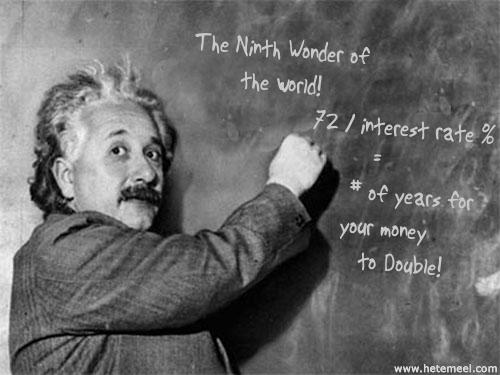
If you’ve ever wondered why financial experts are always telling people to take advantage of tax-deferred 401(k) and IRA accounts, the mystery is solved. Compound interest is the reason. If you put $10,000 into an index fund earning 6% interest and do nothing, it will be worth $57,434.91 in thirty years. That’s because the interest on your original $10,000 is itself earning interest with each passing year. Of course, the returns are even sweeter if you continue putting money in, but the power of compound interest should now be clear. Furthermore, with a Roth IRA, all of this accumulated growth is untouched by income taxes.

Inflation

Image Source

You might have heard various analysts and experts claim that some low rate of return (say, 1% or 2%) “doesn’t even beat inflation.” Inflation refers to a gradual, yearly rise in the prices of everything in the economy. Because the government prints more money each year, it loses its buying power at a rate of between 2%-4% annually. In other words, $500 today can buy more goods and services than it will buy a year or two from now. According to the Heritage Foundation, Social Security provides low or even negative returns to various segments of society because of inflation. When making financial decisions (such as evaluating investment performance or yearly income) you must always determine the inflation-adjusted, or “real” rate of return. Neglecting inflation creates a rosier picture, but is nothing more than an exercise in self-delusion.

Opportunity Cost

Image Source

Opportunity cost refers to the value of your foregone options. The opportunity cost of attending college, for instance, might be the income you could earn at a job if you weren’t in school. The opportunity cost of going to a party might be a lower grade on the test because you didn’t study. Every choice in life, big and small, entails opportunity costs. Nor are they always this obvious. Many “do it yourself” projects are actually a waste of time and/or money when opportunity cost is considered. Let’s say it takes you six hours to do your own taxes, during which you cannot work on your business. If six hours working on the business would have produced more than the cost of an accountant, doing it yourself was a waste. To view it any other way is sheer mental accounting. While you did not physically hand money over, the greater sum of business income you sacrificed means you should have.

Risk vs. Reward

Image Source

One of the most basic ideas underlying many of these concepts is that risk and reward are positively correlated. There is relatively little payoff involved when an activity is extremely safe. As the old saying goes, “if it were easy, everyone would do it.” This is why savings accounts (backed by federal deposit insurance) pay only 1%-2% interest while stocks (which can crash in a heartbeat) routinely pay 5%-10% or more. It is also why working a low-intensity desk job for fifty years is a lot less lucrative than owning an actively managed business. One is relatively sure thing, while the other contains much uncertainty and risk.

10 Things Android Does Better Than iPhone OS

Written by Paul Escallier

Android Takes a Bite Out of Apple

When Android first debuted on the HTC Dream (also known as the G1) back in October of 2008, it was deemed an “iPhone Killer.” While it didn’t quite slay Apple’s handset, it was the first step in a revolution against the tyrannous iPhone. The initial Android platform bested the iPhone OS on several levels, but lacked some key functionalities that the iPhone could provide. Since then, Android has grown – not only meeting all of the functionalities of the iPhone, but besting it in nearly all aspects from an extensive list of devices to a growing Android Marketplace. Here is our list of the top 10 things Android does better than the iPhone.

1: Android can Run Multiple Apps at the Same Time

Starting with version 1.0, Android has been able to run multiple applications at the same time regardless of whether they are system apps or apps from the Android Marketplace. The current version of iPhone OS does offer limited multitasking, but only allows native applications such as Mail, iPod and Phone to run in the background. Android users benefit greatly from this discrepancy, as they can receive notifications, listen to music, or even record GPS data without keeping the application open. Apple will try to level the playing field with iPhone OS 4, granting developers access to a small and limiting list of APIs that can run certain services in the background, but it’s a long way from the true multitasking that Android has.

2: Android Keeps Information Visible on Your Home Screen

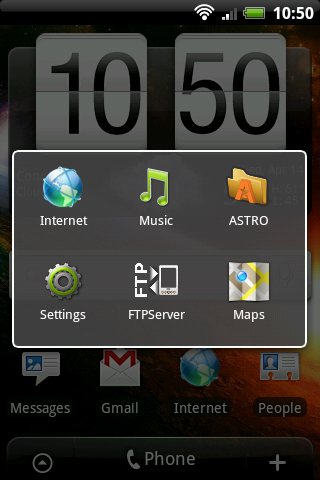
One of the key features Android has is a customizable home screen keeps active widgets right at your fingertips, always accesible and always visible – without having to launch an application first. There are widgets for just about every app in the Android Marketplace from playing music to checking the weather and keeping up to date on Facebook. Meanwhile iPhone users are force to flip through their app list to locate and launch each app. If you wanted to check the forecast, for example, you would have to find the app, launch it, and then wait for it to load. With Android, all of that information can be displayed directly on your home screen, never more than a finger swipe away.

3: Android Has a Better App Market

It’s true that Apple’s App Store has over 180,000 applications, while the Android Marketplace has only just broken the 50,000 mark but Android’s rapid growth and adoption give it the potential to catch up to the iPhone App Store. Android also has another advantage: a completely open market. Apple receives around 10,000 app submissions per week, yet many apps are overlooked because they appear too simple or denied because a similar app already exists. The Android Marketplace is driven entirely by its consumers, so the best app is the one that succeeds – not the first one to reach the market. In addition, the Android Marketplace doesn’t censor its apps, so the possibilities are truly endless.

4: Android Gives You Better Notifications

The iPhone has some trouble with notifications. Because it’s restricted to pop-up notifications, it can only handle one at a time and because it lacks multitasking, applications must be open in order for them to make notifications. Android, on the other hand, has a convenient notification bar which displays an icon for every notification you have waiting. The notification bar can also be pulled downward to reveal more detail about each notification. Android also allows app developers to make notification details viewable from the lock screen, something the iPhone can only do with native applications.

5: Android Lets You Choose Your Hardware

Apple users are encouraged to “Think Different” but when it comes to the actual hardware, they don’t get much choice. You can pick the color, either black or white, and you get to choose between the 16GB or the pricier 32GB version. Other than that, you’re stuck with the 3.5-inch, 320×480 pixel display, 256MB of RAM, and 600MHz processor. Because Android is an open platform, manufacturers have the freedom to pair it with any hardware they want, like the Nexus One (with 3.7-inch, 480×800 pixel display, 512MB of RAM, and 1GHz Snapdragon processor) or the Motorola Droid which has a physical keypad. Obviously, available selections will vary by carrier – speaking of which….

6: Android Lets You Choose Your Carrier

AT&T truly is the iPhone’s weakest link. The iPhone’s success turned the country’s fastest 3G network into a staggering mess of dropped calls and dodgy data connections. If you lust after an iPhone and live in an area with poor AT&T coverage, you’re stuck struggling with low signal quality, slow data speeds, and missed calls. Android devices are available on every major cellular carrier (although AT&T only offers a single, somewhat underpowered, Android phone). Verizon has the Motorola Droid, Droid Eris, and Droid Incredible to start. T-Mobile has the Nexus One, MyTouch 3G, Behold II, and will soon carry the MyTouch Slide. And Sprint has the Hero, Moment, and plans for the very promising Evo 4G. No matter where you live, Android lets you pick the carrier that’s best for you.

7: Android Lets You Install Custom ROMs

The iPhone can be Jailbroken for some additional functionality, like installing apps that aren’t available in the App Store, but the overall experience is the same. You’re still stuck with the same exact interface. Similar to the Jailbreaking movement, Android has a small community dedicated to building custom ROMs for Android devices. Not only do Custom ROMs bring the same functionality Jailbreaking does, but they also bring an additional level of customization to your phone. There are ROMs that port custom UIs from one device to another. Other ROMs strip down bulky features and optimize for speed. With Android, nothing is out of reach.

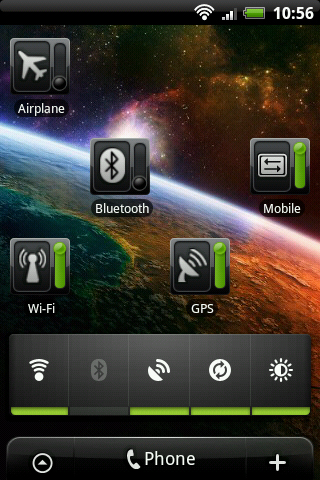
8: Android Lets You Change Your Settings Faster

Smartphones have been gaining more and more functionality over the past few years: Wi-Fi, GPS, 4G, Bluetooth, etc. While these are all great and necessary additions, they have very adverse affects on battery life. In attempts to counter poor battery life, users have taken to toggling system settings like turning on Wi-Fi or 3G on only when they are needed. iPhone users are stuck digging around in the system settings every time they want to use the internet or a Bluetooth device. Android lets you use widgets to manage your settings directly from your home screen – and for those lesser-used settings that might not have dedicated widgets, you can also create shortcuts on your home screen to take you directly to the setting you want to change.

9: Android Does Google and Social Integration

With Smartphones giving us constant connectivity, it’s not surprising that the majority of our computerized lives are moving online. We have email for our messages, Flickr for our photos, Google Docs for our documents, and Facebook and Twitter for our social lives. Android offers the ability to integrate all of this natively. Your Gmail account can be automatically synchronized with your phone. Photos taken with your phone can be automatically uploaded to Flickr. Your phone can even be linked to your Facebook account and can sync your phone contacts with your Facebook friends – complete with profile images, email addresses, and phone numbers. The iPhone can do this only through use of third party apps, and is nowhere near as seamless to use as the Android alternative.

10: Android Gives You More Options to Fit Your Budget

If you’ve ever thought about buying an iPhone, you have probably noticed the price tag. The older iPhone 3G costs $99 with a two-year commitment and performs sluggishly with the latest OS updates when compared to the 3GS (which will run you a whopping $199 with two-year agreement). Because Android is an open source platform, it is very cost effective to implement which means savings for the end user. Every major cellular carrier (except for AT&T) has at least one Android phone available free with two-year agreement. Of course these are lower end Android devices, but they are still comparable in performance to the iPhone 3GS. The most expensive Android phones (which significantly outperform the iPhone 3GS) are  $199 with two-year contract.

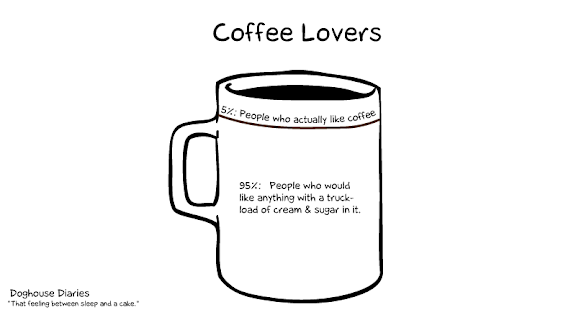
Bonus: Coffee Lovers

source