Written by Akela Talamasca
Let’s say you get your hands on a brand new Time Machine. Whether it’s the old-school H.G. Wells chair model, or a tricked-out DeLorean, you’ve now got to decide what you’re going to do with your new toy. But before you run off and start messing up your life, sleeping with your grandmother, and investing in Google stock before the Internet was invented, we’ve got a few ideas for you. Here are 15 moments in time, both past and future, that you may want to just witness before you go and do what you’re inevitably going to do, and ruin everyone’s universe.
The Trinity Test (Past)
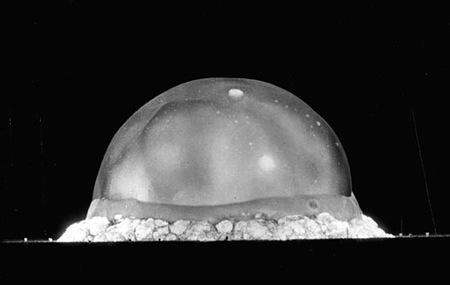
If you want to see one of the most awe-inspiring events in human history, then you need to set your time machine for 5:29 AM, July 16th 1945 at Alamogordo, New Mexico. The Trinity test was the very first successful detonation of a nuclear bomb, with a blast the size of 20,000 tons of TNT. Make sure you pack some Ray-Bans, and apply plenty of sunscreen for this one.
The Roswell Crash (Past)
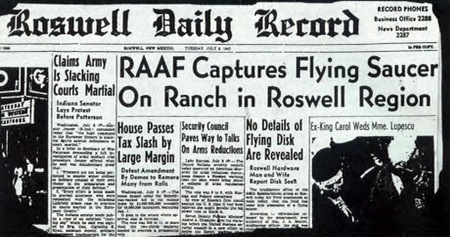
Whether it was a UFO or a weather balloon, it’s time we found out just what went down around Roswell, New Mexico on the night of July 2nd, 1947. Just to be sure, camp out for a couple of days before hand, and try to find a spot somewhere on Foster Ranch, outside a little town called Corona, near Roswell. Remember your cameras and flashlights, and a first-aid kit may not be a terrible idea either.
Birth of the First True Artificial Intelligence (Future)
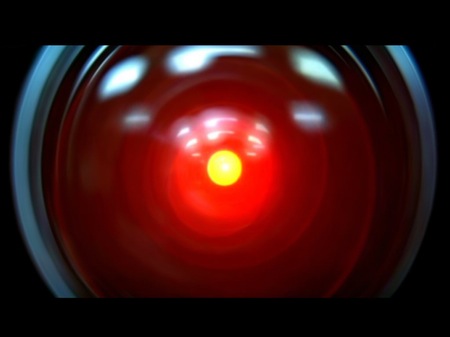
In the movies the first A.I. always turns out to be a total asshole. It nearly always either tries to murder someone, or take over the world, or cause general mayhem while it plots to take over the world or murder someone. This is all Hollywood, so you’ll have to check out just how it pans out when the very first true artificial intelligence wakes up and says hello. Remember, there is still the chance that Hollywood was right all along, so take a really big electromagnet with you just in case.
The First Modern Olympic Games (Past)
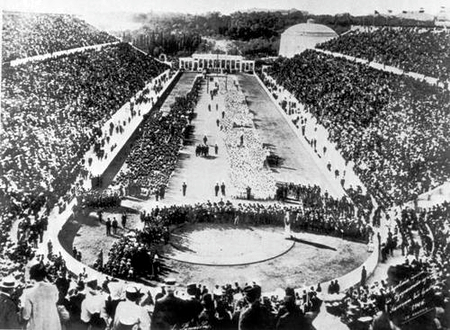
In 1896 Athens, Greece hosted the world’s first international Olympic Games. This was a huge event, with crazy steam-powered boats and new-fangled “locomotives” moving people around. It must have been a sight to see this collection of athletes from around the world all in one place, you know that had to be one hell of a party.
Signing of the Declaration of Independence (Past)
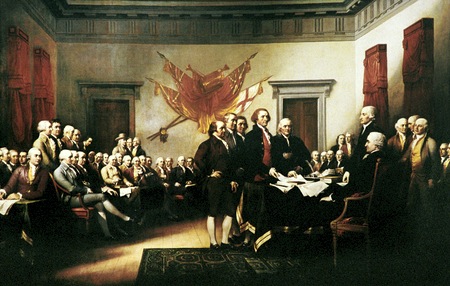
Even non-Americans want to witness this event in human history. The sheer immense gravity of the situation makes it stand out amongst anything else that any other group of men ever did with pen and parchment.
Mankind Attains Faster Than Light Travel (Future)
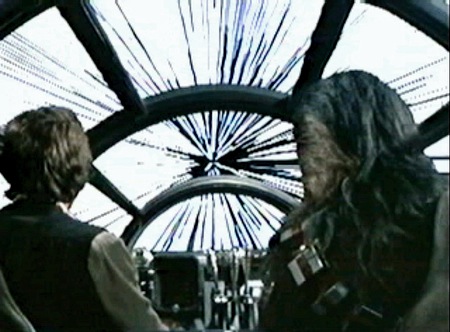
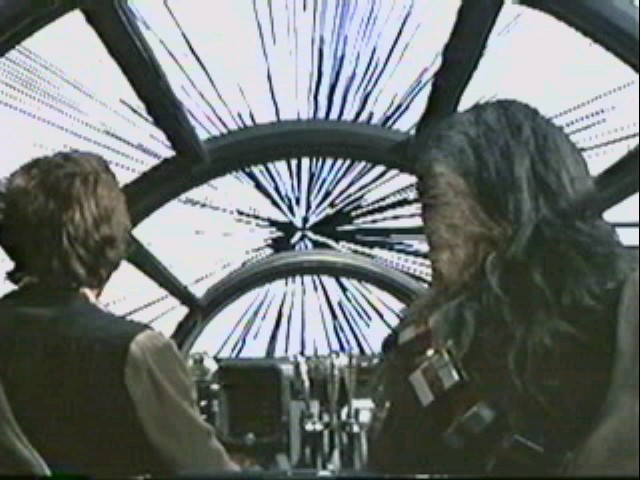
Let’s face it, ever since you were a kid and you saw Star Wars for the first time, you wanted to fly through space at light speed. You especially wanted to do it with Chewbacca at your side but we’re trying to be realistic here. Now if the whole “breaking the laws of physics” thing bothers you, well, you’re in a freaking time machine.
The Fall of Rome (Past)
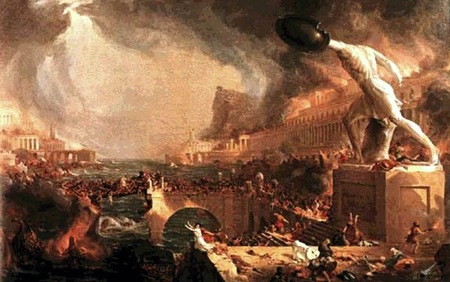
Granted, it may be a good idea to show up a few years early on this one so you can enjoy Rome while it’s not burning, but we’re going for the excitement here, right? You’ve got all the time in the world (literally) to hang out and live the good life with girls feeding you grapes while you bathe in wine; we want to see the barbarian hordes!
Battle of Thermopylae (Past)
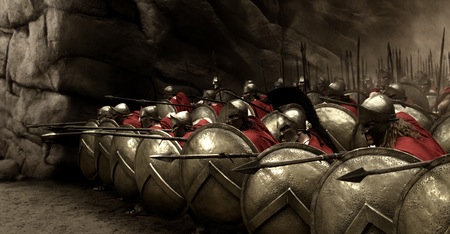
You should note before going to see this horrifyingly spectacular display of bad-assery that, historically speaking, it was nothing like the movie 300. In fact, it may have been slightly more awesome, even though King Leonidas may not have had such a massively out-of-place (but still cool) accent. Xerxes was probably taller and the elephants were probably twice as big.
First Contact With an Alien Species (Future)
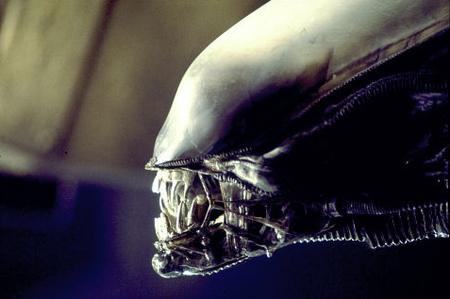
Yes, this could easily go badly for us humans, but it’s something you simply cannot miss. You have a time machine, and that means you have a duty to witness certain things that just too far beyond you for there to be any objection. Do humanity a favor though; if you’re going to watch this one happen, take a flame-thrower with you, and if things get out of hand, just ask yourself “what would Ripley do?”
Helen of Troy (Past)

This is one of those things that simply demands explanation. Was she hot…and by that, I mean was she “sending a country to war hot”? Unfortunately, there is just unbiased record of what this woman looked like. For all intents and purposes, the guy who wrote that story could have had a thing for women like Renee Zellweger… So this is definitely should be on self-respecting male’s pretend, time machine to-do list. Bonus: you also get to see for yourself just how many heroes, gods, and demigods showed up for the fight. Take lots of film.
The Discovery of Beer (Past)

Anthropologists suggest that without the advent of beer, man may never have banded together and settled down on farms like we did. That means we owe a great deal, pretty much everything, to beer. In honor of this, you should make it a point to go back and see the first pint, bow down to it, salute it, do what you will to it. And if you can, drink some of it. Beer is good, remember.
Mankind’s First Interstellar War (Future)
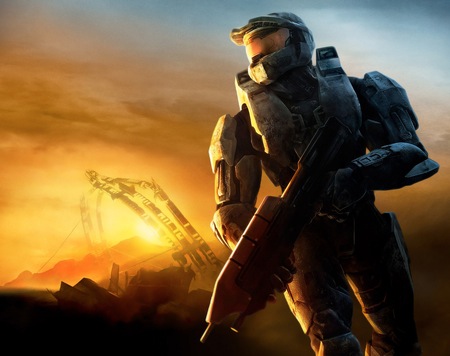
Nobody wants a war, we all want peace, violence is horrible. That being said, since we can’t really deny the inevitability of mankind having a first interstellar war, we may as well own up to the fact that we all want to see how it starts. More than likely, it will just be man vs. man, with colonies in space fighting each other. That’s still loads of awesome, so make sure you stash your time machine some place safe and settle in for the show. And by safe, I mean one of the Dakotas (there’s nothing there, anyways).
Man’s Discovery of Fire (Past)
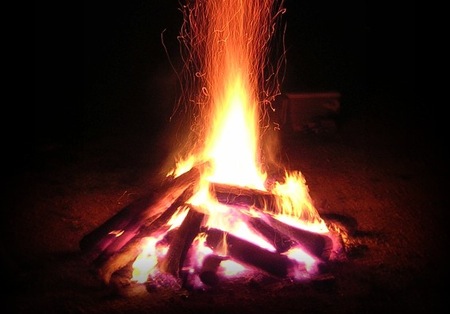
This is arguably the single greatest turning point in the advancement of humanity. Before this point, we were apes. Afterwards, we were apes who could barbeque, things such as animals and other apes. Going back to this time would probably lead to some pretty crazy parties, and even though the language barrier may get in the way (unless you speak ‘grunt’), you’ll be the most handsome guy there. Steve Buscemi doppelgangers excluded.
The Comet that Killed the Dinosaurs (Past)
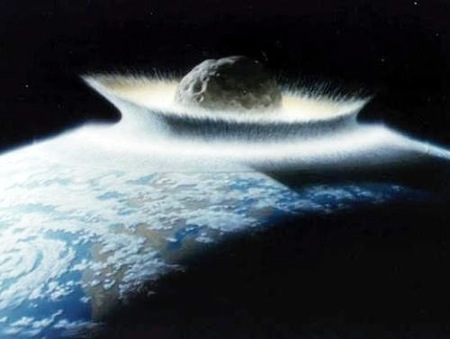
Alright, now this one’s tricky. We’re talking about an explosive impact so ridiculously huge, that it killed nearly everything on Earth. You’re going to have to camp out a bit, and keep the binoculars handy to watch for the comet; when this goes down, you had better get some really good pictures, hopefully video, and then hop back in your time machine and out of there as quickly as possible. None of this adventuring means anything if you’re wiped out with the dinos.
Cubs Win the World Series (Future)
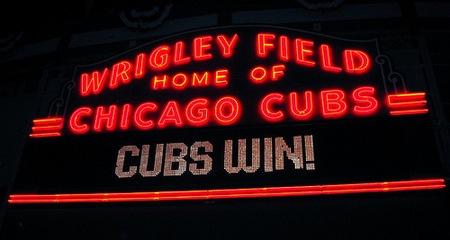
We can at least be hopeful, can’t we?
Don’t Forget This
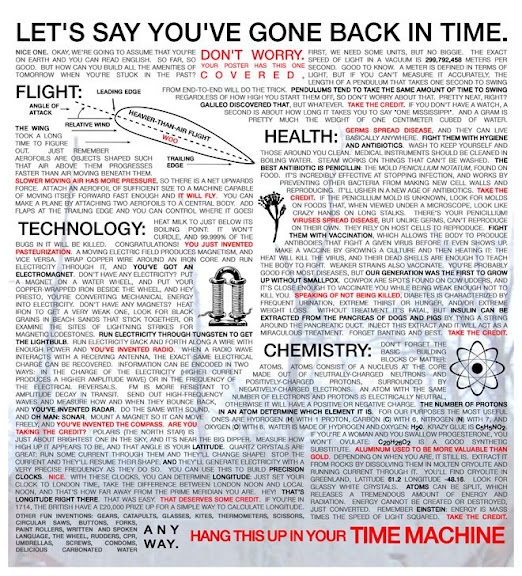
This handy guide will keep you taken-care of in the unfortunate event that you get stranded in time, assuming it’s the past. If you get stranded in the future, then just make a fortune going on talk shows and starring in movies. Since you’ll be so out-dated, you can pull of vintage-chic pretty well, and if that fails there’s always politics.

 General Motors (