
Monthly Archives: February 2010
15 Valentines Gifts Guaranteed to Get You Dumped
Written by forkparty
Love is in the air whether you like it or not. Around this time of year, girls tend to get all hot and bothered by the prospect of Valentine’s Day even though it isn’t even a real holiday. I don’t know why but women can’t seem to understand that Valentine’s Day is a holiday propagated by greeting card, flower, and chocolate companies. As a result, you, the man, statistically anyway, must purchase her love with gifts from the aforementioned companies. They want stuff for Valentine’s Day; and not just any stuff, stuff that makes them feel “special” and “loved”. There are very strict guidelines that you must follow and if you purchase any of the following gifts, the odds that you won’t have a significant other for the 15th are very, very good.
Lingerie

Lingerie is one of those gifts that isn’t really for her. Granted, Valentines Day is just a day where if you pull everything off correctly, you have a 100% chance of getting laid. I know it makes sense in your head that $80 lace undies is completely appropriate for Valentine’s Day but remember that women want to feel special on this day. What lingerie does is reassures them of the fact that they are nothing more than a sexual object to you and that won’t make them feel special at all.
Flowers From a Gas Station

Gas stations stock up on flowers because they know idiots like you are either going to completely forget Valentine’s Day or just put off buying a gift until the very last minute. Girls are smart… sometimes… well, at least they know that your bouquet of roses wrapped in newspaper and completely lacking any babies breath was purchased on your way home from work while you stopped for gas. These gas station attendants have no idea how to arrange a bouquet and although it may seem ridiculous to you, women hate that shit.
Gym membership

The gym membership has to be one of the all-time biggest screw-ups in gift buying. Instead of getting her a year at Gold’s gym, maybe you should have just slapped her across the face and told her to “go for a run, fatty”.
Cheesy Heart-Shaped Jewelry
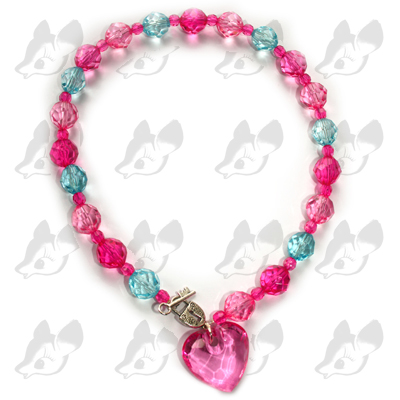
Yeah, the jewelers have been advertising this completely cheesy heart-shaped pendant for the last few weeks but that doesn’t mean that anybody actually wants it. If you can get a piece of jewelry that is appropriate for any day, go for that instead of the cubic zirconia heart-shaped pendant and your chances of getting any will skyrocket. Think about it, If she’s ever had a boyfriend on any Valentine’s Day in the past, she probably already has a cheesy heart-shaped pendant and she really doesn’t need another.
Kitchen Appliances
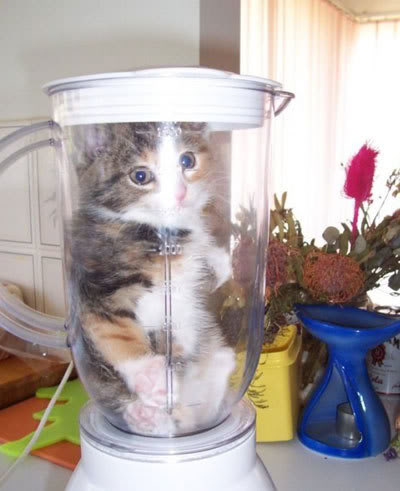
Nothing cements your significant other’s attachment to the kitchen like appliances. Has a blender ever made you feel special? Has a food processor ever conveyed somebody’s undying love for you? If the answer is no then your girl doesn’t want it for Valentine’s Day. Take it back to Sears.
Bathroom Scale
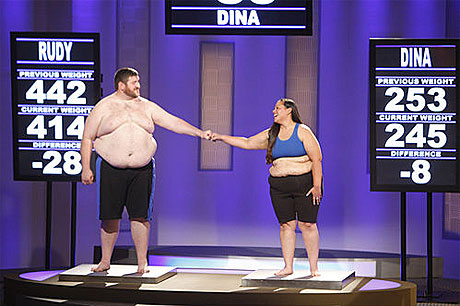
Oh my god you did not. Seriously, a scale to weigh anything, even drugs, is strictly the worst present you can get anybody for anything. Even if you’re a alleged lover has just dropped 60 pounds and you want to get her a scale as a means of congratulating that effort, to her it just looks like she needs to lose some more. Personally, I don’t understand why in the world anybody would need a scale. If you’re fat, you can tell without the scale and no degree of accuracy is going to change that.
A Maid Outfit
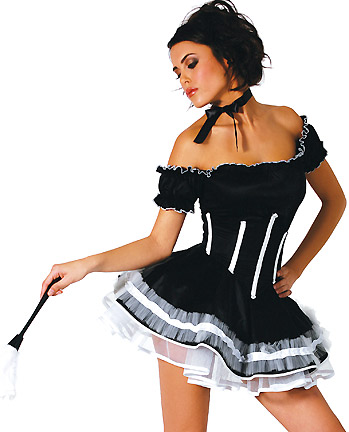
The maid outfits or any other sexy costume is another one of those presents that’s really more for you than it is for her. I really have to reiterate the fact that these sorts of presence don’t make her feel special, they make you feel special. It might get to the point where you do get to slip her into some sexy costumes, but you’ll certainly never get there if you are giving them to her as the Valentines Day gifts. If you make her dinner, buy her a nice bunch of roses, and get her an incredibly personal and loving gift, then it might be time to break out the French maid costume. Best of luck to you though because I never saw the inputs as being worthy of the output.
Cooking Classes

Cooking classes are a great way of telling your significant other that they suck at cooking. Cookbooks may be a little lighter but they still aren’t recommended. Anything you give her to mold her into the person you want her to be, just forget it. You want to make her feel special as she is, not as you want her to be.
Cosmetic Surgery

I know it might seem pretty obvious that cosmetic surgery is a terrible gift get somebody you love but some people just don’t know. What you’re really saying is “yeah, I think you’re beautiful but you’d be more beautiful with a breast enhancement and some lypo”. Not so subtle implications that you think your lover isn’t perfect are terrible ideas for any day and will probably grant you a knee to the bollocks rather than a mouth to the same area.
Flowers from the Front Yard

By all means go out to wild fields and spend a couple hours picking flowers for the object of your affection, but if you have completely forgotten about Valentine’s Day until just prior to opening the door, forget about picking the daffodils from the front yard. Yeah, she can tell. If you forgot Valentine’s Day, don’t go reaching for the most ridiculous and simple gift you can find, instead make your lover feel special by cooking her a magnificent dinner and rubbing her feet down or something. Picking flowers from yours, or anybody else’s garden for that matter, is a surefire way to not get laid for the rest of the month.
A Venereal Disease

So, if everything else went right and you do end up getting laid on Valentine’s Day make sure that you are clean. Transmitting the present that that Saigon hooker gave you while on business is the last thing your significant other wants on Valentine’s Day. If you find yourself in this position, you would probably be better off just telling her that you’ve been unfaithful and leaving. She may be really quite upset now but when she realizes that you have a VD that she doesn’t, she might even thank you for not having sex with her. I bet it wouldn’t be the first time too! ZING!
A Card
Greeting cards are the embodiment of impersonal feelings. If you get all hot and bothered in your significant other’s presence, then you should be able to put your feelings onto paper. Greeting cards exist solely because people are too lazy to write how they really feel or just plain don’t care. By all means make your own card or buy a blank one, but make sure that you actually write something heartfelt and make the person that you’re giving it to feel special.
Any Hair Removal System

Nair, razors and coupons for laser treatments are all absolutely terrible gifts to get any woman. If she has a problem with body hair, fine, but don’t get her anything that reminds her of that problem for Valentine’s Day. You want to make your significant other feel absolutely beautiful exactly how they are. Chances are that if you know about her problems with hair sprouting out in embarrassing places, then so does she. The last thing she wants to be reminded of on Valentine’s Day is her mustache.
Dumping Them
Don’t dump anybody on Valentine’s Day because that’s just not cool. Remember, even though it may just be another day to you, girls actually give a shit. One day it will come back to bite you in the butt because what goes around comes around. Seriously, if you dump anybody on Valentine’s Day, odds are that you were having second thoughts about the relationship prior to this date and you should have done something about it sooner.
“Oral” Guidance

If you get her a book called “Head: You’re Doing it Wrong” you are an idiot. On the other hand, if you get her a book called “Dogging Chicks Out: You’re Doing it Wrong” and spend the evening hours reading it followed up by a good 10-20 minutes of executing what you’ve just learned, she might be more inclined to look up some really nice techniques for you on the Internet.
Personally, I have completely succeeded in convincing my girlfriend that Valentine’s Day is a day that flower companies just want to get paid for. As a result, I don’t have to buy her anything. I do, however, make sure that I have a three-course meal and a seven-dollar a bottle of wine ready for her come dinnertime. Afterward, we might watch a terrible romantic comedy but because of all my hard work and dedication to making the significant other feel special and loved, I can usually persuade her to put on the stockings and give me a Valentine’s Day present as well.
What NOT To Do In London: The Top 5 Tourist Mistakes
Written by JetSetCD

It’s easy to make stupid tourist mistakes in London, England; the city is huge and there is tons to see. But if your first language is English and you’ve ever been to a big city before, you have no excuse for making a few easily-avoided oopsies. We’ve covered the five absolute worst mistakes, but we know there are a score more.
So without further ado, here is the Jaunted guide of What Not To Do In London: The Top 5 Tourist Mistakes.
Check them out, after the jump.
5. DON’T confuse Tower Bridge with London Bridge
So you’re tempted to stroll along the Embankment by the Thames singing “London Bridge is falling down” to youself, but dude—the original London Bridge is long gone. In fact, it’s in Lake Havasu City, Arizona, because they bought it from London in the 1970s and installed it in their town, and that’s still not even the clogged-with-buildings historical version of the Bridge mentioned in the song. Rest assured, there is still a London Bridge over the Thames, but it’s nothing special and hard to distinguish from any other bridge. Just don’t point at the bridge in the picture above and claim that this one is London Bridge, because it’s just not. That’s Tower Bridge, and it always has been.

4. DON’T drive, walk or stand on the wrong side of the street and sidewalk
The cars might drive on the left side of the street in Britain and every pedestrian crosswalk may be painted with a “LOOK LEFT” or “LOOK RIGHT” to remind you of this fact, but the directions don’t apply to everything. Take, for instance, walking on a sidewalk. The pedestrian traffic flow is on the right, and you should also be aware of escalator etiquette: it’s stand on the right and walk on the left there.
3. DON’T shop on Oxford or Regent Streets
The only good thing that Regent Street has going for it is the large Apple store with its free WiFi signal that leaks out. Otherwise, these streets are a crush of confused tourists shopping at H&M or other chain stores they could usually find at home. If you are however desperate to do some shopping like this, you can find the same shops in nicer environs and less congestion on Kensington High Street or Kings Road. Slightly related tip: don’t wear “Mind the Gap” or Union Jack shirts fresh from purchasing them as souvenirs; you become a target for pickpockets and thieves, because you are obviously a confused tourist.

2. DON’T go to Buckingham Palace hoping to see the Queen, or even thinking that she’s there
Just because the Union Jack flag is flying high above the Palace doesn’t mean that they whole royal family is sitting in there, having tea or something and gazing out at you. The Queen herself is only in if you see more guards wearing their red jackets and huge hats than usual and the royal standard is raised on the flagpole too, and it looks like this. When we were there last week, she was not in, and yet hoards of tourists were clinging to the gate and staring up at the window expectantly, and for a while too!

1. DON’T pay to go to a museum
The majority of London’s museum are completely free, and sort of de facto hangout places for locals even. If your plans include any of these big museums: Tate Modern, British Museum, the National Gallery, Tate Gallery, Victoria & Albert Museum, National Portrait Gallery, National Maritime Museum, and the Imperial War Museum (and many more!), then you can just walk in and have a great time without laying down a single sterling. These should exhaust you pretty well, so that you hopefully aren’t even tempted to pay the exorbitant 16.50 GBP ($26) per person entrance fee to the Tower of London or the 7 GBP to go upstairs in Tower Bridge. Just say no.
What are your London DOs and DON’Ts? Have you done any of the above and loved or regretted it? Let us know in the comments!
[Photos: Jaunted, The Rocketeer, and Jaunted]
9 Food Label Lies
Written by Dan Shapley
Reading food labels isn’t as easy as you think. Here’s how to decipher nutrition labels so you can separate fact from marketing.
It’s a fact of the grocery store that the most healthy food often has the least marketing muscle behind it. The best source of fiber and vitamins are fresh vegetables and fruit, and yet it’s the processed, packaged junk food fortified with vitamin and fiber powder that screams for attention. The Center for Science in the Public Interest recently published a comprehensive report on the subject, a persuasive indictment delicately called “Food Labeling Chaos.”
“Consumers need honest labeling so they can spend their food dollars wisely and avoid diet-related disease,” said CSPI senior staff attorney Ilene Ringel Heller, co-author of the report. “Companies should market their foods without resorting to the deceit and dishonesty that’s so common today. And, if they don’t, the FDA should make them.”
Like listening skeptically to a politician speak, however, you can often decipher the truth amid the lies and misdirection by carefully reading food labels. Here we take a look at nine of the most common ways food labels lie, so you can prepare before your next trip to the grocery store.
Made With Whole Grains
You’re standing in the grocery aisle, faced with a choice. On the one hand, there are the Thomas’ English Muffins of your youth: white and filled with nooks and crannies practically screaming to be filled with pools of melted butter. On the other: Thomas’ Hearty Grains English Muffins, which is “made with the goodness of whole grains.” You reach, somewhat grudgingly, for the healthy option, since experts tell you that 50% of your grains should be whole grains.
What you don’t realize is that unbleached wheat flour is the main ingredient; whole wheat flour is the third on the list, “indicating that the product contains relatively little,” according to the Center for Science in the Public Interest. Once again, one truth – the presence of whole grains, masks another, that whole grains make up an insignificant portion of the food. Some products that trumpet their whole grain credentials (like Keebler’s Zesta saltine crackers) use caramel to mimic the brown color that results from the use of whole grains; in fact, according to CSPI, the crackers have almost as much salt as whole grains. Other purportedly healthy crackers have more sugar than whole wheat. So much for healthy whole grains (or truth in advertising).
Ingredients
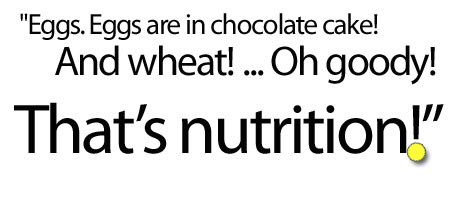
What could be more straight-forward than ingredient lists? So you might think, but there’s a lot of room for deception and misdirection in the average ingredient list. Exhibit A, according to the Center for Science in the Public Interest: the Tasty Living Mocha Cherry Double Chocolate Layer Cake. The first ingredient is enriched bleach flour, and everyone knows that ingredients are listed in order from most to least. This cake must be sort-of nutritious, since it’s mostly made out of nutritious wheat flour, right? After all, as Bill Cosby reminded us so many years ago, “Eggs. Eggs are in chocolate cake! And milk! Oh goody! And wheat! That’s nutrition!”
Sorry, Bill. The biggest ingredient in this cake is sugar, as the Center for Science in the Public Interest Points out. How is it possible? Just add up all the sugars that go by different names: sugar, corn syrup, high-fructose corn syrup and white grape juice concentrate. Boom! This cake is nearly one-third sugar.
The Center for Science in the Public Interest argues that U.S. nutrition labels and ingredient lists should be a more consumer-friendly. By grouping major ingredients and separating minor ingredients, we’d all be better able to make smarter purchases. Which can of diced tomatoes is 60% tomato and 40% water, and which is 70% tomato? How much fruit is actually in that fruity-looking “health” bar? Right now, there’s no way to know … without a chemistry kit.
Serving Size
A 20 oz. soda fits easily in your hand, fits easily in your car’s cup holder and might even come free with a sandwich at the local deli. But even if a reasonable person might perceive that bottle as a single-serving delivery system, there are 2.5 official servings in there, meaning 100 calories per “serving” … but 240 calories per bottle.
While major soda bottlers have begun spelling out this single-serving conundrum to the junk food-consuming public, most serving size calculations are based on standards developed when Die Hard, Beetle Juice and Rain Man debuted on the big screen. Some are based on standards as old as Star Wars and Saturday Night Fever! Just try to remember the size of the sodas and popcorn customarily dolled out in 1977 at the drive-in, compared to today at the megaplex, and you get a sense for how much our sense of portion proportion has gone out of whack (er, changed) in the last generation.
And yet, the serving size data on our foods reflect a slimmer more restrained era, when an 8 oz soda was a weekly treat, not a single glug between fistfuls of Cool Ranch Doritos (serving size: 11 chips). How many people do you know restrain themselves to 11 chips? Or to a 1/2 cup of ice cream? Or a single cup of cooked pasta?
Omega 3
Everyone knows Omega-3 fatty acids are healthy, but that doesn’t mean every product emblazoned with the word is a healthy source of it. The FDA allows certain foods that are rich in two of the Omega-3 fatty acids to advertise that they can reduce the risk of coronary heart disease, but only if they’re also low in saturated fats or other risk factors.
Which is why many eggs and some walnuts use this bit of marketing misdirection: the packaging has the word “Omega-3,” but nothing specifically about heart health, according to the Center for Science in the Public Interest. The FDA specifically prohibited eggs from carrying the “qualified health claim” linking Omega-3 fatty acids to heart health because eggs are high in cholesterol; it ruled out walnuts because the Omega-3 fatty acid found in the nuts isn’t one of the two that has been linked to heart health. These products, and others, dance around the truth and the law by simply stating that they contain Omega-3s, which bathes the food in a healthy light they don’t necessarily deserve.
Hey! That’s not what I expected from reading the food labels!
Made With Real Fruit
Hey wow! That candy has real fruit in it. It must be good for my kid.
The marketing around “real fruit” is so egregious that, for many shoppers, it doesn’t pass the sniff test. But we all get weak-kneed when faced with something potentially yummy, so let’s take a look at some of those misleading marketing techniques.
Case-in-point: Gerber Fruit Juice Treats for Preschoolers. Its package blooming with pictures of ripe oranges, raspberries, cherries, peaches, grapes and pineapple, its only fruit-like ingredient is fruit juice concentrate, which the Dietary Guidelines for Americans considers just another form of sugar. Not surprisingly, the primary ingredients are also sugar and … well, sugar (corn syrup). It’s candy. Similarly, Betty Crocker “Strawberry Splash Fruit Gushers” say they’re made with real fruit, but the only thing approximating fruit is pear concentrate (sugar) with Red No. 40 for “strawberry” color. Overall, the gushers are half sugar (a.k.a., candy).
Bottom line: If you want real fruit, buy real fruit. If you want candy, buy candy.
(And watch out for the same tricky marketing used on supposedly vegetable-rich products like Knorr “Pasta Sides” Chicken Broccoli fettuccini. As the CSPI points out, there’s more salt than broccoli in this pasta dish. Of course, it isn’t called Chicken Salt fettuccini … because presumably no one would buy it.)
0 Trans Fat
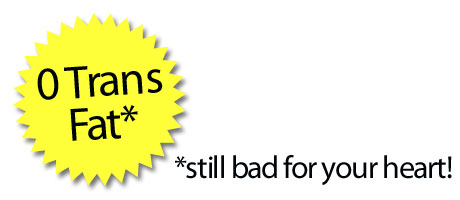
Like some kind of Frankenstein’s monster, we stagger down the grocery aisles, arms outstretched, growling, “Trans Fat Bad!” And yes, they are bad. After numerous studies showed that these fats boost “bad” LDL-cholesterol levels and lower “good” HDL-cholesterol counts (they’ve been called “the most potent type of fatty acid in terms of increasing the risk of coronary heart disease”) the U.S. required companies to disclose trans fat content in their foods.
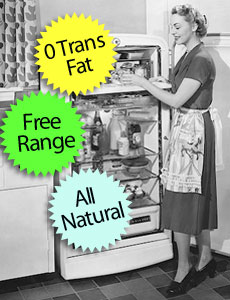
But it’s marketers who made our modern Frankenstein mutter: While some companies reformulated their products to reduce the use of risky fats, many just replaced trans fats with saturated fats. These reformulated foods are basically just as bad, but they scream one truth: “0 trans fats!” to obscure another: “still bad for your heart!”
Free Range Eggs

Ah, the idyllic red barn. The rays of sunshine streaming over the hillside. You feel good buying those “free range” eggs knowing that the chickens tasked with producing those little protein-filled shells lived happy cage-free lives. The sunny label says so. But those few extra cents you plunk down for the “free range” eggs might be paying a savvy marketer, rather than an ethical farmer, because the government doesn’t regulate the use of the phrase “free range” or “cage free” on eggs. Legally speaking, it’s meaningless, according to Consumer Reports’ Eco Label Decoder.
The Department of Agriculture does have rules for use of the term on poultry. It means chickens must be granted the luxury of exactly five minutes of “access” to the outdoors everyday, a token prize for a short dirty life that can also include an unceremonious severing of the beak, wing-to-wing crowding in a shed that’s more hangar than coop, and more chicken poop than you ever want to contemplate while planning a meal.
Those eggs you buy may have been raised ethically, with room enough for hens to roam the yard and peck contentedly at the dirt. But there’s no guarantee in the “free range” label.
Fiber
Fiber is fiber is fiber. Right? Who would have any reason to think otherwise? You might if you knew the fibers advertised in many foods are mainly “purified powders” called inulin, polydextrose and maltodextrin, according to the Center for Science in the Public Interest. These “isolated” unnatural fibers are unlikely to lower blood cholesterol or blood sugar, as other fibers can, and two of the three won’t even “help with regularity,” according to the CSPI. “Currently, fiber is being added to foods such as ice creams, yogurts, juices and drinks so that manufacturers can brag about their fiber content,” the group contends. “But these products do not contain the traditional sources of fiber associated with a variety of health benefits.”
There may be nothing harmful about maltodextrin, (made from corn, wheat, rice or potato starch), polydextrose (made from glucose and sorbitol) or inulin (a carbohydrate derived mostly from chicory roots and other plant roots). But these ingredients act more as low-calorie filling agents (and high-value marketing agents) than proven health agents. Put another way, as SNL did at the start of the health fiber craze, “there’s fiber, and then there’s high fiber.” For the real thing, look for foods like whole grains, vegetables, fruits and beans.
Tastes Like Medicine!
Food isn’t medicine … or is it? Certain micronutrients, after all, can prevent diabetes, cure cancer, make you smarter, improve your sex life, polish your furniture, and, if you eat enough, make your fall in love again for the first time*…
In truth, the FDA allows food manufacturers to make certain pre-approved “qualified health claims” about the health benefits of nutrients in food, but only if those foods meet a range of healthy criteria, like low fat, cholesterol and sodium content. But, according to the Center for Science in the Public Interest, marketers have stretched this inch into a long mile. For instance, food makers can’t say that their product “helps reduce the risk of heart disease” without FDA approval, so they say that it “helps maintain a healthy heart.” That’s why several public health groups, including the American Heart Association and the American Cancer Society, have voiced concern about this trend.
In the most famous recent example, the FDA stopped General Mills from labeling Cheerios with cholesterol reducing claims it wouldn’t allow on some prescription drugs. Another, which the California attorney general helped stamp out, was the Kellogg’s claim that its children cereals “support your child’s immunity” because, even though some are 40% sugar, they are fortified with vitamins. “While a severe deficiency in those vitamins could interfere with the proper functioning of the body’s immune system (and any other system), there is no evidence that Cocoa Krispies actually improves a children’s immune status or wards off disease,” CSPI argues. But Kellogg’s is far from alone. Even as Kellogg’s stopped that line of marketing, Ocean Spray cranberry juice and Juicy Juice berry beverage, Nestlé’s Carnation Instant Breakfast and Kraft’s Crystal Light all make similar claims.
Other foods make claims about boosting your kid’s intelligence (Juicy Juice), or protecting healthy joints (orange juice), or improving heart health (Quaker cinnamon and spice instant oatmeal, which is almost one-third sugar).
Bottom line: Food is food, not medicine.
*If you experience good health for more than four hours after eating this food, call your doctor.
A Dog’s Purpose

15 Worst Birthday Gifts to Give Your Girlfriend
Written by Manolith
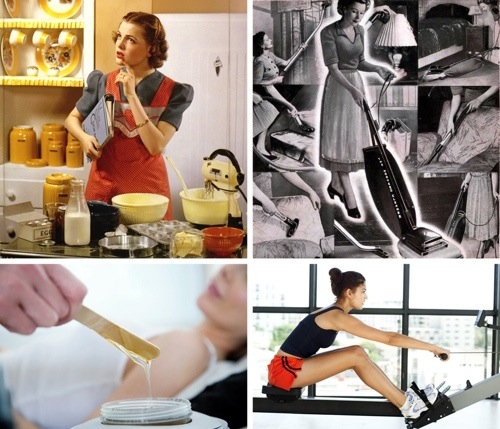
As we state often, there are always exceptions to every rule, but some things are fairly universal. Women tend to hold their own birthdays in high regard; there’s the happy party vibe, and there’s the mild self-loathing that accompanies her feeling of getting one year older. It’s a tense time for any would-be gift giver, to be sure. There are certain things that guys simply should not get their girlfriends for their birthdays, however — unless she explicitly asks for them. Some could get a guy slapped, and some might hurt not for what they could get him, but for what he won’t be getting after giving them. These are the 15 worst birthday gifts to give a girlfriend; don’t make any of these mistakes.
Any Household Appliance
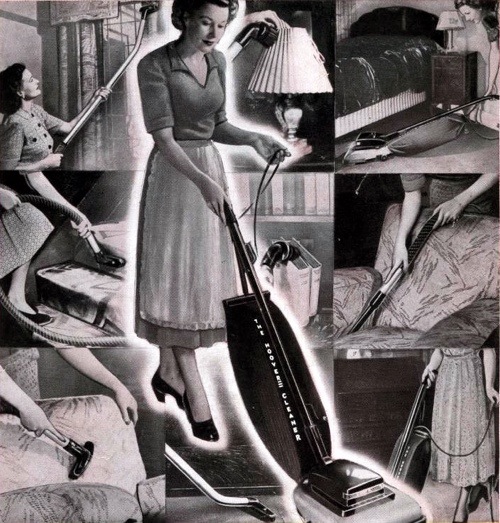

Nothing says romance like a vacuum cleaner. You may think you’re being thoughtful, but the sight of a brand new toaster, vacuum, iron, and so on is tantamount to saying “how about you clean up your dump of an apartment.” Unless she’s in genuine need of one of these things, and asks for it, this is not what you want to hand her on that special day.
Acne or Wrinkle Creams
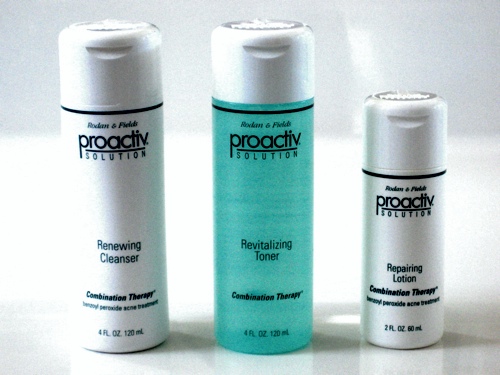

We see women spend ridiculous amounts of money and time on facial creams, exfoliants, complexion repair treatments, “age-defying” lotions and all the other things they gobble up on a regular basis. Some of us might get the bright idea to get a girl some of this stuff for her birthday, thinking it’s normal and apparently appreciated. We’d be wrong. Getting a girl anything but scented lotions is like saying she needs some work done, and she’s not likely to appreciate that very much.
Gym Membership


This should be a no-brainer, but it happens. Guys run into the problem fairly often; their girl gets a little lazy with work and school and setting aside relaxation time, or there’s just too many shots and not enough laps — whatever the case may be, getting her a gym membership is not the answer. It’s liable to get you slapped if you’re not careful (duck fast) and there’s really no way around the fact that it’s pretty insulting.
Nose Hair Trimmer


As odd as this sounds, it’s happened more times than should ever be counted. Usually as part of a bigger package, lazy guys make the mistake of not accounting for the unisex nature of travel kits. It’s bad enough that you’re handing your girlfriend a totally insincere, last minute “gift,” but having a nose hair trimmer as part of the deal is like a slap to the face — something you should probably expect if you try this one.
A Cook Book
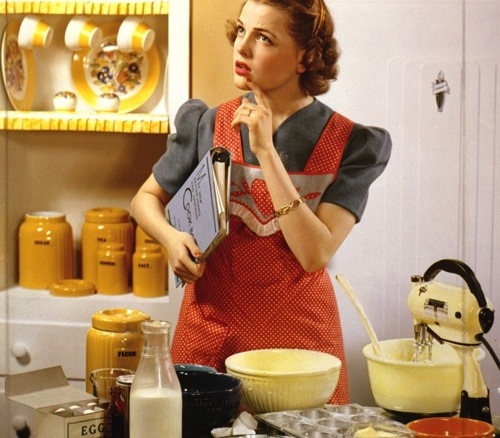

Much like the household appliances, this screams anything but romance. In fact, what it says most is “get to the kitchen and make me sandwich.” You may as well hand her some oven mitts, an apron, and a bag of flour while you’re at it. As nice as it’d be, we don’t live in the world of Mad Men, and you’d be safer taking her out to dinner instead of giving her instructions on how to make you dinner.
A Bikini Wax Kit


This says “I don’t like the way your whole crotch looks, and I’d like you to change that for me.” Not exactly the romantic message you want to send to a girl on her birthday, is it? A gift certificate to an expensive, full service salon/spa that also offers bikini wax services is a better bet. You never know, while she’s there, she may decide on her own to go ahead and trim the grounds.
Facial Hair Remover
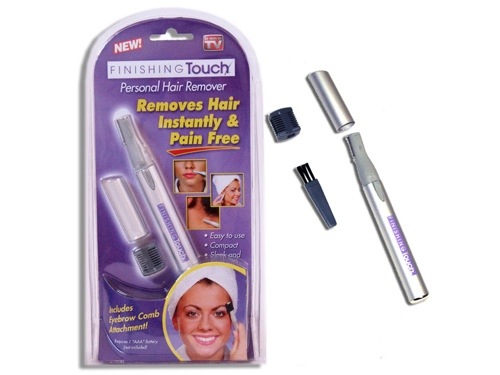

These things, hilarious as they may be, are all the rage right now among women. They apparently do work for all sorts of things, but women don’t generally react well to guys suggesting they use them. You may think you’re being clever in getting her a useful tool to use in her never ending quest for beauty, but she’ll think you’re telling her she has a mustache and a unibrow.
A Stripper Pole


No matter how much she may flirt with the idea of getting one of these things, her birthday is not the day to present her with one. If she decides she wants a stripper pole, an event for which the odds are decidedly against, then feel free to offer to buy her one when that time comes. Just don’t be that guy who gives his girlfriend a stripper pole for her birthday; you’ll never hear the end of it.
Workout Videos
Somewhat like the stripper pole, these ridiculous things are often talked about by women who are fully aware of how dumb they are, but still find some recreational and exercise value in them. The thing is, you can’t just up and give her one of these workout DVDs, and you definitely can’t do it on her birthday. It’s basically saying “you could use this, you’ve been letting yourself go.”
Expensive Diet Plans
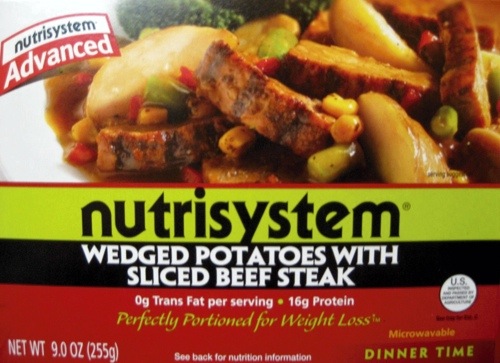

You watch her eat like a bird, she’s picky as hell, she wants to lose five pounds, she eyes every diet in every magazine, and so on, and so on. It doesn’t matter what she says or thinks, you’re not supposed to agree with her in the first place, much less force any sort of diet on her. Even if you spend $1000 on some fancy, wholly ridiculous diet plan and hand it to her, you’re still saying “you’re fat, eat this instead, fatty.”
Tickets to an Event You Want to Attend


This is usually pretty hilarious to watch take place, but painful at the same time. It goes something like this: Guy wants to go to game/concert/fight/etc. Girl wants to go see [insert any female singer/songwriter] live in concert. Guy doesn’t listen and/or care and buys “her” a pair of extremely expensive tickets to the event that he wants to see, and hands them to her acting like he just gave her an amazing gift. She struggles not to strangle him, thinks he’s an idiot, and she’s right.
Anything for Her Car
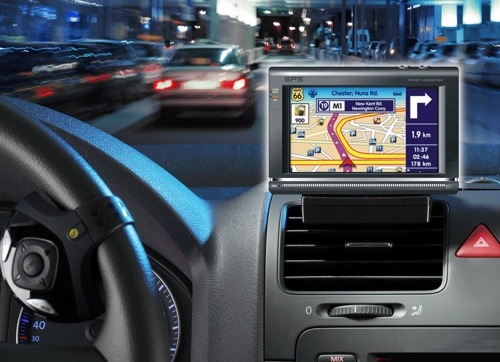

You might think you’re being super helpful and cute by getting her something for her car; maybe it’s a set of matching seat covers or maybe it’s a GPS navigation unit, or even a new sound system that makes your own look like crap. News flash: Chicks don’t really care. If it’s some sort of interior add-on, she’s probably not going to like the color, because she would rather choose it herself or not buy it at all. If it’s electronics, then she probably won’t see the use in it since her stuff works just fine, or she’ll use it like it’s cheap OEM garbage and completely waste the money you spent on it. Just leave her car alone, it’s not worth going there.
The Walgreens Special
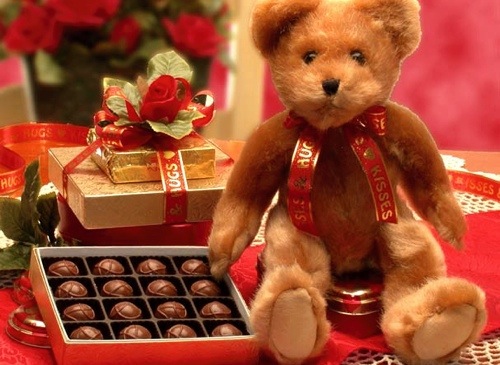

Evidence that a guy completely forgot or blew off his girlfriend’s birthday until the very last minute, the Walgreens Special is simple: You hit up Walgreens or any drug store that lies between work and home, and raid the place for anything and everything that could possibly fill the gaping hole that should be filled with a real birthday present.
A Card with Money
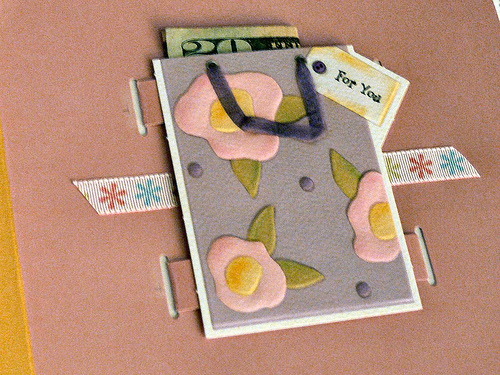
What are you, her grandfather? Nothing says love like a wad of cash, right? Giving her money for her birthday is basically treating her like a prostitute, and that’s how she’ll feel. You may as well leave it on the nightstand, and give her a slap on the ass while you’re at it. Don’t be her John, be her boyfriend.
Nothing at All

While, in most cases, she won’t even say a word should you get her absolutely nothing for her birthday, this is the absolute worst thing you could do. Even if she swears up and down for three months beforehand that she doesn’t want a present from you, you should attempt to find some way to honor her wishes but go against them at the same time — even if it’s a single flower, or taking her out to dinner. Just don’t blow it off like you got away with something, she’ll remember it.
Please Unsubscribe me from Your Internet
Collected by makeuseof
From the Page:
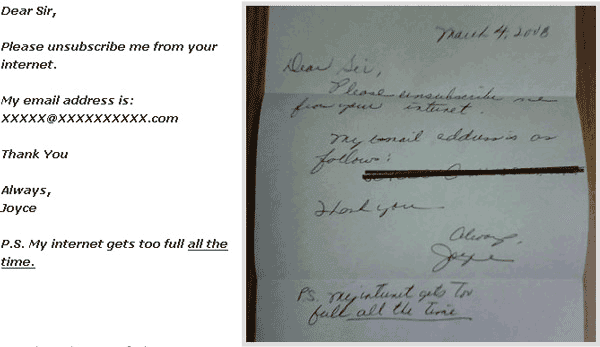
My company runs email campaigns like any other. You know, the usual sales promotions, monthly specials, etc. Just click the unsubscribe link at the end of the email to opt out / unsubscribe permanently.
A couple of weeks ago we received an actual, honest to goodness US Postal service real snail-mail letter to our department. Written in the feminine cursive of my parents’ generation, it reads as follows:
Source: www.mikeduncan.com