We offer latest collection of brain dumps including 642-661 dumps and 642-681 dumps so you will pass exam even on limited time.
We offer latest collection of brain dumps including 642-661 dumps and 642-681 dumps so you will pass exam even on limited time.
Written by Dena P
Top 10 Steak Grilling Tips (From a Real-Live Chef!)
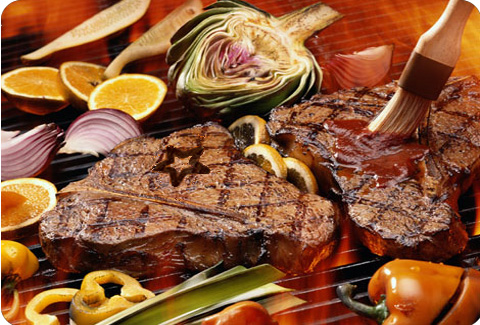
If you think grilling a steak is as simple as slapping a piece of meat you bought at the supermarket on a grill and flipping it a few times, you’re missing out on what could be THE GREATEST STEAK OF YOUR LIFE.
Here are some grilling tips from an honest-to-goodness chef that’ll make your next steak meal your finest work ever.
1. Choose the right cut of meat — Some cuts of meat are better for grilling than others. I, personally, prefer to grill strip steaks over other cuts because you get a nice combination of fat and meat for a great flavor. Filet mignon, on the other hand, I prefer to pan sear because it is so lean and I can add fat and flavors in the pan. Experiment! Ultimately, no one can tell you what you like, you have to find it for yourself. Here are the pros and cons of each cut:
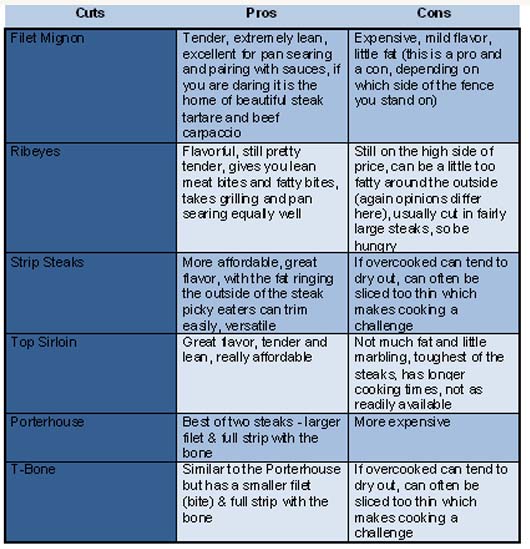
2. Choose the right quality of meat — Nothing ruins a good steak dinner like a bad steak. A lot of places sell poor quality meat, so make sure you choose a reputable supplier so you know you are getting your money’s worth. By law, all meats are inspected for wholesomeness so no one is selling you meat that will kill you, but grading is a voluntary system. Meats are graded on several categories, including the marbling of fat and the amount of connective tissue. Sure, it may be fit to eat but do you want to eat it? Prime is the highest quality, followed by choice and select. Choice meats are very high quality steaks and the most common steak used in the restaurant industry. Here are a few pointers to track down the perfect quality & cut of steak:
3. Season early — You should salt your meat even before you start your coals. If you throw salt on right before you put it on the grill you end up leaving salt all over the grill, not on your steak. So season your steaks about fifteen minutes before you put them on the grill. That gives the salt a chance to dissolve and evenly flavor your meat. Sea salt is all the rage now and chefs like to fancy up a plate by using specialty salts like Hawaiian Pink Salt or Fleur de Sel. Sometimes a little good salt is all that a steak needs.
4. Take ‘em out early — Let your steaks sit on the counter for at least twenty minutes. I know it doesn’t seem sanitary, but since steaks are whole muscles and you are cooking the outside well above safe levels, you won’t need to worry so much about food-borne illness. The problem with throwing your steaks on the grill right out of the refrigerator is that it will take them a lot longer to cook. Steaks at room temperature take seasoning better and will cook faster. Unfortunately, meat takes time to cook and if you are in too much of a hurry to cook it you are probably in too much of a hurry to really enjoy it. Take your time and learn to enjoy cooking your steak almost as much as eating it.
5. Use charcoal — Gas grills work great for cooking food but can sometimes impart a gas flavor to your meat. I like to use natural hardwood charcoal started in a chimney. Don’t use lighter fluid; it defeats the purpose of using hardwood charcoal. You want to smell the steak roasting over the coals – that is the best part! Some people swear by mesquite soaked in apple juice others say you cook your steak to fast to get any benefit. Wood chips can add flavor if you are smoking your meat but that usually takes a lot more time than it takes to grill a steak. My recommendation is that if you are curious, play around see if you can taste and enjoy the difference.
6. Hot coals — Set your coals up so that you have zones of cooking. Always start off on a hot spot. You want good color and flavor from the high heat. When you flip it, don’t put it down on the same spot as before — it will be cooler. Find another hot spot to continue getting good color and flavor.
7. Don’t touch it! — This is one of the biggest mistakes a home cook makes. Everyone wants to keep checking the food to see if it is done. Leave it alone. Know how thick your steak is and roughly how long it takes to cook. Flip it once and give it a quarter turn once on each side. The more you touch it the better chance you have of screwing it up. Check out this grilling chart as a guide on how to cook steaks:
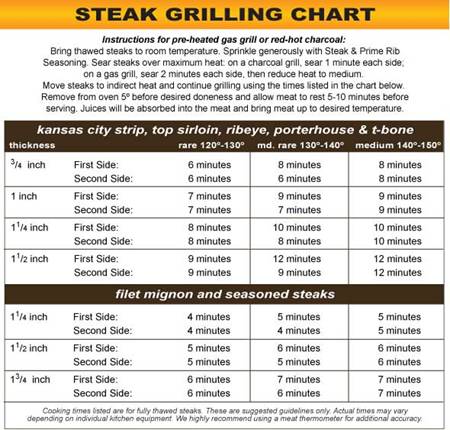
Grilling Chart courtesy of www.kansascitysteaks.com
8. Make it pretty — Use the hot grill to create “cross-hatch” grill marks. Set your steak down at a 45-degree angle from your grill lines. About a quarter of the way through cooking, give it a quarter turn. Half-way through cooking, flip it once. Give it a final quarter turn for the last bit of cooking. When finished you should have a steak that looks like it belongs on a commercial. This might not be the most important thing in your day, but if you’re on a first date or trying to impress then try this!
9. Leave it alone — There’s nothing worse than taking a beautiful steak and covering it with other flavors. Sauces, rubs and butters are fine but if I’m going to eat a steak I like to taste steak. If you are using a lesser cut of meat or poorer quality, marinades are a great tool. But we are talking steak here and all it needs is a little salt, pepper and some heat to cook over. So refer to rule #2 and source and buy only good quality meat.
10. Make all your condiments early — One trap many people fall into when they grill meat is trying to cook the rest of the meal at the same time. Your kitchen is inside; your grill (if you are following tip #5) should be outside. Don’t try to run between the two. You will only end up ruining your steak or your side dish — or both. Plan your meal to get your extras done early so you can focus solely on your grilling. I mean, it deserves it, doesn’t it? I like a simple compound butter made of softened, unsalted butter, garlic, a little red wine and some cracked pepper. Mix it all together, (in a mixer, if you can, so it is smooth), roll it in plastic wrap and put it in the fridge up to two weeks before you cook your steak. One pat on top of each steak can be a nice treat.
You can read this article from here
Written by Kevin Purdy

As the outcry over Google Buzz’s privacy has shown us, it’s smart to explore settings in Gmail, along with other places you’re sharing data with the search giant. Let’s take a look at 10 privacy, convenience, and annoyance fixers you should know.

By default, Gmail hides images embedded into emails from chain letters and unknown sources—and that’s a smart move, given spammers’ tracking tactics and malware tendencies. But it still shows images from contacts you’ve previously sent mail to, which can be a pain if you’ve got relatives who just love hi-larious forwards. Head to your Settings page, and look for the “external content” setting, which you can switch off to always ask you to confirm showing images in any email. If you’ve got just a handful of offenders, open up one of the egregious emails, hit the “Show details” link near the bottom of the to/from/subject details, and click the “don’t display from now on” link. (Original post)
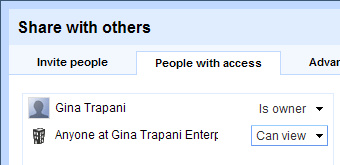
Google Apps, formerly know as Apps for Your Domain, has a lot of goodies tucked inside it for anyone who owns their own site, runs a family name domain, or operates a small business. Unlike Gmail, however, the new features and disabled offerings aren’t as apparent (or blogged about). Gina gave us a great tour of Google Apps, showing how you can control privacy and access, choose which Labs features make it into your domain’s email, and otherwise set up your site to your liking.
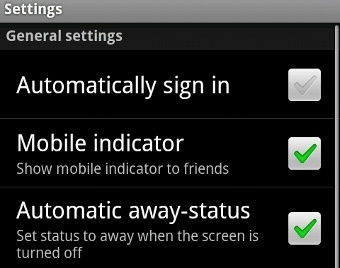
Simple and easy, but also easy to miss: If you’ve got an Android phone and have launched Google Talk from it just once, you might notice that you seem to catch any and all chats throughout the day. That’s because Talk can sit in the background upon launching, ready to pick up messages. That’s fine if that’s what you want, but if you want a choice in the matter, head to the Google Talk app, hit your Menu key, and choose Settings. Un-check the “Automatically sign in” option, hit your back button, and then hit Menu and sign out of Google Talk. You’ll need to sign back in if you’re downloading apps from the Market (odd pairing, indeed), but you’re otherwise free to chat when you want to. (Original post)
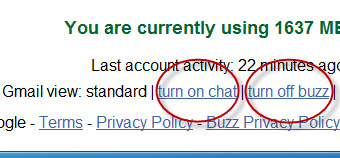
Not big on Buzz? Chat more distracting than useful? Gmail Labs making your inbox feel lag-ish? You can kill all of them, if you’d like, and get back just a plain vanilla inbox. Scroll all the way to the bottom of any page inside Gmail, and at the bottom, you’ll see two links to turn Gmail’s chat sidebar and Buzz inbox on or off. Actually, you don’t really “turn off Buzz” so much as remove it from your inbox, so be sure and check your Buzz settings at your Google Profile, if you have a Google Profile. If Labs features seem to be slowing down, or even breaking, your Gmail experience, you can turn them off entirely by loading Gmail from this URL: https://mail.google.com/mail/?labs=0#. Bookmark it as your main Gmail link, or title it “Gmail (Safe Mode)” if you’d like to still venture into all the goodies on occasion.
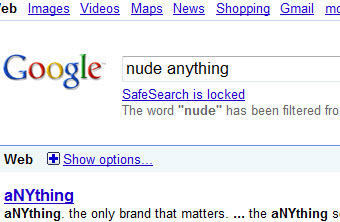 Google’s SafeSearch isn’t an entirely comprehensive solution to preventing impressionable eyes from the worst realms of the internet. It is, however, a good stopgap until they learn to grow up and install other browsers, wipe out cookies, and customize user scripts. Whether you don’t have any young ones in the house and want to turn SafeSearch off altogether or you want a complete SafeSearch lockdown on your computer, head to your search preferences, scroll down to the SafeSearch section, and find the setting that fits you. (In Google Image Search, they’ve helpfully placed the control right under the search box on your first result.) If you want to permanently enable SafeSearch, click the “Lock SafeSearch” link—and repeat for any browsers the little ones use. Now when they’re performing a Google search, you should see some giant Google-colored balls in the upper-right corner—or else they’ve gotten too smart.
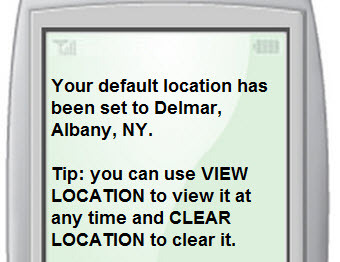
For those without web-connected smartphones, or at least a decent data connection, Google’s SMS service is seriously helpful—it’s how I (used to) get by with just an iPod touch and a standard phone. To make it even more helpful, text set location, followed by the city and state or ZIP code where you spend the most time. Now you can just text “weather” or “pet store” to get the skinny on what’s happening. (Original post)
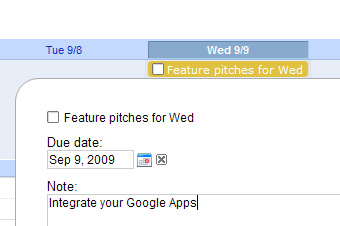
Taking off the privacy and preference hat for a moment, Google’s apps have a lot of neat settings just beneath their surface that make using them all together a tight experience. You can turn emails into tasks, and then map those tasks on your calendar. You can send voice messages and SMS from Google Voice to Gmail, and mark them as read when you open them there. Gina previously ran down seven easy ways to integrate your Google apps, and even more seem to come along every week.

If you’re logged into Google for Gmail or any other service, there’s a good chance Google’s keeping tabs on all your searches, months after you made them. If you aren’t logged in, Google’s probably still tracking and personalizing your searches based on what you previously typed in. This one-stop solution should work for most users, but if it doesn’t, log into Google and head to google.com/history. A notice at the top will tell you if you’ve “paused” or otherwise stopped your search history, or else you’ll see your recent searches listed with dates and times. You can clear out this history by hitting the “Remove items” link on the left. If you aren’t logged in, look for the “Web History” link in the upper-right corner. From there, you can choose whether Google tracks your searches via cookie and IP address and customizes your results.
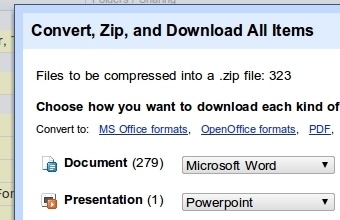
For all you’ve heard about Buzz, privacy, and Google this week, you still can’t fault them too much for their efforts to let you take your data with you if you decide to leave their app ecosystem. The Data Liberation Front site, a pet project from Google’s engineers, explains how you can pull your information, documents, and other data out of nearly any Google product. Gina’s also covered some of Google’s apps in a cloud backup feature, and Adam tackled the best-at-that-time tools for Google backups in 2007. (Original Data Liberation Front post)
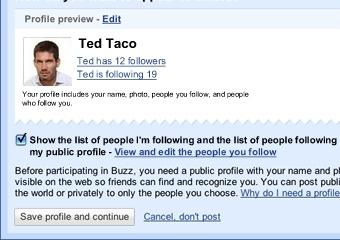
Google’s new social service Buzz showed up suddenly in everyone’s Gmail accounts this week, and right away it wanted to get you connected with the people you contact over email and chat the most. Before you let it turn you loose, though, consider whether you want the world to see exactly who you “follow.” Google has since improved the on/off visibility, but if you want to make sure you’re not broadcasting your inbox to the web at large, we suggest visiting your profile and checking your follower counts. If you don’t see a profile at all, or don’t see the followed/following numbers, you’re likely in the clear, but as with many aspects of Buzz in this early stage, you can’t be too careful. And when you actually start using the thing, be careful not to broadcast private email addresses yourself. (Original posts: Buzz update, private emails).
Lifehacker copy consigliere Dustin Luck mentions yet another reason to hit up your search preferences from time to time. With a single click, you can choose to open the results you click on in new windows. If you’ve set up your browser the right way, those new windows become new tabs, and little research projects on Google just became far more convenient.
What settings do you always make sure are set in your own personal Google universe? What settings do you wish existed for better control and privacy? Tell us about them both in the comments.
Use of braindumps not only helps you to shorten preparation process but provide guaranteed results. We offer latest 642-982 dumps and 642-983 dumps with 100% pass guarantee.
Written by regretfulmorning
Valentines Day weekend is a gold mine for single men. Unfortunately, most of us don’t know it and will probably ruin any chance of action by being “too nice.”
If a girl you like gets dumped during the week of V-day, it’s logical to be there for her, get her some flowers, and possibly take her to a nice restaurant – right? See this is where most of us fuck up. That my friends what gets you “OMG I’m so glad I have friends like you.”
The solution: Put your emotions aside and move in for the kill. When a lion sees and injured gazelle limping on the open plains, he does not try to nurse it back to health. Sure it’s heartless and you might even feel like an ass, but this is how the circle of life works young Simba.
Here are 10 rage comics to help prove our point.
Mixed Signals

Logical Female is Logical

I Only Date Assholes

Sex Is Great

I Was Drunk, lulz

You’re a Nice Guy

2 Weeks of Spending Time Together
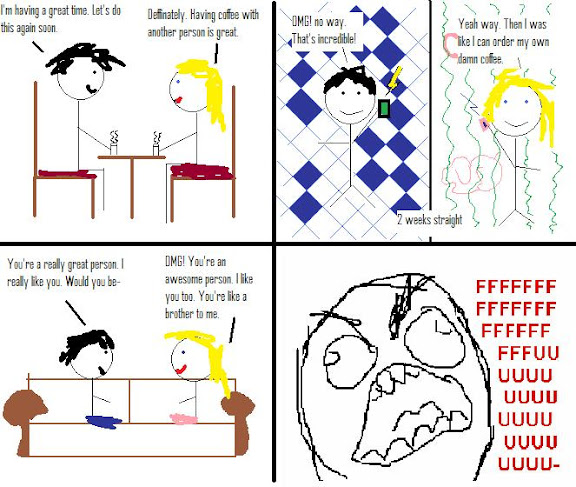
From The Girl’s Perspective

The Friend Zone Explained

The Friend Zone Solutio(Click to Enlarge)

Written by Mark Edward Soper
As much as we like to multitask, there’s only so much a processor can handle at once. And some processes, like games, monopolize CPU clock cycles, making it inconvenient to run other processor-intensive utilities in the background. That’s why we keep our home PC powered on while we’re at sleep or at the office. Forget about energy savings–a powerful PC is meant to be utilized!
From scheduled FTP downloads to converting digital photos and more, here are the ten best ways to keep your PC busy so it won’t miss you when you’re gone. Downtime be damned!
Sure, you can record TV shows and movies while you use your PC, but what do you do if you have two or three programs all battling for your attention? If you can’t catch your favorites on Hulu or Boxee, or if you don’t have a TV tuner than can handle multiple programs, take advantage of repeat broadcasts of many programs; catch the game live, and record your favorite news programs or movies later.
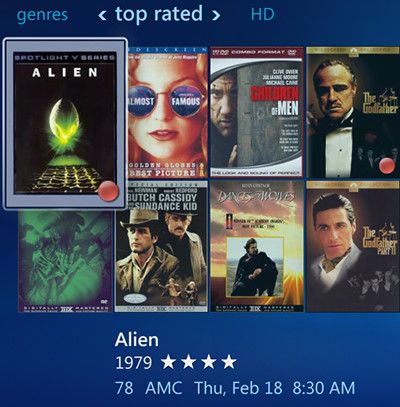
If your favorite movie station insists on having a marathon of your favorite movie, you might as well record the 2AM showing and watch something else in prime time. If you use Windows Media Center, you can use either the program guide or the movies guide to record movies.
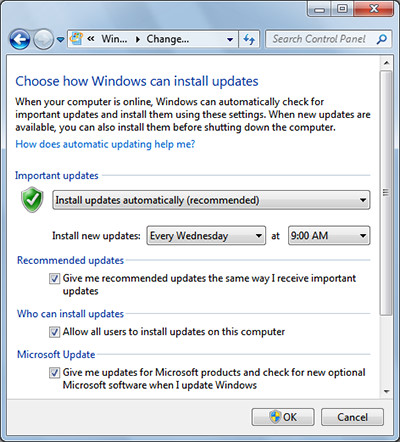
Windows Update enables you to decide when to download and install updates for Windows and for Microsoft Office and other programs supported by Windows Update/Microsoft Update. The default setting is in the middle of the night, but if your PC is busy with other tasks then, consider a time like Wednesday morning after you head off to work (Wednesday morning is also a perfect time to catch Microsoft’s Patch Tuesday updates). Need a reminder on how to adjust your settings? Here’s how to do it with Windows XP and with Windows Vista (and Windows 7).
Although most current anti-virus and anti-malware programs can run while you use your computer for other tasks, you’re still better off to check your machine for problems when you’re not using it. Depending upon your favorite software, you might be able to schedule scans from within the software, or in some cases, you might need to run Windows Task Schedule/Scheduled Tasks service separately.
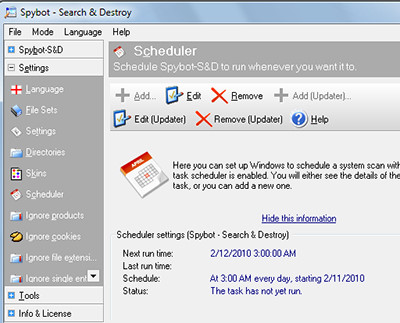
To find out if your favorite programs have built-in scheduling, you might need to switch to the program’s advanced mode or advanced menus. For example, to schedule scans with Spybot S&D, you must switch to the Advanced mode and open the Settings tag to locate the scheduler. However, you might need to update to the paid versions of some scan programs to have access to scheduling functions.
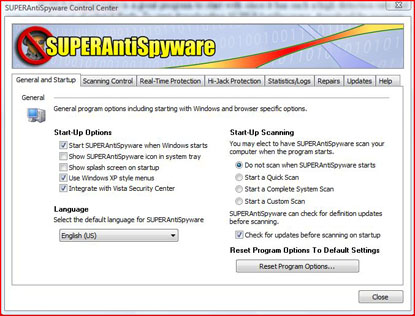
Depending upon the speed of your anti-virus and anti-malware scanners, you might be able to schedule them on the same day or night. If possible, schedule the scanner’s update process to run before the scan program itself.
While malware and spyware can deep-six your computer’s performance, so can problems with your hard disk’s structure. Use the dynamic duo of chkdsk and defrag to check your hard disks for errors and defragment files to keep your storage in good shape.
Chkdsk can be run from the command prompt, and by using command-prompt switches when you schedule chkdsk to run, you have a great deal of control over how chkdsk works. If you want to repair disk errors on the C: (system) drive, you’ll need to schedule chkdsk to run at startup.
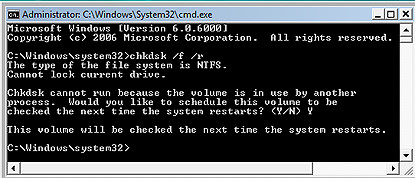
You can shut down and restart Windows automatically using Task Scheduler, enabling you to run Chkdsk on the system drive at startup. You should run Chkdsk before you run Defrag on a given drive to assure that files are not being moved to corrupt portions of the disk.
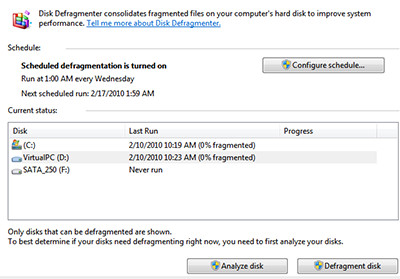
In Windows 7, you can select multiple drives for defragmenting, which realigns small file fragments into larger contiguous blocks. This enables faster file reads and writes, especially on drives with frequent changes, such as the drive you use for temporary or swap files or drives with frequent modifications to data files.
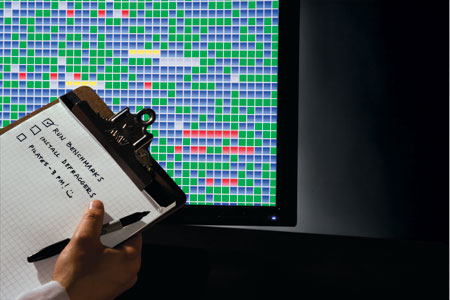
You can configure most commercial backup programs as well as Windows’s own backup programs to run on a schedule. To make scheduled backups work properly, keep the following in mind:
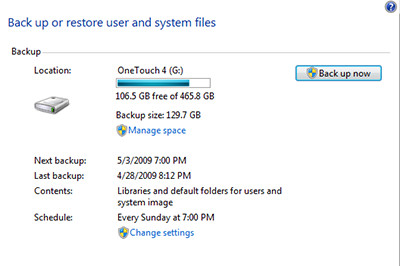
To learn more about using Windows 7 backup, see our Windows 7 feature focus article.
If you’re a serious digital photographer, you already know that shooting in RAW mode provides much more control over exposure, white balance, and other factors than shooting in JPEG. However, when it comes to sharing or printing your photos, JPEG rules. Cut out the tedium of converting your photos manually by using automation features in your photo editing software.
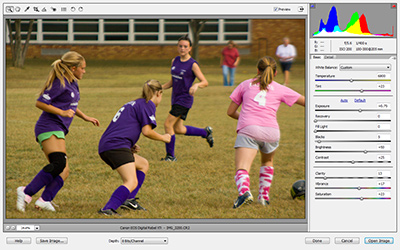
With Photoshop Elements and Adobe Camera RAW, you can use Process Multiple Files to convert RAW files into virtually any other format supported by Photoshop Elements, apply quick fixes, resize images, rename files, and add labels.
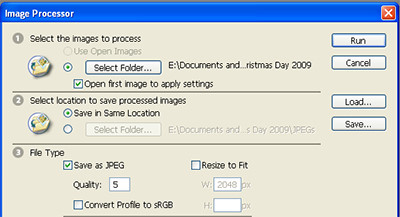
With Adobe Photoshop CS4 and Adobe Camera RAW, you can use the Image Processor to automate the conversion process and run actions. If you still use Adobe Photoshop CS3 and Adobe Camera RAW, you can also use Image Processor.
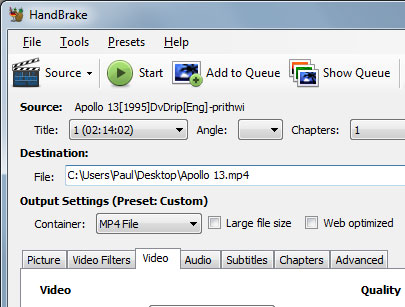
Depending upon what type of video you’re encoding or transcoding, there are many choices, all of which take time better spent when you’re away from your PC. Here are some of our tutorials and product guides:
Whether you use FTP or Bittorrent to transfer files or play games delivered via Steam, you’re pushing a lot of information through your home network to the Internet (and vice-versa). Here’s how you can take advantage of away from your PC time to handle heavy bit-pushing.
If you use file transfer protocol (FTP) to shuffle files around, you know there are plenty of freeware versions to choose from. Unfortunately, just about all of those that include a scheduler feature will cost you a few bucks. One that won’t cost you anything is WinSCP. Use its scripting feature to schedule file transfers. For a low-cost FTP program that doesn’t require scripting to schedule transfers, consider ProSoft FTP Scheduler Standard Edition (about $25, 15 day trial).
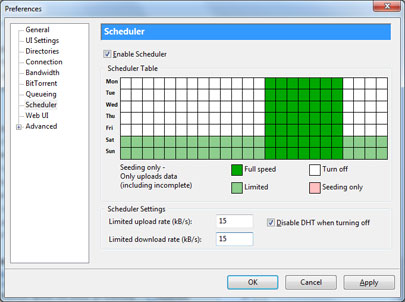
Want to schedule Bittorrent transfers? Check out the Scheduler feature built into uTorrent. Scheduler allows you to adjust transfer speeds, go idle, or upload only at the times you select. For a tutorial, see page 7 of our own Paul Lilly’s 20 Essential Tricks and Skills Every BitTorrent User Should Know. Be sure to see the comments for tips on using Dropbox and PeerBlock to improve uTorrent performance.
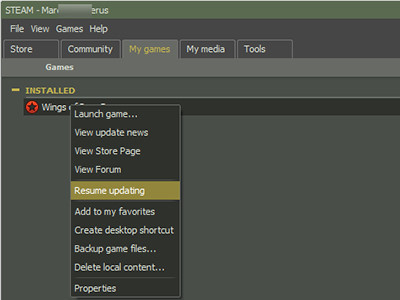
While Steam doesn’t provide a way to schedule your downloads, you can pause and restart a game download whenever you want.
There’s no need to drag your music collection between home and office. Give your iPod or Zune a rest and use our own Norm Chan’s How To: Stream Your Music Library to Any Computer tutorial to bring your music to your office. The most time-consuming step (page 2) is importing your music into Netjukebox, so it’s a perfect candidate for running it before you hit the hay or head to the office.

Compiling code and rendering graphics are among the most time-consuming tasks you can perform, so you shouldn’t waste precious playtime by watching your computer munch program and video bits.

Start these processes before you clock out for the evening or as you start off to work. To make sure they run as quickly as possible, set your computer’s power management for high performance and turn off other tasks that might interfere, such as Windows and application updates and other processes (such as the ones listed in this guide). If you’re rendering graphics to an external drive or building a DVD or Blu-Ray disc, make sure your external drive is ready to roll and that you have a suitable blank disc in your drive.
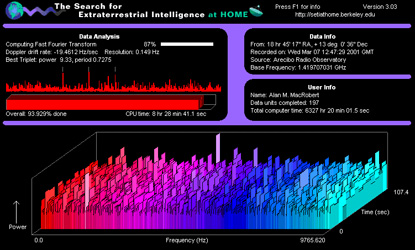
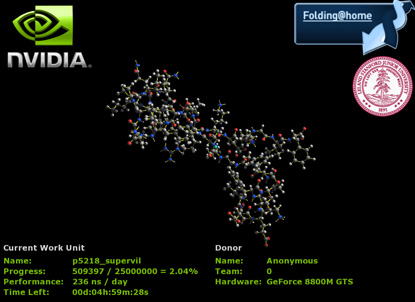
You can “give something back” to the world by devoting unused computer cycles to a cause you support. You can help make scientific discoveries or fight deadly diseases, and there’s no shortage of causes looking for your help. For a list of projects, see these Maximum PC stories: Facebook and Intel want You to Donate Your Spare Cycles, Freeware Files: Five Free Distributed Computing Projects for your Idle PC!, and New Distributed Computing Initiative Wants to Create Artificial Life. Need more options? See Wikipedia’s list of distributed computing projects and Distributed Computing Info’s list of projects.
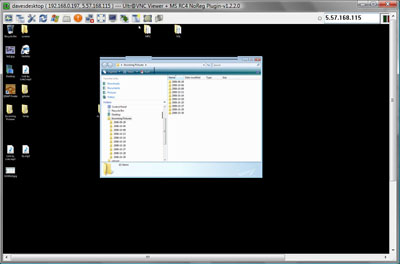
Whether you’re running apps that include built-in schedulers or need to start them yourself, you’re going to want a way to log into your home PC from the office and keep an eye on what’s going on. You could use commercial services like GotoMyPC, but if you’re looking for a powerful freebie, check out the remote connection apps in our story The Ultimate Free Network Applications, Period. During your coffee breaks or lunch, you can stay in complete control of your PC at home.
Written by Col. Hans Longshanks

It was probably close to three in the morning in your living room. You were six sodas and three gorditas deep with the volume turned way down on the set, anxiously awaiting some practical knowledge regarding the mysterious act of sex. From the scenes that put wisdom in your brain and a strain in your shorts, these were the moments that taught you more about getting laid than anything else. Here are some of the lessons you learned.
Before Kim Cattrall was slutting it up on Sex In The City, she had a howling appreciation for the stench of the boy’s locker rooms. It’s not that Tinactin and Ben-Gay are aphrodisiacs. It’s that girls like the way guys smell, and vice versa. It’s one of the things that’s kept the human race boning since day one.
Gary and Wyatt use their sweet hacking / collage skills to build a mega babe with their Comadore 64. So much for playing Bionic Commando in a pair of Umbros. In the end, the boys don’t get any tail from their creation. It reminds us that science has not yet devised a way to create the perfect woman (not yet). So we better learn how to work the ones around us.
Who knew a tape recorder with a cheesy French accent could turn Jamie Lee into a wind-up Strippo-Roboto? Note to self: Hit up Radio Shack before the company holiday party, or at least prep with a few original lines.
Although the most watched television show of all time neglected to inform that the beaches of Los Angeles are filthy cesspools of trash and acoustic buskers, it did have its share of practical lessons regarding the opposite sex. Follow up lesson: fake boobs are totally awesome.
Chicks don’t want a guy who has more hair products than them (or shower gel with exfoliating aloe crystals). Conversely, guys don’t really want a girl who is this into sports. And as an absolute, no one wants Roseanne.
“Anatomically Correct” is for medical textbooks. If you had to draw the same chick 1400 times for a minute of animation, of course the boobs would be bigger than the head. My point is this. Jessica Rabbit was basically the graphic interpretation of what what 99.9 % of dudes want to screw, and there is NOTHING wrong with that.
The issue of Mo’ Mermaid, Mo’ Problem has been covered throughout history. What it basically amounts to is this. Mermaids are sexy, but there’s just no physical way to get your hump on. Sometimes you just have to set your sights on conquerable territories.
As much as you like air-drumming to the Spin Doctors, surrender control of the jukebox to any woman. Have her choose where you’re going to dinner. This is just speaking to a bigger point. Let women make the decisions on the smaller things, and play along when they’re expressing their sexual side. It’s better for both of you on the highway to bone town.
The original version of Wild Horses is from the Rolling Stones album Sticky Fingers. “Graceless lady you know who I am / You know I can’t let you slide through my hands / Wild horses, couldn’t drag me away.” My point is that if you are ever on a roller coaster with Reese Witherspoon and she wants you to finger bang her, you better sack up.
Memories and photos fade. Video has a much better shelf life.
Yeah, It relieves stress and takes that edge off. But doing it too much is only going to decrease the amount that you get laid, and might even get you caught. Seriously, sometime that edge is exactly what you need.
It helps to understand that the delicate dance between you and a woman you are trying to bed is a feat that involves a level of coordination and strategy you don’t employ on a regular basis. Go with the flow, stay the course, and be prepared buy brunch. But let your body take care of the rest– it knows what it’s doing.
Lessons by “Sex Specialist” Buck Russell
———————————————-
Written by mensfitness
— The average American man’s erect penis is five to seven inches long with a circumference of four to six inches, according to The Kinsey Institute.
— 46% of women would give up getting laid for two weeks rather than logging off the Internet for the same amount of time, according to a survey conducted by Intel.
— Want the ultimate orgasm? Abstain from any sexual activity at all for three weeks. That’s the amount of time it takes for your testosterone levels to peak and boost your libido, according to a study published in the World Journal of Urology.
— There are 500-1,000 deaths per year from autoerotic asphyxiation. that’s equal to the numbers of murders in New York City each year.
— Spain, Brazil, and Italy produce the best lovers, reports global research site OnePoll.com. The worst? Germans, who women dubbed “too smelly.” Englishmen were too lazy, and Swedes finished too quickly. As for the Yanks? They landed somewhere in the middle.
— Forget hitting the shower after a romp — 36% of people under the age of 35 go right onto Facebook and Twitter, according to consumer electronic site Retrevo.com.
— 11% of guys say they use sex to relieve stress.
— You help her get a good night’s sleep. University of Pennsylvania researchers claim that women in stable relationships get better shut-eye than single women do.
— More than one in three women are having sex at least three times every week. Not quite one in four men (28%) are as lucky.
— Not going out as much? 32% percent of men say they are masturbating more since the recession.
— Sex-related entertainment (porn mags or videos, strip clubs, escort services, phone sex, sexting, etc.) has taken the plunge with the economy: Forty-two percent of guys cut it from their budget entirely.
— Women are having sex 17% more often than the average guy.
— One in three men and women are completely satisfied with their sex life. (Alas, the same number of both sexes think their sex life could drastically improve.)
Written by Jeff Wysaski

Way back in 2001, Homer Simpson’s most popular catchphrase – Doh! – successfully transcended beyond the status of pop culture catchphrase and entered the pantheon of legitimate English word. This momentous occasion was the direct result of the Oxford English Dictionary deciding to include the word in their 2001 edition.
However, doh is just one of many Simpsons neologisms (fake words) that have entered into both American and British mainstream vocabulary. Looking back over the years, one could argue that a number of these fake words also deserve the prestige of sitting alongside “doh” as a proper term in the American lexicon. And if any of those eggheads at Oxford are reading this article, I would like to suggest the following ten words for inclusion in their next dictionary edition:
 1 Yoink
Yoink: An exclamation that, when uttered in conjunction with taking an object, immediately transfers ownership from the original owner to the person using the word regardless of previous property rights. (urbandictionary.com)
Yoink is a word that makes stealing even more fun. While this phrase first appeared in a 1960s episode of The Flinstones, The Simpsons did much to bring it into popular use. In the town of Springfield, the phrase is first uttered by Homer in a fourth season episode as he snatches a wad of cash out of Marge’s hands. The word has also been used by Snake while purse-snatching, Mr. Burns while swiping a $1,000 bill from Bart and an anonymous person stealing Lenny’s diamond tooth.
 2 Diddly
Diddly: a filled pause, a non-word which a speaker uses to take up time or space in a sentence, and which are sometimes used for emphasis (http://www.exampleproblems.com/wiki/index.php/List_of_neologisms_on_The_Simpsons)
If “uh” and “um” have a home in the dictionary, then so too does Ned’s favorite non-word. Whether used to add alliteration, replace a swear word or simply as nonsense, few words are as versatile and effective as diddly. One of my favorite diddly quotes: “Son of a diddly!”
 3 Glayvin
Glayvin: a nonsensical word used to describe any emotion from surprise to joy to sadness (urbandictionary.com)
Great glayvin in a bag, is this a good word. Glayvin is yet another catchphrase that has earned a considerable amount of steam in the real world. Professor Frink’s most popular utterance is a catch-all term that can be used in almost as many scenarios as “diddly.” The term likely originates form Jerry Lewis’ legendary catchphrase “froyndleyven.” Frink’s character traits are clearly inspired by Lewis.
 4 Meh
4 Meh
Meh: Indifference; to be used when one simply does not care. (http://www.urbandictionary.com/define.php?term=meh)
I’d wager a guess and say that “meh” is used in common conversation way more often than “doh.” The word was first muttered in tandem by both Bart and Lisa when Homer asks if they want to go to Blockoland – a Legoland rip-off amusement park. Meh has reached such popularity, that self-described “minor celebrity” John Hodgman has publicly denounced its use. I, on the other hand, find great merit in the word – and apparently so too does the Collins English Dictionary. This British publication added “meh” to their dictionary in 2008 (so stop dragging your heels, America).
 5 Kwyjibo
Kwyjibo: A big, dumb, balding North American ape with no chin and a short temper.
In an early episode, Bart lays down all his tiles in a game of Scrabble to spell “kwyjibo.” The definition above comes straight from Bart’s mouth (with addendum from Marge), and is a thinly veiled description of Homer. Granted, I suppose the validity of the word suffers a bit from the fact that kwyjibos as a species don’t actually exist, which is why I implore nature biologists everywhere to force “kwyjibo” into popular acceptance by bestowing the name upon the next long-lost ape species we discover.
 6 Car Hole
Car Hole: a covered place to park your car; synonym for garage
If you want to refer to your garage without sounding like a snobby Frenchman, then this is the perfect word for you. Moe Szyslak coins this phrase during a game of poker after ridiculing Homer for his fancy-shmancy usage of the word “garage.” The fact that Homer immediately discards his previous nomenclature by using the phrase “car hole” in the very next scene should be testament to the supreme accessibility and usefulness of this perfectly simple and descriptive term.
 7 Frogurt
Frogurt: a portmanteau for “frozen yogurt”
Looking back, I’m surprised that The Simpsons were the first to use this term, as it seems like such a natural way to shorten “frozen yogurt” – a term I think we all can agree is way too long and clunky. The delicious word made its debut in a Treehouse of Horror episode in which Homer visits an evil gift shop. Apparently the Frogurt is cursed (that’s bad), but it also comes with a free topping (that’s good).
 8 Craptacular
Craptacular: of exceptionally poor quality; spectacularly crappy
Along with frogurt, craptacular is one of the more accessible portmanteaus crafted by the writers of the Simpsons. Bart uses the word to describe Homer’s Christmas lights display during a Christmas episode. Certainly, there are plenty of instances in the real world where the term “crappy” just isn’t strong enough to effectively portray the sheer terribleness of a particular person, place or thing. For those instances, craptacular is here to help.
 9 Unpossible
Unpossible: not possible; synonym of impossible
“Me fail English? That’s unpossible!” When Ralph Wiggum blurted out this silly little phrase in the sixth season of the Simpsons, it instantly became one of the most quoted lines of the series. Taken out of context, the term is generally meant ironically, which some may argue gives it less credibility. However, if you think the word is one that would only be used genuinely by uneducated morons, let me just point out that “unpossible” has been used by none other than William Shakespeare. The word appears in his play, Richard II.
 10 Embiggen
Embiggen: To make bigger or grow in size; a perfectly cromulent word
This graceful word can be attributed to town founder Jebediah Springfield. As the town motto goes, “A noble spirit embiggens the smallest man.” The word is used repeatedly throughout the 7th season episode in which all of Springfield comes down with a major case of Jebeditis (another excellent candidate for this list) during the town’s bicentennial celebration. Adding credibility to the word is the fact that it has appeared in numerous scientific publications since the episode aired.
Simpsons fans can’t think of “embiggen” without thinking of the other fake word used to describe it: cromulent. Clearly, this word should be included on this list as well – if it weren’t for the fact that the Webster’s American dictionary added it to their “New Millenium” edition a few years ago. The official definition: fine, acceptable.
Bonus words:
The above words are probably the most credible options for inclusion in the American dictionary. Some bonus words that almost made the cut are listed below. See if you remember them.
Jeebus
Blurst
Debigulator/rebigulator
Foilage
Saxomophone
Tramampaline
Avoison
Chocotastic
Groin-Grabbingly
Sacrilicious
Science Pole
Squishee